Sudan’s Healthcare System Faces Catastrophic Collapse Amid War and Drastic Funding Cuts
Sudan’s already fragile healthcare system is teetering on the edge of collapse, a dire situation exacerbated by significant global funding cuts and the relentless civil war. Numerous healthcare facilities across the nation have been forced to cease operations, leaving millions without essential medical care. A leading medical charity has highlighted the critical state, noting that dozens of organizations lost their primary funding source after the United States, historically Sudan’s largest donor, closed USAID’s foreign aid delivery body last year.
While the U.S. remains a major contributor to Sudan, many USAID-funded grants expired in June, coinciding with a broader trend of reduced international assistance from European governments. This decline is part of a larger global trend, with international aid reportedly falling by 21.3% in 2025 compared to the previous year, according to the Organisation for Economic Co-operation and Development (OECD). The ongoing conflict, which erupted in April 2023 between the Sudanese army and the paramilitary Rapid Support Forces (RSF), has plunged the country into one of the world’s most severe humanitarian crises, with over 33 million people urgently requiring medical support.
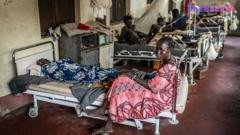
The withdrawal of funding has led to the closure of frontline services, placing immense pressure on the few remaining hospitals and clinics. Patients are now compelled to undertake perilous and extended journeys to access treatment, often arriving in critical condition at facilities that are already overwhelmed or at capacity. Data from medical organizations operating in the region indicates a significant surge in admissions; for instance, facilities in central Darfur experienced a 22.5% increase in patient intake between January and April 2026 compared to the previous year.
In May alone, 45 healthcare centers in one area ceased receiving financial support. The closure of maternity and surgical wards in places like Gedaref state’s Tanedba camp, home to 18,400 displaced individuals, exemplifies the crisis. A medical charity is now managing an emergency room there, but pregnant women requiring surgical delivery must travel three hours to the nearest city. Similarly, the Um Rakuba camp has seen a drastic reduction in aid agencies, from 35 in 2021 to fewer than 10, serving approximately 17,000 people, predominantly women and children. Compounding the funding crisis, attacks on healthcare workers and facilities persist. In 2025, Sudan tragically accounted for 1,620 deaths from such attacks, representing 82% of all global fatalities in assaults on healthcare worldwide. Beyond medical needs, the United Nations reports that over 19.5 million people are experiencing ‘crisis levels’ of food insecurity, with more than five million facing ’emergency levels of hunger’. Despite anticipated diplomatic consultations in Khartoum aimed at ending the civil war, the fighting shows no signs of abating. Recent reports from North Kordofan state detail a drone attack on the army-controlled town of Umm Ruwaba, resulting in at least 11 fatalities after a projectile struck a crowded court complex courtyard.
Key Takeaways
- Sudan's healthcare system is on the verge of collapse due to drastic global funding cuts and the ongoing civil war.
- The withdrawal of international aid, particularly from the U.S. and European governments, has led to the closure of numerous facilities and increased strain on remaining services, forcing patients to undertake dangerous journeys for care.
- Millions of Sudanese are in urgent need of medical assistance and food, while attacks on healthcare workers continue amidst persistent conflict, exacerbating one of the world's worst humanitarian crises.
Editor’s Analysis & Impact
The impending collapse of Sudan’s healthcare system carries profound implications, extending beyond immediate humanitarian concerns. Economically, it cripples human capital, hindering any future recovery and perpetuating a cycle of poverty and instability. The significant reduction in international aid signals a potential shift in global donor priorities or capacity, which could have ripple effects on other conflict-affected regions reliant on foreign assistance. The future outlook is grim without immediate, substantial, and coordinated international intervention. The ongoing conflict makes aid delivery exceptionally challenging, risking further escalation of mortality rates, particularly among vulnerable populations. This crisis underscores the critical link between political stability, global health, and humanitarian aid, highlighting the catastrophic consequences when these pillars falter simultaneously. The international community faces a moral and strategic imperative to address both the conflict and the humanitarian catastrophe to prevent a complete societal breakdown in Sudan.
Frequently Asked Questions
Q: What is causing the collapse of Sudan's healthcare system?
A: The collapse is primarily driven by a combination of drastic global funding cuts from major donors like the U.S. and European governments, coupled with the devastating impact of the ongoing civil war between the Sudanese army and the Rapid Support Forces (RSF).
Q: How are patients in Sudan affected by the healthcare crisis?
A: Patients face severe challenges, including the closure of numerous healthcare facilities, forcing them to undertake long and dangerous journeys to access treatment. Many arrive in critical condition at already overwhelmed hospitals, and essential services like maternity and surgical wards are becoming unavailable in many areas.
Q: What role has international aid played, and why is it decreasing?
A: International aid has been crucial for Sudan's health system, with the U.S. historically being the largest donor. However, major grants have expired, and European governments are also reducing assistance. This decline is part of a broader global trend of decreasing international aid, further exacerbating Sudan's humanitarian crisis.
AI Disclosure: This article is based on verified data and official reports. Our Team and AI have cross-referenced every financial detail with primary sources to ensure total accuracy.
More from this Category