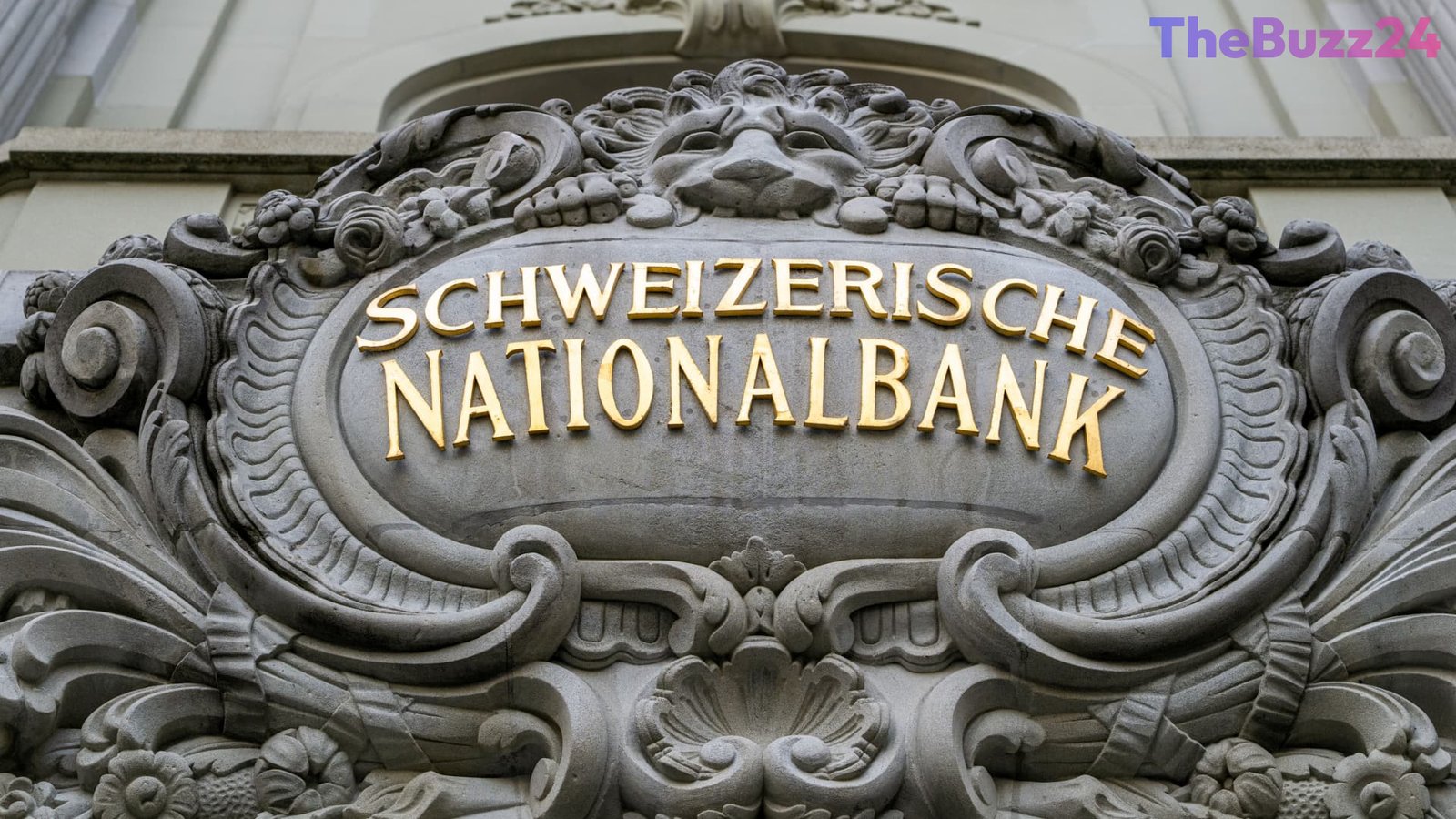
Swiss National Bank Reports Substantial Q3 Profit Amidst Gold Volatility and Foreign Asset Gains
The Swiss National Bank (SNB) recorded a significant profit of 19.1 billion Swiss francs (approximately $23.3 billion) in the third quarter of 2026, primarily driven by its extensive gold holdings and foreign currency investments. This robust performance brings the central bank’s year-to-date profit for the first nine months to 44.2 billion francs, or about $53.8 billion, potentially paving the way for distributions to Swiss federal and local governments by year-end. However, the third-quarter result represents a notable year-on-year decrease of nearly 32%.
Gold contributed 7.6 billion francs to the quarterly profit, while foreign currency positions added 11.6 billion francs. This marks a shift from the third quarter of 2025, when gold generated a net gain of 14.3 billion francs. The yellow metal experienced an extraordinary rally in 2025, surging by approximately 66% in value. In contrast, 2026 has seen more volatile trading, with gold’s value declining by over 7% since the beginning of the year. Profits from foreign currency positions also saw a year-on-year decline of about 15%.
The SNB’s investment portfolio is distinctive among major central banks, notably for its substantial equity holdings. Unlike institutions such as the U.S. Federal Reserve or the Bank of England, the SNB directly invests in equity markets, albeit as a passive investor. Its foreign currency reserves are predominantly held in financial assets denominated in various international currencies, with 61% allocated to government bonds, 28% to equities, and 11% to other bonds at the close of the third quarter. The portfolio’s currency exposure is diversified, with 39% in euros, 37% in U.S. dollars, 7% in Japanese yen, and 6% in British pounds. The Swiss franc itself saw a significant appreciation against the U.S. dollar in 2025, rising around 12% as investors sought safe-haven assets, particularly following U.S. President Donald Trump’s tariff announcements. However, it has since depreciated by approximately 3.6% against the greenback in 2026.
Despite these substantial investment gains, the SNB emphasizes that its primary objective is not profit maximization. Its core mandate is to ensure price stability within Switzerland, with an inflation target range of 0% to 2%, while also considering economic developments. The central bank’s monetary policy decisions, which may involve influencing interest rates and exchange rates, always take precedence, even if they could negatively impact its annual financial results. Profits generated are typically distributed to the federal and cantonal governments, with shareholders receiving a dividend only if the SNB’s equity capital is sufficiently robust.
Key Takeaways
- The Swiss National Bank reported a Q3 2026 profit of 19.1 billion francs, bringing its year-to-date profit to 44.2 billion francs, primarily from gold and foreign currency investments.
- Despite the strong overall profit, the Q3 2026 result represents a nearly 32% year-on-year decline, influenced by gold's volatile performance in 2026 after a significant rally in 2025.
- Unlike many other central banks, the SNB maintains a substantial equity portfolio, but its primary mandate remains price stability in Switzerland, not profit generation.
Editor’s Analysis & Impact
The SNB’s latest financial results underscore the complex interplay between central bank mandates and global market dynamics. While a substantial profit is reported, the year-on-year decline highlights increased volatility, particularly in gold markets, and the impact of fluctuating currency valuations. The SNB’s unique investment strategy, including its significant equity holdings, exposes it more directly to market swings than central banks focused solely on traditional assets. This approach, while potentially yielding higher returns, also introduces greater risk to its balance sheet. Looking ahead, the SNB’s commitment to price stability, even at the expense of profit, will continue to shape its monetary policy decisions. The prospect of government payouts is positive, but future distributions will remain contingent on sustained positive performance amidst an unpredictable global economic landscape. The SNB’s position as a safe-haven currency manager will also be tested by ongoing geopolitical and economic shifts.
Frequently Asked Questions
Q: What is the primary goal of the Swiss National Bank (SNB)?
A: The SNB's primary goal is to ensure price stability in Switzerland, maintaining an inflation target range of 0% to 2%. Profit generation is a secondary consideration, and monetary policy decisions take precedence even if they negatively impact financial results.
Q: How does the SNB's investment strategy differ from other major central banks?
A: Unlike many other major central banks, such as the U.S. Federal Reserve or the Bank of England, the SNB directly invests a significant portion of its foreign currency reserves in equity markets. It acts as a passive investor, basing its stock holdings on benchmark international indexes.
Q: What were the main drivers of the SNB's profit in Q3 2026?
A: The main drivers of the SNB's 19.1 billion Swiss franc profit in the third quarter of 2026 were gains from its gold holdings (7.6 billion francs) and its foreign currency positions (11.6 billion francs).
AI Disclosure: This article is based on verified data and official reports. Our Team and AI have cross-referenced every financial detail with primary sources to ensure total accuracy.
More from this Category