KMT Leadership Meets Xi Jinping in Rare Cross-Strait Diplomatic Engagement
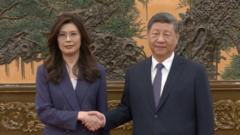
In a significant development for regional diplomacy, Kuomintang (KMT) leader Cheng Li-wun met with Chinese President Xi Jinping in Beijing this Friday. The high-level summit marks the most substantial engagement between the mainland leadership and Taiwan’s primary opposition party since 2016, signaling a potential shift in the communication landscape between the two sides.
During the discussions held at the Great Hall of the People, the conversation centered on the preservation of regional stability. President Xi signaled an openness to broadening dialogue with Taiwanese political entities, provided they maintain a firm stance against formal independence. In response, Cheng emphasized the 1992 Consensus, framing it as an essential diplomatic tool for reducing friction and fostering a more predictable, peaceful environment for the region.
The meeting has triggered immediate political friction within Taiwan. The ruling Democratic Progressive Party (DPP) has criticized the summit, arguing that the KMT’s engagement strategy is overly conciliatory toward Beijing. DPP representatives contend that relying on the 1992 Consensus undermines Taiwan’s sovereignty and ignores the prevailing public sentiment, which favors maintaining the current status quo over closer political integration.
This diplomatic encounter occurs against a backdrop of heightened geopolitical tension, as Beijing continues to view the current Taiwanese administration with suspicion. The summit highlights a deepening internal divide in Taiwan regarding the best path forward for cross-strait relations, forcing a difficult balancing act between pursuing economic stability and safeguarding the island’s self-governed democratic status.
Key Takeaways
- KMT leader Cheng Li-wun held a rare high-level meeting with President Xi Jinping in Beijing to discuss regional stability.
- The discussions centered on the 1992 Consensus as a framework for de-escalating tensions, provided there is opposition to Taiwanese independence.
- The meeting has caused significant political backlash in Taiwan, with the ruling DPP party accusing the KMT of compromising national sovereignty.
Editor’s Analysis & Impact
The meeting between the KMT and Beijing represents a calculated attempt to re-establish a communication channel that has been largely dormant for nearly a decade. By engaging directly with the mainland, the KMT is positioning itself as the primary alternative to the DPP’s current policy, aiming to appeal to voters concerned about the economic and security risks of continued cross-strait hostility. However, this strategy carries significant political risk; in an era of heightened Taiwanese national identity, any perceived alignment with Beijing can be a liability at the ballot box. The broader implication is a sharpening of the domestic debate in Taiwan, where the electorate must decide between the promise of stability through dialogue and the preservation of autonomy through a more cautious, defensive posture. This development will likely influence regional security dynamics and the strategic calculations of international stakeholders monitoring the Taiwan Strait.
Frequently Asked Questions
Q: What is the 1992 Consensus?
A: The 1992 Consensus is a term used to describe a meeting between representatives of the mainland and Taiwan in 1992, where both sides reached an understanding that there is only 'one China,' though they maintain different interpretations of what that means.
Q: Why is the DPP opposed to this meeting?
A: The Democratic Progressive Party (DPP) argues that the 1992 Consensus is outdated and that engaging with Beijing under these terms threatens Taiwan's sovereignty and democratic self-governance.
AI Disclosure: This article is based on verified data and official reports. Our Team and AI have cross-referenced every financial detail with primary sources to ensure total accuracy.
More from this Category