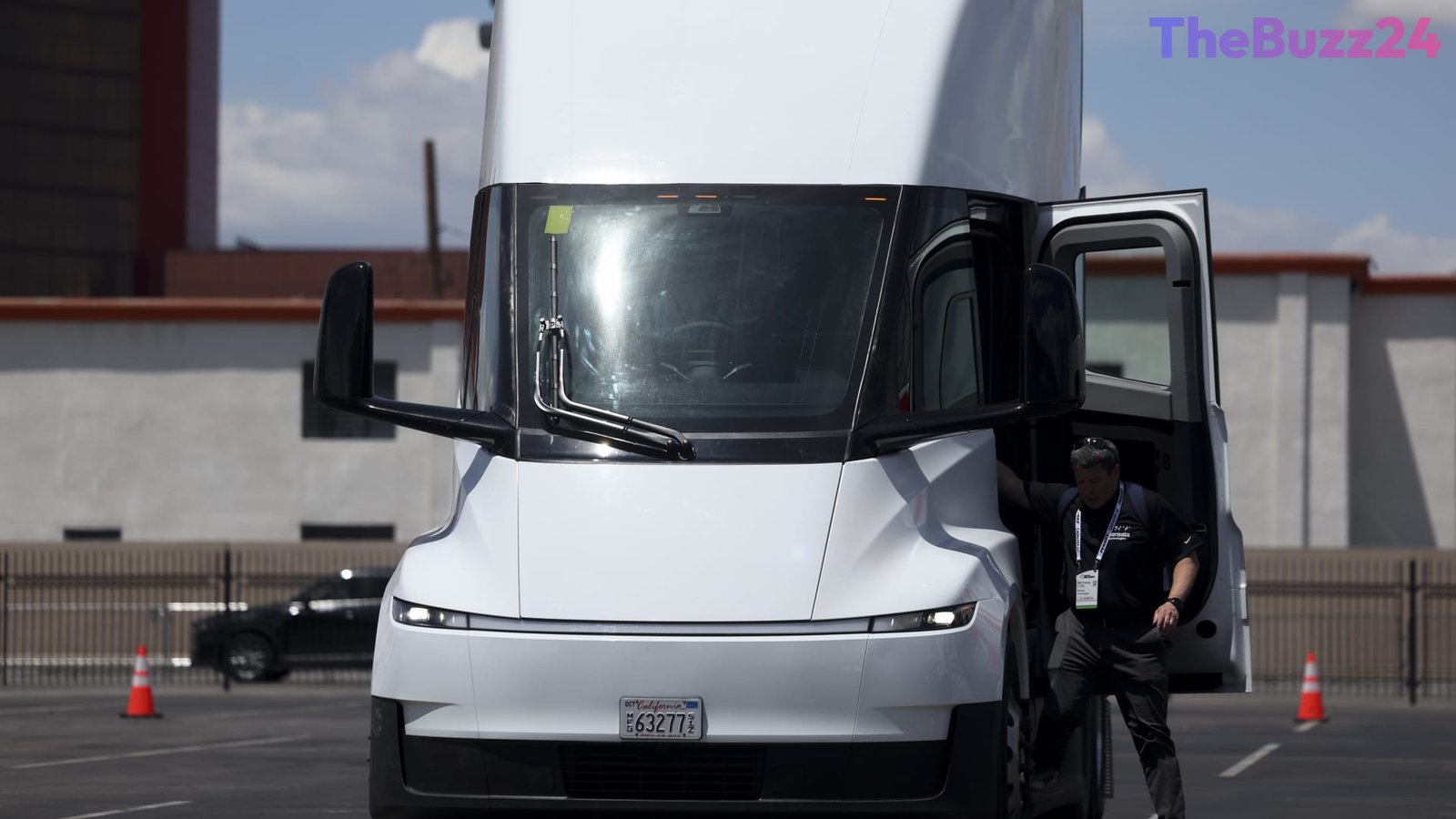
Tesla Accelerates Heavy-Duty Ambitions with New Nevada Semi Factory
Tesla has officially inaugurated its first dedicated production facility for the Semi, the company’s heavy-duty electric truck, in Sparks, Nevada. This milestone marks a significant shift in strategy as the automaker seeks to expand its footprint beyond passenger vehicles and into the commercial logistics sector. During the ribbon-cutting event, company leadership outlined an ambitious production target of 50,000 units annually, a move expected to generate over 3,000 jobs in the region as the facility ramps up operations.
Since its initial unveiling in 2017, the Semi has seen limited deployment, primarily through early partnerships with major corporations like PepsiCo. However, the company is now securing significant commercial interest, including a recent commitment from the industry coalition ZET SCALE for 2,500 units and an order for 500 trucks from logistics firm Einride. With the long-range variant offering an estimated 500 miles of range per charge, Tesla is positioning the vehicle as a viable, low-maintenance alternative to traditional diesel-powered rigs, citing a 98% uptime rate in current fleet operations.
Looking ahead, the company is prioritizing the integration of its Full Self-Driving (FSD) technology into the Semi platform. Leadership emphasized that autonomous capabilities are critical to addressing the ongoing shortage of commercial truck drivers in the United States. While competitors such as Aurora Innovation and Kodiak Robotics are already testing driverless systems on public roads, Tesla aims to deploy its own autonomous solutions in the near future, potentially by late 2025 or early 2026, as it prepares to compete in both the North American and European heavy-transport markets.
Key Takeaways
- Tesla has opened a dedicated factory in Nevada with a production goal of 50,000 Semi trucks per year.
- Major commercial orders, including a 2,500-unit commitment from ZET SCALE, signal growing market demand for electric heavy-duty transport.
- The company plans to integrate Full Self-Driving technology into the Semi to help mitigate the national shortage of commercial truck drivers.
Editor’s Analysis & Impact
The opening of the Nevada Semi factory represents a pivotal moment for Tesla as it attempts to diversify its revenue streams amid cooling demand for its passenger EV lineup. By entering the commercial trucking sector, Tesla is targeting a high-impact market where the total cost of ownership—driven by fuel savings and reduced maintenance—is a primary motivator for fleet operators. However, the company faces stiff competition from established legacy manufacturers like Volvo and Daimler, as well as agile autonomous-tech startups. The success of this venture will hinge on Tesla’s ability to scale manufacturing efficiently and, more importantly, deliver on its promise of autonomous trucking. If Tesla can successfully deploy FSD in a commercial capacity, it could fundamentally disrupt the logistics industry, though the company’s history of aggressive timelines suggests that regulatory and technical hurdles remain significant risks.
Frequently Asked Questions
Q: What is the estimated range of the Tesla Semi?
A: The Tesla Semi is available in two variants: a standard version with an estimated 325-mile range and a long-range version capable of traveling approximately 500 miles on a single charge.
Q: Why is Tesla focusing on autonomous technology for its trucks?
A: Tesla views autonomous driving as a critical solution to the persistent shortage of commercial truck drivers in the United States, aiming to improve efficiency and safety in the logistics industry.
AI Disclosure: This article is based on verified data and official reports. Our Team and AI have cross-referenced every financial detail with primary sources to ensure total accuracy.
More from this Category