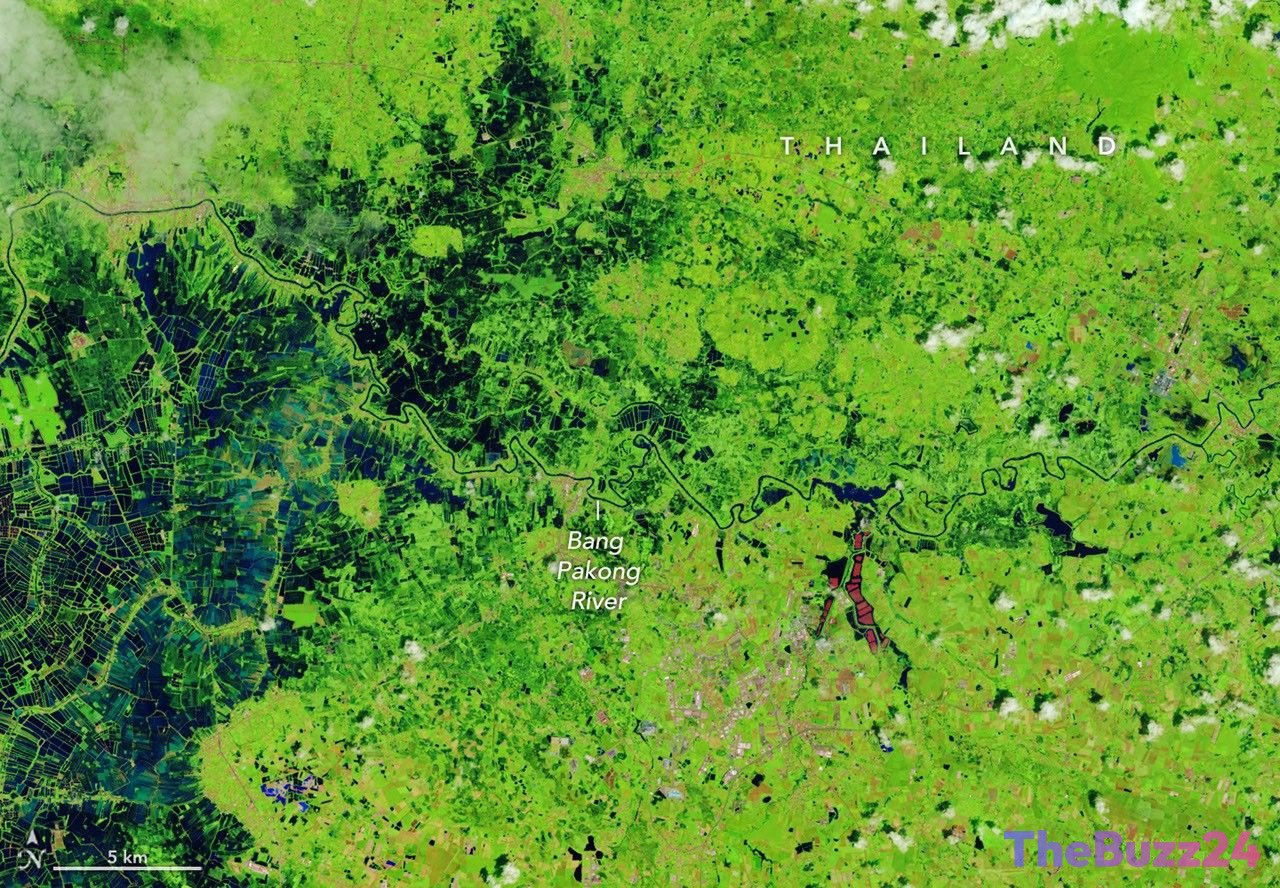
Thailand Grapples with Widespread Devastating Monsoon Floods
Thailand experienced extensive and severe flooding across numerous provinces in late September and early October 2026, as persistent heavy monsoon rains, punctuated by intense downpours, overwhelmed low-lying areas. While the country is accustomed to seasonal rains, the intensity and duration of this event led to significant inundation, particularly in agricultural regions and population centers.
Among the hardest-hit areas was Prachin Buri province, where land along the Bang Pakong River and surrounding agricultural and aquacultural facilities were submerged. The deluge was largely attributed to a low-pressure system that stalled over the region for several days. This system, fueled by moisture and energy from the warm Gulf of Thailand, delivered exceptionally heavy rainfall. For instance, Bangkok, located approximately 100 kilometers to the west, recorded nearly 300 millimeters (11.8 inches) of rain over a 48-hour period, a figure close to its average monthly rainfall for September.
The humanitarian and economic toll of the floods has been substantial. Since mid-September, the disaster has impacted 50 provinces across Thailand, affecting over 4 million people and resulting in dozens of fatalities. Government assessments indicate that approximately 270,000 hectares (670,000 acres) of vital farmland, including rice fields and fruit orchards, have been damaged, posing a significant threat to local livelihoods and food security.
Key Takeaways
- Thailand experienced severe, widespread flooding in late 2026, impacting 50 provinces due to persistent heavy monsoon rains.
- A stalled low-pressure system, drawing moisture from the Gulf of Thailand, caused exceptional rainfall, with Bangkok receiving nearly 300 mm in 48 hours.
- The floods affected over 4 million people, caused dozens of deaths, and damaged approximately 270,000 hectares of crucial farmland.
Editor’s Analysis & Impact
The extensive flooding in Thailand highlights the increasing vulnerability of Southeast Asian nations to extreme weather events, potentially exacerbated by climate change. The significant damage to agricultural land, particularly rice fields and fruit orchards, will likely have a ripple effect on local food supply chains, potentially leading to price increases and impacting the livelihoods of millions of farmers. Economically, the recovery efforts will strain provincial and national budgets, diverting resources from other development initiatives. This event underscores the urgent need for enhanced flood management infrastructure, early warning systems, and climate adaptation strategies to build resilience in vulnerable communities. The long-term implications could include population displacement and increased migration if such events become more frequent or severe.
Frequently Asked Questions
Q: What caused the severe flooding in Thailand in late 2026?
A: The severe flooding was primarily caused by persistent heavy monsoon rains and an intense low-pressure system that stalled over the region in late September and early October 2026. This system drew significant moisture from the warm Gulf of Thailand, leading to exceptional rainfall.
Q: How many people and how much land were affected by the floods?
A: The floods impacted over 4 million people across 50 provinces and resulted in dozens of fatalities. Approximately 270,000 hectares (670,000 acres) of farmland, including vital rice fields and fruit orchards, suffered damage.
Q: Which specific areas were most heavily impacted by the flooding?
A: Prachin Buri province, particularly areas along the Bang Pakong River, experienced widespread inundation. Bangkok also recorded nearly 300 millimeters of rain in a 48-hour period, close to its average monthly total for September.
AI Disclosure: This article is based on verified data and official reports. Our Team and AI have cross-referenced every financial detail with primary sources to ensure total accuracy.
More from this Category