The Data Bottleneck: Startup XDOF Secures $70 Million to Fuel the Robotics AI Revolution
As major AI laboratories pivot back toward robotics, a significant hurdle has emerged: the lack of high-quality, large-scale training data. While language models have benefited from the vast expanse of text available on the internet, robots require complex, physical interaction data that is currently scarce. To address this, a new startup called XDOF has emerged from stealth with $70 million in funding to build the essential infrastructure for the next generation of physical AI.
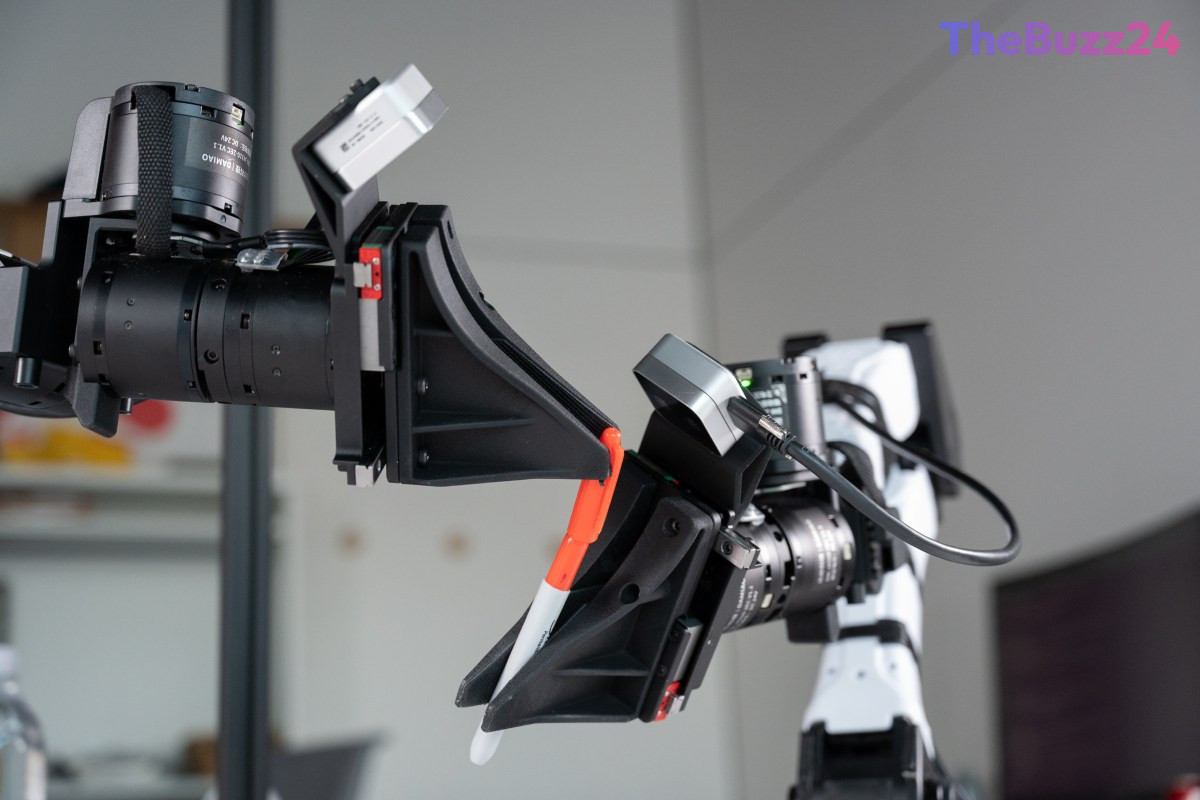
Founded by Philipp Wu, Fred Shentu, and Nemo Jin, XDOF aims to solve the ‘chicken-and-egg’ problem of robotics development. The company provides a comprehensive ecosystem that includes data pipelines, collection tools, and annotation systems. By leveraging teleoperation technology—where human operators control robotic arms to generate precise movement data—XDOF is creating the foundational datasets necessary for robots to learn complex tasks, such as folding laundry or manipulating small objects.
The company is already working with 20 customers, including several prominent AI labs, to streamline the labor-intensive process of data collection. To jumpstart the industry, XDOF is partnering with UC Berkeley’s AI Research lab to release ‘ABC,’ a massive collection of robot manipulation data that includes 130,000 trajectories. This initiative is designed to provide the academic and commercial communities with the high-fidelity data required to train foundation models for physical environments.
Beyond software, XDOF is tackling the logistical challenges of physical data collection, including the development of wearable sensors and the management of large-scale teleoperation facilities. By outsourcing the complex, unglamorous work of data production, XDOF allows major AI labs to focus on model architecture while ensuring they have the high-quality inputs needed to avoid falling behind in the race toward advanced physical AI.
Key Takeaways
- XDOF has raised $70 million to provide the specialized data infrastructure and annotation services required to train physical AI robots.
- The company is releasing the 'ABC' dataset, a massive collection of 130,000 robot manipulation trajectories, to accelerate research and development in the field.
- XDOF addresses the industry's 'data bottleneck' by managing the complex, labor-intensive physical operations that most AI labs prefer to outsource.
Editor’s Analysis & Impact
The emergence of XDOF signals a critical shift in the AI industry: the transition from digital intelligence to physical agency. As the ‘low-hanging fruit’ of text-based training data is exhausted, the competitive advantage in AI will increasingly depend on proprietary, high-fidelity physical data. XDOF’s business model is strategically positioned to capitalize on this shift by becoming the ‘data refinery’ for the robotics sector. By standardizing data collection and annotation, they are effectively lowering the barrier to entry for companies attempting to build humanoid or industrial robots. If successful, XDOF could become the essential utility provider for the robotics industry, similar to how cloud providers became the backbone of the software-as-a-service era. The future outlook for this sector is bullish, as the demand for physical AI is expected to skyrocket across manufacturing, logistics, and domestic services.
Frequently Asked Questions
Q: Why is it so difficult to collect training data for robots compared to language models?
A: Language models can be trained on existing text from the internet. Robots, however, require data that captures physical interaction in the real world, which is not readily available and requires specialized hardware and human teleoperation to generate.
Q: What does the name XDOF stand for?
A: The name is a play on the robotics term 'degrees of freedom,' which refers to the number of independent motions a robot can perform. The 'X' represents the company's goal of enabling 'unlimited degrees of freedom' for robotic systems.
AI Disclosure: This article is based on verified data and official reports. Our Team and AI have cross-referenced every financial detail with primary sources to ensure total accuracy.
More from this Category