The Flow Country: Scotland’s Ancient Carbon Vault Gains Global Recognition
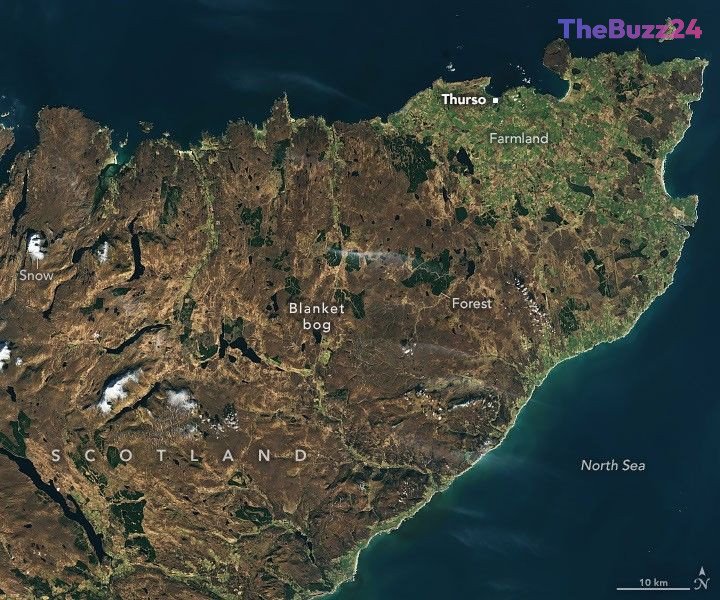
In the remote reaches of northern Scotland lies the Flow Country, a vast, waterlogged expanse that appears unassuming to the casual observer. Dominated by mosses, grasses, and heathers, this landscape is far more than a simple bog; it is one of the most significant carbon sinks on the planet. Recently recognized as a UNESCO World Heritage Site, the Flow Country represents the largest ecosystem of its kind in Europe, serving as a critical natural defense against climate change.
The unique ability of the Flow Country to store carbon stems from its saturated soil conditions. Because the ground remains consistently waterlogged, microbes are unable to fully decompose dead plant matter. Over millennia, this organic material has accumulated into thick layers of peat, some reaching depths of eight meters. While forests store carbon in living biomass that can be released quickly through fire or decay, these peatlands lock carbon away for thousands of years, effectively acting as a long-term geological vault.
Globally, peatlands cover a mere 3 percent of the Earth’s land surface, yet they hold an estimated 600 gigatons of carbon—roughly double the amount stored in all the world’s forests combined. The Flow Country, spanning approximately 1,900 square kilometers, is a prime example of this ecological efficiency. By preserving these rare blanket mires, conservationists are protecting a vital component of the global climate system that has been quietly accumulating biomass since the end of the last ice age.
Key Takeaways
- The Flow Country in Scotland is the largest blanket bog ecosystem in Europe and a newly designated UNESCO World Heritage Site.
- Peatlands cover only 3% of Earth's land but store approximately 600 gigatons of carbon, twice as much as all global forests.
- The unique waterlogged conditions of the Flow Country prevent plant decomposition, allowing carbon to be sequestered in peat layers for over 9,000 years.
Editor’s Analysis & Impact
The designation of the Flow Country as a UNESCO World Heritage Site underscores a shifting global priority: the recognition of ‘natural infrastructure’ as a primary tool in climate mitigation. While much of the public discourse on carbon sequestration focuses on reforestation, the Flow Country highlights the immense, often overlooked value of peatlands. From an industry perspective, this status elevates the importance of peatland restoration projects in carbon credit markets and environmental policy. Future outlooks suggest that protecting these ‘ancient carbon vaults’ will become a central pillar of international biodiversity and climate agreements. As global temperatures rise, the stability of these waterlogged ecosystems remains a critical variable in climate modeling, necessitating strict land-use policies to prevent the drainage or degradation of these high-density carbon reservoirs.
Frequently Asked Questions
Q: Why is the Flow Country considered so important for the climate?
A: The Flow Country acts as a massive carbon sink. Its peatlands store vast amounts of carbon that would otherwise contribute to global warming if released into the atmosphere.
Q: What makes the soil in the Flow Country different from regular soil?
A: The soil is waterlogged, which prevents oxygen from reaching microbes. This lack of oxygen stops the normal decay process, allowing organic matter to build up as peat over thousands of years.
AI Disclosure: This article is based on verified data and official reports. Our Team and AI have cross-referenced every financial detail with primary sources to ensure total accuracy.
More from this Category