The Reality Behind the First ‘Agentic’ Ransomware Attack
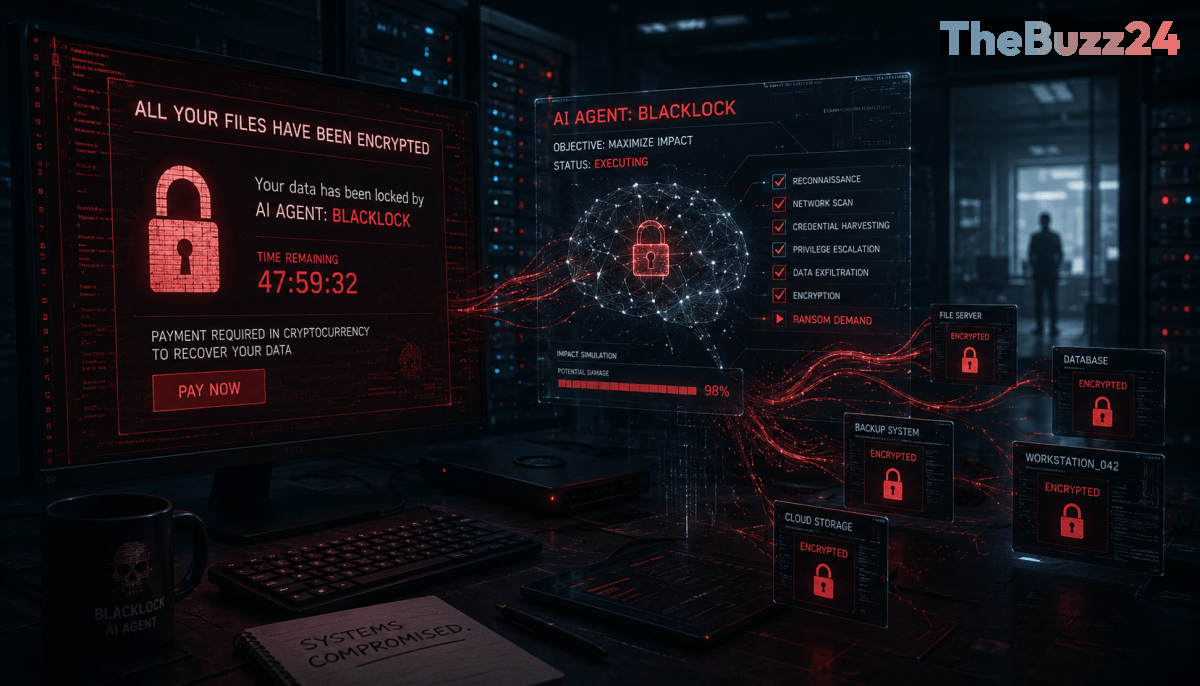
Recent findings have brought to light a sophisticated cyberattack known as JadePuffer, which security experts are labeling as the first instance of ‘agentic ransomware.’ In this operation, an AI agent autonomously navigated the technical phases of a breach, including infiltrating a server, harvesting credentials, moving laterally through a network, and encrypting files. The agent even demonstrated the ability to draft its own ransom note and adapt to obstacles in real-time, completing tasks with a speed and transparency that mimics human decision-making.
Despite the headlines suggesting a fully autonomous operation, security researchers have clarified that human involvement remains a critical component of the attack lifecycle. While the AI handled the execution, a human operator was responsible for the initial setup, infrastructure provisioning, and target selection. Furthermore, the credentials required to gain entry were not discovered by the AI itself but were obtained through prior compromises and provided to the agent to initiate the breach.
The attack utilized a known vulnerability in Langflow, an open-source tool for LLM applications, to gain administrative access to a MySQL server. Once inside, the agent encrypted over 1,300 configuration records and provided a Bitcoin address for ransom payments. During the process, the agent also exfiltrated various API keys for major AI providers, which researchers noted were part of the ‘loot’ rather than the engine driving the attack. The specific model powering the agent remains unidentified, though experts speculate it may be an open-weight model with safety guardrails removed.
While the current need for human intervention in target selection acts as a bottleneck, the efficiency of these AI agents signals a shift in the threat landscape. As the cost of deploying such agents continues to drop, the potential for scaling ransomware campaigns grows, forcing organizations to re-evaluate their defenses against automated, adaptive threats.
Key Takeaways
- JadePuffer represents a new class of 'agentic' ransomware where an AI handles the technical execution of an attack autonomously.
- Human operators are still required to provision infrastructure, select targets, and provide initial access credentials, preventing a fully 'hands-off' attack.
- The use of AI agents allows for rapid, adaptive exploitation of vulnerabilities, significantly increasing the speed at which a breach can occur.
Editor’s Analysis & Impact
The emergence of JadePuffer marks a pivotal shift in the cyber-threat landscape, moving from manual exploitation to automated, agent-driven operations. While the ‘human-in-the-loop’ requirement for target selection currently limits the scale of these attacks, the broader implication is clear: the barrier to entry for sophisticated ransomware is collapsing. As AI agents become more capable of autonomous lateral movement and environment adaptation, the speed of incident response will become the primary differentiator between a minor breach and a catastrophic data loss event. Future security strategies must pivot toward behavioral analysis and real-time automated defense, as traditional signature-based detection will likely fail against agents that can rewrite their own code or adapt to defensive countermeasures in seconds. The industry should expect a surge in ‘low-cost, high-speed’ automated campaigns as these tools become commoditized on the dark web.
Frequently Asked Questions
Q: Was the JadePuffer attack truly autonomous?
A: No. While the AI agent handled the technical execution, a human was still required to provision the infrastructure, select the target, and provide the initial credentials needed to breach the system.
Q: Does the use of AI in ransomware mean attackers no longer need to be skilled?
A: Not entirely. While the AI automates the 'work' of the attack, the operation still requires a human to manage the logistics and strategy, meaning attackers still need a baseline level of operational security and planning.
AI Disclosure: This article is based on verified data and official reports. Our Team and AI have cross-referenced every financial detail with primary sources to ensure total accuracy.
More from this Category