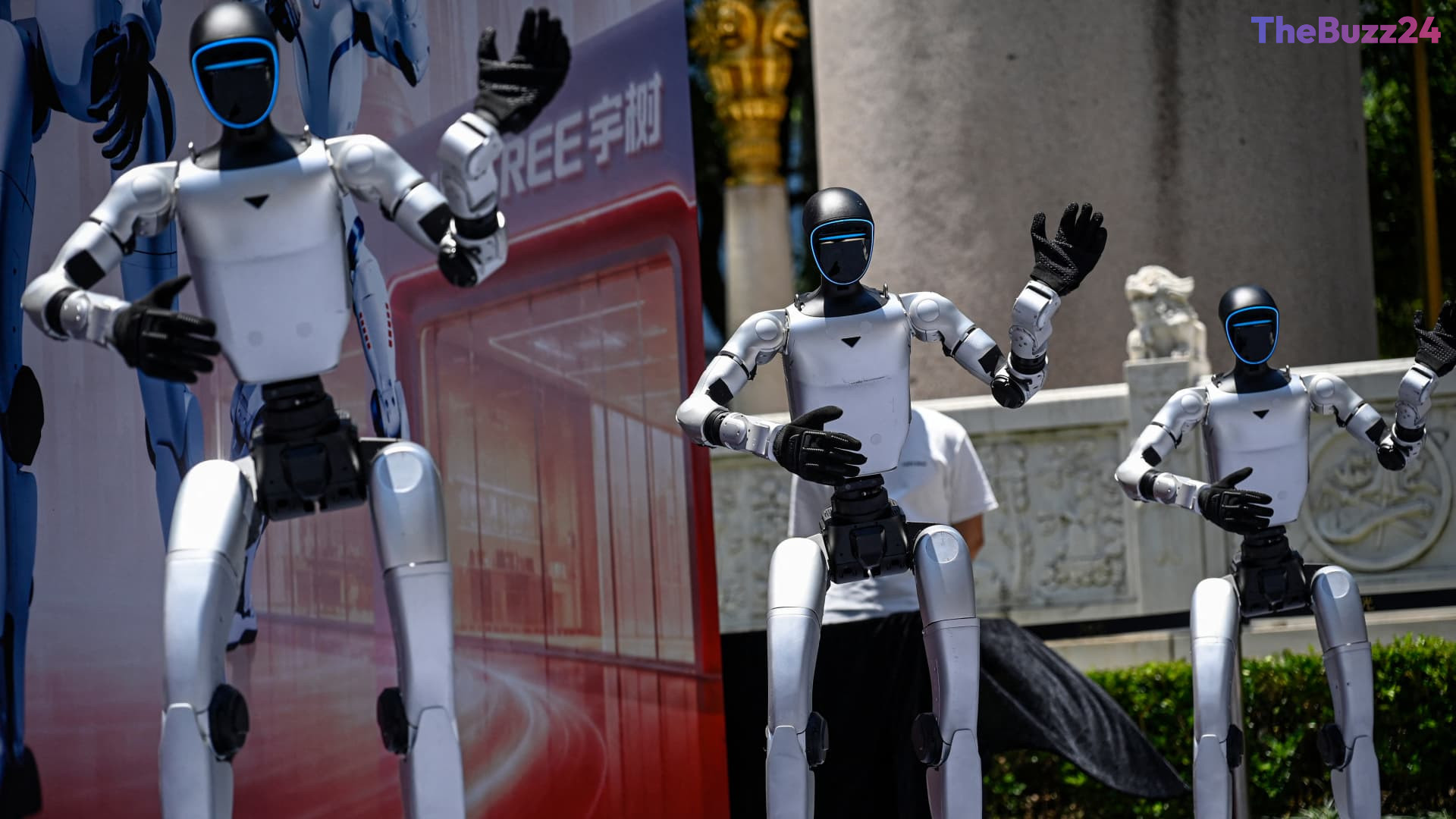
The Rise of the Machines: Why Humanoid Robotics is Poised for a Trillion-Dollar Boom
The global landscape of labor and automation is on the precipice of a seismic shift as humanoid robotics transitions from science fiction to industrial reality. Analysts project that the market for these machines, which are designed to replicate human movement and dexterity, could surge from its current multi-billion dollar valuation to a staggering $200 billion by 2035. Industry experts suggest that the long-term economic potential of physical AI could eventually reach into the trillions, fundamentally altering how businesses and households function.
Currently, the sector is experiencing its first wave of deployment, primarily focused on manufacturing, logistics, and construction. These robots are increasingly filling critical labor gaps caused by aging populations and a shrinking workforce, particularly in roles characterized as ‘dirty, dull, or dangerous.’ As the technology matures, a second wave of adoption is expected after 2030, moving into service-oriented sectors such as healthcare, education, and hospitality, where the majority of Western economic growth is generated.
While the United States is making significant strides—most notably through high-profile projects like Tesla’s Optimus—China currently maintains a dominant position in the global robotics ecosystem. By leveraging lower production costs and a massive industrial base, China has become the world’s primary laboratory for robotics, accounting for the vast majority of recent installations. As hardware and software capabilities continue to converge, investors are increasingly looking toward the tech sector as the primary vehicle for capturing the value created by this impending robotics revolution.
Key Takeaways
- The humanoid robotics market is projected to grow to $200 billion by 2035, with long-term potential reaching into the trillions.
- Deployment is occurring in two phases: industrial and logistics roles currently, followed by service and healthcare applications after 2030.
- China currently leads the world in robot density and production, while the U.S. continues to develop its own competitive offerings like Tesla's Optimus.
Editor’s Analysis & Impact
The transition toward humanoid robotics represents the next logical step in the AI revolution: the move from digital intelligence to physical agency. The economic implications are profound, as these machines offer a potential solution to the structural labor shortages plaguing developed economies. However, the industry faces significant hurdles, including the high cost of development, the need for real-time processing improvements, and the inevitable regulatory scrutiny regarding safety and workforce displacement. Investors are currently favoring companies that bridge the gap between hardware manufacturing and advanced software integration. As the technology moves from controlled factory environments into unpredictable service roles, the companies that can solve the ‘physical AI’ challenge will likely become the next generation of trillion-dollar market leaders. The competitive gap between China and the West will likely drive a new era of industrial policy focused on robotics sovereignty.
Frequently Asked Questions
Q: What are the primary industries currently using humanoid robots?
A: Currently, humanoid robots are primarily deployed in manufacturing, logistics, agriculture, and construction to handle repetitive or hazardous tasks.
Q: Why is China considered a leader in the robotics industry?
A: China is considered a leader due to its massive industrial scale, high robot density, and the ability to produce robotics hardware at roughly half the cost of Western competitors.
AI Disclosure: This article is based on verified data and official reports. Our Team and AI have cross-referenced every financial detail with primary sources to ensure total accuracy.
More from this Category