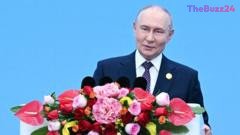
The Shenzhen Summit: Putin’s Strategic Bid for Global Legitimacy
In a significant shift from the international isolation that defined his standing in 2022, Russian President Vladimir Putin is set to participate in a landmark trilateral summit in Shenzhen. This meeting, featuring the leaders of China, Russia, and the United States, marks a historic moment in global diplomacy, placing Putin at the center of high-stakes negotiations alongside the world’s two most powerful nations. For the Kremlin, the summit serves as a powerful visual rebuttal to years of Western sanctions and diplomatic efforts aimed at sidelining Russia on the world stage.
While the meeting offers a major public relations victory for Moscow, it has sparked deep anxiety among European allies and Ukrainian officials. President Volodymyr Zelensky has voiced concerns that the summit could mirror the 1945 Yalta Conference, potentially leading to a redistribution of geopolitical influence that excludes key stakeholders. The prospect of Donald Trump and Xi Jinping discussing the war in Ukraine with Putin—without Ukrainian representation—has intensified fears that the conflict could be settled through a framework that ignores Kyiv’s sovereignty.
Despite the diplomatic optics, the reality on the ground remains starkly different. The summit coincides with ongoing military struggles for Russia, underscored by a recent, high-profile strike on the bridge connecting Russia to the Crimean Peninsula. This logistical and symbolic blow serves as a reminder that despite Putin’s efforts to project strength through international summits, the conflict in Ukraine remains a protracted and costly endeavor that has not yielded the decisive military victory the Kremlin originally envisioned.
Key Takeaways
- Vladimir Putin is leveraging a trilateral summit with Donald Trump and Xi Jinping to project global influence and signal the failure of Western isolation efforts.
- Ukrainian leadership fears the summit could result in a 'Yalta-style' agreement that redraws spheres of influence without their participation.
- The diplomatic summit contrasts with Russia's ongoing military difficulties, highlighted by recent successful Ukrainian strikes on critical infrastructure like the Crimean Bridge.
Editor’s Analysis & Impact
The Shenzhen summit represents a pivotal moment in 21st-century diplomacy, signaling a move toward a tri-polar power structure. By securing a seat at the table with the U.S. and China, Putin effectively neutralizes the narrative of Russian pariah status, regardless of the actual policy outcomes. For the global market, this signals a period of heightened geopolitical volatility; investors should anticipate shifts in trade alliances and potential changes in sanctions regimes depending on the nature of the ‘strategic stability’ discussions. The long-term implication is a potential return to ‘Great Power’ politics, where regional conflicts are increasingly managed by a small circle of leaders, potentially marginalizing international institutions and smaller nations. The future outlook remains uncertain, as the gap between diplomatic theater and military reality on the ground in Ukraine continues to widen, creating a fragile environment for global security.
Frequently Asked Questions
Q: Why is the Shenzhen summit considered a diplomatic victory for Russia?
A: It allows Vladimir Putin to demonstrate that he is still a central player in global politics, effectively countering years of Western efforts to isolate his administration following the invasion of Ukraine.
Q: What are the primary concerns regarding the trilateral meeting?
A: The primary concern, particularly from Ukraine, is that the three leaders might negotiate a settlement or a redistribution of influence regarding the war in Ukraine without the presence or consent of the Ukrainian government.
AI Disclosure: This article is based on verified data and official reports. Our Team and AI have cross-referenced every financial detail with primary sources to ensure total accuracy.
More from this Category