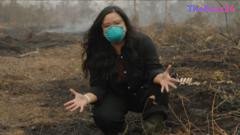
The Smoldering Crisis: Why Indonesia’s Peat Fires Defy Containment and Choke Southeast Asia
A severe and toxic haze continues to blanket millions of residents across Indonesia, casting a dense smog that has crossed international borders into neighboring nations including Singapore and Malaysia. This ongoing environmental emergency has raised urgent questions regarding the unique nature of these blazes and why they prove exceptionally difficult for emergency responders to extinguish.
At the heart of the crisis are vast expanses of peatlands, which are unique ecosystems composed of accumulated partially decayed organic matter spanning thousands of years. Unlike typical forest fires that consume surface vegetation, peat fires burn beneath the surface within layers of dried, carbon-rich soil. This underground combustion makes the fires notoriously resilient against traditional firefighting methods and rainfall.
The resulting thick, acrid smoke releases massive amounts of greenhouse gases and particulate matter into the atmosphere, posing severe public health risks and disrupting daily life across the region. Experts and environmental agencies continue to monitor the situation closely, emphasizing the urgent need for sustainable land management and long-term prevention strategies to protect these fragile carbon sinks from future destruction.
Key Takeaways
- Toxic haze from severe peat fires in Indonesia has spread to neighboring countries like Singapore and Malaysia, affecting millions.
- Peat fires burn underground within layers of ancient organic matter, making them uniquely resilient and difficult to extinguish.
- The ongoing environmental crisis poses significant public health risks and releases massive amounts of carbon into the atmosphere.
Editor’s Analysis & Impact
The persistent peatland fires in Indonesia represent a critical environmental and economic challenge for Southeast Asia. Beyond the immediate public health crises and cross-border diplomatic tensions caused by the haze, these subterranean fires release staggering volumes of stored carbon, accelerating global climate change. Traditional firefighting efforts often fail because surface dousing cannot reach the smoldering depths below. Consequently, the long-term economic and ecological outlook relies heavily on proactive policy shifts toward peatland restoration and strict agricultural burning bans. Investors and policymakers must recognize that preventing these disasters is not merely a regional emergency issue, but a vital component of global carbon mitigation strategies and sustainable regional development.
Frequently Asked Questions
Q: What makes peat fires different from normal forest fires?
A: Unlike regular forest fires that burn vegetation on the surface, peat fires burn underground within layers of decayed organic matter. This makes them smolder continuously and resist heavy rainfall and standard firefighting techniques.
Q: Why does the smoke from Indonesian peat fires affect other countries?
A: The sheer volume of toxic smoke generated by burning peatlands creates a dense haze that is easily carried across international borders by prevailing seasonal winds, impacting nations like Singapore and Malaysia.
AI Disclosure: This article is based on verified data and official reports. Our Team and AI have cross-referenced every financial detail with primary sources to ensure total accuracy.
More from this Category