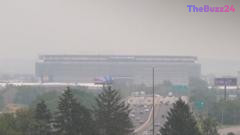
Thick Wildfire Smoke Engulfs New York City, Obscuring Iconic Landmarks
A dense blanket of wildfire smoke descended upon the New York City metropolitan area this week, creating hazardous air quality conditions that obscured some of the region’s most recognizable landmarks. The thick haze significantly reduced visibility, effectively hiding structures such as the Empire State Building and the Statue of Liberty from view, while also casting a somber, grey pall over the MetLife Stadium.
Environmental monitoring data indicated that air quality levels reached the ‘unhealthy’ range for the New York City metro area, while western regions of the state faced even more severe conditions, categorized as ‘very unhealthy.’ The atmospheric shift prompted many residents to return to wearing protective masks in an effort to mitigate the health risks associated with inhaling the fine particulate matter carried by the smoke.
Authorities have been monitoring the situation closely as the smoke, originating from distant wildfires, continues to drift across the region. The persistent haze has disrupted daily life and outdoor activities, serving as a stark reminder of the far-reaching environmental impacts of wildfire seasons occurring hundreds of miles away.
Key Takeaways
- Wildfire smoke has caused hazardous air quality levels across New York City and surrounding regions.
- Visibility has been severely compromised, with major landmarks like the Empire State Building obscured by the haze.
- Health officials have advised residents to take precautions, including the use of masks, due to the unhealthy air quality index.
Editor’s Analysis & Impact
The recent surge in wildfire smoke affecting major urban centers like New York City highlights a growing vulnerability in metropolitan infrastructure to climate-driven events. As wildfire seasons become more intense and prolonged, the economic and public health implications are becoming increasingly significant. Businesses and city planners must now account for ‘smoke days’ as a recurring disruption, similar to extreme weather events like hurricanes or blizzards. The broader implication is a shift in public health policy, where air quality management is no longer a localized concern but a regional necessity. Moving forward, we can expect increased investment in air filtration technology for public buildings and more sophisticated early-warning systems to protect urban populations from the long-term respiratory risks associated with recurring poor air quality events.
Frequently Asked Questions
Q: Why is the air quality in New York City currently so poor?
A: The poor air quality is primarily caused by smoke drifting from distant wildfires, which carries fine particulate matter into the atmosphere, reducing visibility and posing health risks.
Q: What precautions should residents take during these smoke events?
A: Health officials generally recommend staying indoors, keeping windows closed, using air purifiers, and wearing high-quality masks like N95s if going outside is necessary.
AI Disclosure: This article is based on verified data and official reports. Our Team and AI have cross-referenced every financial detail with primary sources to ensure total accuracy.
More from this Category