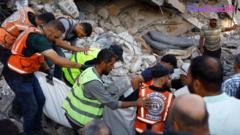
Tragedy in Gaza as Compromised Residential Building Collapses, Leaving Dozens Trapped
A devastating structural collapse of a war-damaged, six-storey building in the Tal al-Hawa neighborhood of Gaza City has resulted in the deaths of at least 21 individuals, including eight children. Emergency responders and international agencies have rushed to the site, racing against time as dozens of residents remain unaccounted for beneath the thick layers of concrete and twisted metal.
The ill-fated structure had previously suffered heavy structural damage during military strikes over a year prior, leaving it visibly leaning to one side. Despite the obvious hazards and ongoing warnings from locals, approximately ten displaced families sought refuge within the compromised apartments, driven by an acute shortage of secure housing alternatives in the war-torn enclave. Survivors and neighborhood residents described the harrowing collapse as feeling like an earthquake, followed immediately by frantic screams and thick clouds of dust in the early hours of Wednesday.
Rescue operations have been severely hampered by a critical lack of heavy machinery, specialized rescue gear, and basic equipment. Civil defense personnel and volunteers initially resorted to utilizing their bare hands and rudimentary tools to claw through the debris in hopes of reaching survivors. International organizations, including United Nations teams and assisting Egyptian squads, have stepped in to aid the search efforts. However, officials warn that hundreds of similarly damaged structures across the territory remain at imminent risk of failure, particularly with winter weather fast approaching, compounding the humanitarian crisis for the millions currently displaced in makeshift tents.
Key Takeaways
- At least 21 people, including eight children, were killed following the overnight collapse of a heavily damaged residential building in Gaza City.
- Roughly 10 displaced families were residing in the unstable structure due to a severe shortage of alternative shelter options.
- Rescue efforts are severely delayed by a lack of heavy machinery and essential equipment, prompting urgent calls for international aid.
Editor’s Analysis & Impact
The tragic collapse of the Tal al-Hawa building underscores the compounding infrastructure crisis within conflict zones, where damaged buildings present lingering, fatal threats long after active fighting subsides in a specific sector. With a vast majority of regional structures compromised and hundreds more deemed structurally unsafe, humanitarian agencies face an immense logistical and safety hurdle ahead of winter. The restriction on heavy machinery imports severely limits local civil defense capabilities, transforming routine structural failures into mass-casualty events. Moving forward, the international community faces mounting pressure to broker logistics agreements that prioritize civilian safety and structural remediation, mitigating preventable secondary casualties in densely populated displaced communities.
Frequently Asked Questions
Q: What caused the building in Gaza City to collapse?
A: The six-storey building had been severely weakened and left tilting to one side due to earlier war damage, making it structurally compromised before it finally gave way.
Q: Why were people living in a damaged building?
A: An acute shortage of safe housing and shelter options forced displaced families to move into the building despite clear warnings that it was unsafe.
Q: What are the main challenges facing rescue workers at the site?
A: Rescuers are severely hindered by a lack of heavy machinery, equipment, spare parts, and fuel, often forcing them to dig through the rubble with their bare hands.
AI Disclosure: This article is based on verified data and official reports. Our Team and AI have cross-referenced every financial detail with primary sources to ensure total accuracy.
More from this Category