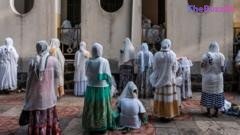
Tragedy in Oromia: Over 60 Killed in Devastating Assault on Ethiopian Religious Community
A devastating wave of violent assaults in Ethiopia’s Oromia region has left more than 60 people dead, marking one of the most lethal escalations of targeted violence in the area in recent years. The coordinated raids took place across three localities within the Shirka district, where armed attackers surrounded unsuspecting communities from multiple directions. Eyewitnesses reported that the assault resulted in the destruction of at least 20 homes, which were set ablaze during the siege, leaving numerous families displaced and triggering a widespread exodus of terrified residents.
Among the casualties were at least five children and an elderly man, whose family members recounted being caught completely unprepared by the ambush. While local security forces eventually arrived at the scene, they were unable to halt the swift and coordinated destruction. Regional government representatives strongly condemned the killings and pledged decisive action against the perpetrators, while local leadership linked the violence to the Alliance for Survival—a recently formed insurgent coalition that includes the Oromo Liberation Army (OLA). The OLA has historically denied involvement in attacks targeting civilians.
The Ethiopian Orthodox Tewahedo Church issued a formal statement expressing deep grief over the loss of life and warning that persistent violence threatens the nation’s foundational values of mutual respect and peaceful coexistence. Religious leaders noted that they have repeatedly raised alarms regarding deteriorating security conditions in Oromia, yet systemic solutions from federal and regional authorities remain elusive. Data from human rights advocacy groups indicates that over 450 people have been killed in similar targeted attacks across the district over the past four years, highlighting an escalating cycle of unrest.
Federal officials, including Prime Minister Abiy Ahmed, have previously accused insurgent groups of deliberately targeting religious institutions and civilian populations to undermine national stability. With Ethiopia’s demographics roughly divided between a Christian majority and a significant Muslim minority, recurring attacks on religious groups raise profound fears of broader communal instability across the Horn of Africa nation.
Key Takeaways
- More than 60 individuals, including children, were killed in coordinated attacks across Ethiopia's Shirka district in Oromia.
- At least 20 homes were destroyed, forcing widespread displacement as local security forces struggled to contain the violent assault.
- Church leaders and human rights bodies warn that rising targeted violence threatens national cohesion and stability across the region.
Editor’s Analysis & Impact
The brutal assault in Oromia highlights Ethiopia’s fragile security architecture and the deep-seated ethnic and religious fissures threatening its long-term stability. Despite ongoing military operations and political reform efforts led by Prime Minister Abiy Ahmed, insurgent factions like the Oromo Liberation Army and newly formed rebel coalitions continue to leverage structural vulnerabilities in peripheral districts. For international humanitarian organizations and neighboring East African nations, the persistent lawlessness in Oromia poses significant risks to regional economic integration and trade corridors. Moving forward, the Ethiopian federal government must move beyond reactive security measures and pursue comprehensive peace-building frameworks that address local grievances, enforce accountability, and protect vulnerable minority populations from targeted violence.
Frequently Asked Questions
Q: Where did the recent attacks in Ethiopia take place?
A: The attacks occurred across three localities within the Shirka district, located in the Oromia region of Ethiopia.
Q: Who has been blamed for the violence in the Oromia region?
A: Local officials have attributed the assault to the Alliance for Survival rebel coalition, which includes the Oromo Liberation Army (OLA), though the group has historically denied targeting civilians.
Q: What is the broader human rights impact of violence in this district?
A: Human rights monitoring groups report that over 450 people have been killed in targeted attacks within the region over the past four years, causing severe civilian displacement and heightened religious tensions.
AI Disclosure: This article is based on verified data and official reports. Our Team and AI have cross-referenced every financial detail with primary sources to ensure total accuracy.
More from this Category