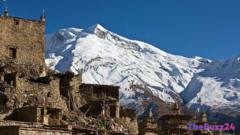
Tragedy in the Himalayas: Two Bodies Recovered After Avalanche Engulfs Climbing Camp
Rescuers have confirmed the recovery of two bodies following a devastating avalanche that struck a climbing expedition in the Nepalese Himalayas. The incident occurred on Sunday morning at the base camp of Himlung Himal peak, located in the Manang district.
An estimated dozen individuals, comprising Nepalese climbers and support staff, remain unaccounted for after a massive snow slide engulfed their camp. This group had been dispatched ahead of foreign climbers to establish the camp and prepare the climbing route by fixing ropes on the mountain. Recent weather forecasts had indicated significant snowfall in the vicinity of the 7,126-meter (23,380-foot) peak, which straddles Nepal’s border with Tibet.
Rescue operations have been severely hampered by adverse weather conditions, with initial efforts by helicopters and ground teams delayed due to the thick snow and poor visibility. A specialized team of experienced mountaineers was dispatched from Kathmandu, the Nepalese capital, but their work is expected to continue into Monday. The challenging conditions underscore the inherent risks associated with mountaineering in the region, particularly during periods of heavy precipitation.
This incident highlights the precarious nature of Nepal’s vital climbing tourism industry, which has faced increasing threats from extreme weather events. Earlier this week, climbers were forced to abandon an expedition on Mount Manaslu, the world’s eighth-highest peak, due to escalating avalanche risks. The recent loss of Nepalese lives adds to a series of climbing-related tragedies in the broader Himalayan region, underscoring the growing impact of climate change on these formidable mountains.
Key Takeaways
- Two bodies have been recovered after an avalanche hit a climbing camp on Himlung Himal in Nepal.
- Approximately a dozen Nepalese climbers and support staff are still missing.
- Poor weather conditions are significantly hindering rescue efforts, with operations expected to continue.
- The incident highlights the dangers faced by Nepal's climbing tourism industry due to extreme weather.
Editor’s Analysis & Impact
This tragic event underscores the increasing vulnerability of Himalayan mountaineering expeditions to extreme weather patterns, likely exacerbated by climate change. The disruption to Nepal’s crucial tourism sector, which relies heavily on climbing expeditions, is significant. The challenges faced by rescue teams due to adverse conditions also point to the need for enhanced preparedness and potentially more advanced forecasting and safety protocols in high-altitude environments. The incident serves as a stark reminder of the inherent dangers and the human cost associated with pushing the limits in some of the world’s most challenging terrains.
Frequently Asked Questions
Q: Where did the avalanche occur?
A: The avalanche occurred at the base camp of Himlung Himal peak in the Manang district of the Nepalese Himalayas.
Q: Who was affected by the avalanche?
A: The avalanche primarily affected a group of Nepalese climbers and support staff who were preparing the camp and route for foreign climbers.
Q: What challenges are hindering the rescue efforts?
A: Rescue efforts are being significantly hampered by poor weather conditions, including thick snow and low visibility, which have delayed helicopter and ground team access.
AI Disclosure: This article is based on verified data and official reports. Our Team and AI have cross-referenced every financial detail with primary sources to ensure total accuracy.
More from this Category