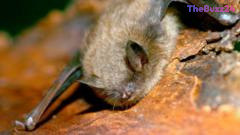
Tragic Rabies Death of Ontario Child Highlights Critical Need for Bat Exposure Awareness
A tragic incident in Ontario has resulted in the death of an 11-year-old boy following a rare encounter with a bat. While visiting a family cottage, the child awoke to find a bat on his face and swatted it away. Because the boy showed no visible signs of injury and the animal did not appear to be acting erratically, his parents did not initially seek medical intervention. However, the situation took a dire turn 19 days later when the boy began experiencing facial numbness and swelling.
Over the following days, the child’s condition deteriorated rapidly, leading to multiple visits to clinics and hospitals. Medical professionals initially struggled to identify the cause, misdiagnosing the symptoms as Bell’s palsy and later as a viral infection of the mouth and gums. As his health declined, he developed a high fever, difficulty swallowing, confusion, and visual hallucinations. He was eventually intubated and transferred to a pediatric intensive care unit, where doctors suspected rabies. Laboratory testing later confirmed the presence of a bat-variant rabies virus.
Despite intensive medical efforts, the boy passed away 17 days after his hospital admission. This case serves as a somber reminder of the lethality of the rabies virus once symptoms manifest. Health experts emphasize that any direct contact with a bat should be treated as a medical emergency requiring immediate post-exposure prophylaxis, regardless of whether a bite or scratch is visible. Rabies remains extremely rare in Canada, with fewer than 30 human cases recorded in the last century, largely due to robust vaccination programs.
Key Takeaways
- An 11-year-old boy died from rabies after a bat encounter that initially appeared harmless due to a lack of visible injuries.
- Symptoms of rabies, including facial numbness and fever, did not appear until 19 days after the initial contact with the animal.
- Medical experts stress that any direct contact with a bat requires immediate post-exposure prophylaxis, as the disease is nearly always fatal once symptoms develop.
Editor’s Analysis & Impact
This tragic case underscores a critical gap in public awareness regarding zoonotic diseases. While rabies is statistically rare in developed nations like Canada, the high mortality rate associated with the virus makes it a significant public health concern. The diagnostic challenges faced by medical staff in this instance highlight the difficulty of identifying rabies in its early stages, especially when the patient lacks a clear history of a bite or scratch. Moving forward, public health initiatives must prioritize education regarding the risks posed by bats, which are primary carriers of the virus. The incident serves as a stark reminder that in cases of potential exposure to high-risk wildlife, preventative medical intervention must be prioritized over waiting for clinical symptoms to emerge, as the window for effective treatment is extremely narrow.
Frequently Asked Questions
Q: Why is it dangerous to ignore a bat encounter even if there is no visible wound?
A: Bat bites and scratches can be extremely small and difficult to detect. Because rabies is almost 100% fatal once symptoms appear, medical professionals advise that any direct contact with a bat should be treated as a potential exposure requiring immediate post-exposure prophylaxis.
Q: What are the early symptoms of rabies in humans?
A: Early symptoms can be non-specific and flu-like, including fever, headache, and general weakness. As the virus progresses, symptoms may include numbness or tingling at the site of exposure, confusion, difficulty swallowing, hallucinations, and agitation.
AI Disclosure: This article is based on verified data and official reports. Our Team and AI have cross-referenced every financial detail with primary sources to ensure total accuracy.
More from this Category