Trump Calls for Trade Halt with Spain Amid Escalating NATO Defense Spending Dispute
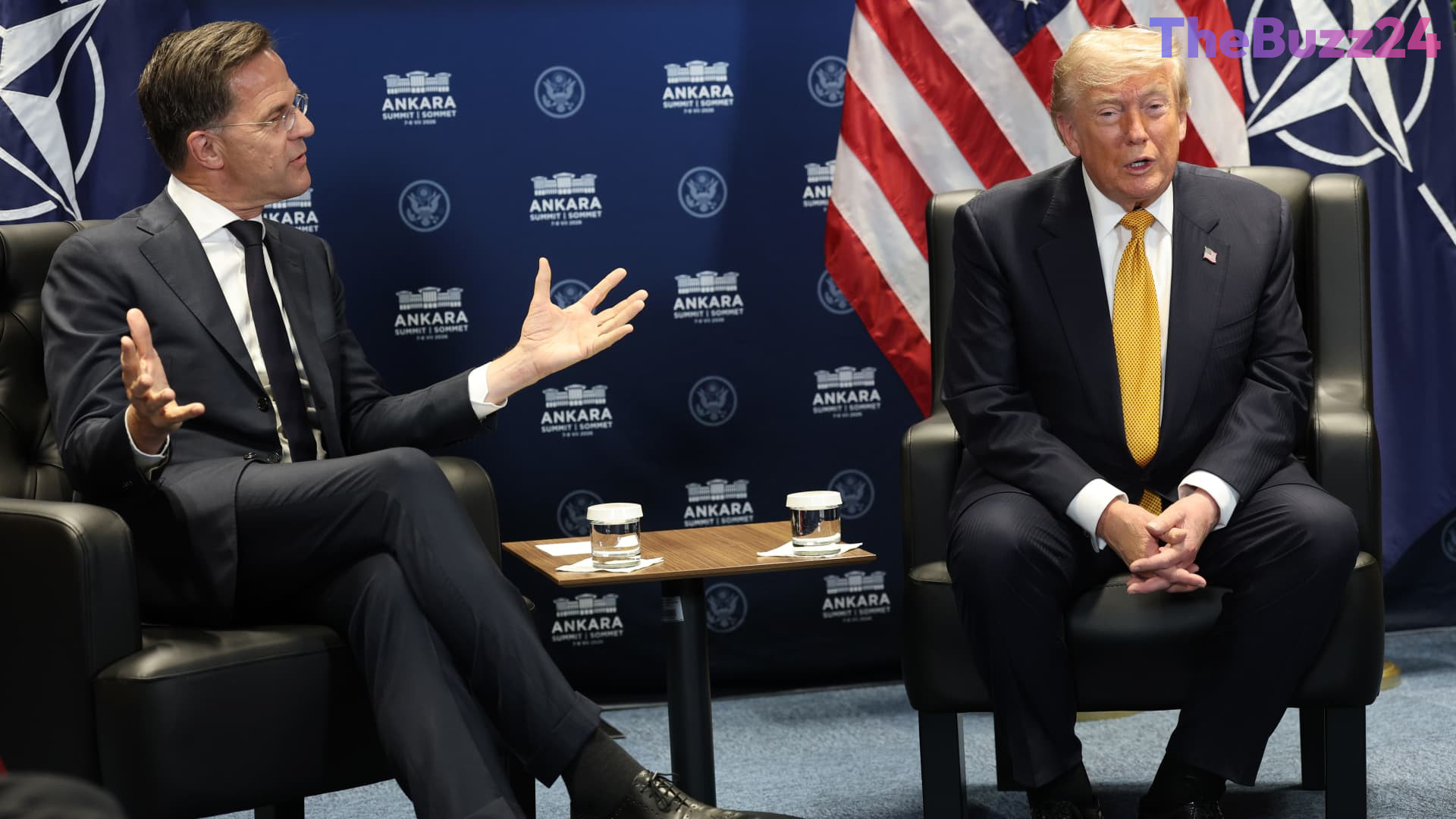
During a high-stakes summit in Ankara, Turkey, President Donald Trump issued a sharp rebuke of Spain, labeling the nation a ‘terrible partner’ within the NATO alliance. The President’s comments centered on Spain’s failure to meet aggressive new defense spending targets, specifically the commitment to allocate 5% of its gross domestic product to military capabilities by 2035. Trump went as far as to suggest a complete cessation of trade and diplomatic engagement with Madrid, citing the country’s perceived lack of participation in collective defense efforts.
The friction comes as NATO faces significant internal pressure regarding the financial contributions of its member states. While NATO Secretary-General Mark Rutte attempted to mitigate the tension by noting that Spain has increased its defense spending to 2.1% of its GDP—up from 1.4% in 2021—Trump remained unmoved, insisting that the current level of investment is insufficient. The Spanish government has responded to the rhetoric by maintaining that bilateral relations remain mutually beneficial and characterizing the President’s remarks as standard political posturing.
The diplomatic fallout has had immediate consequences for financial markets. Following the President’s comments, the Spanish IBEX 35 index saw a decline of over 2.8%, while yields on Spanish 10-year government bonds rose by nearly 10 basis points. The broader European Stoxx 600 index also retreated as investors reacted to the uncertainty surrounding both the trade threats and the President’s declaration that the ceasefire with Iran is effectively over.
Key Takeaways
- President Trump has threatened to cut off trade with Spain due to the country's failure to meet NATO's 5% GDP defense spending target by 2035.
- Despite NATO Secretary-General Mark Rutte's defense of Spain's recent spending increases, the President continues to demand higher financial commitments from the alliance.
- Financial markets reacted negatively to the rhetoric, with the Spanish IBEX 35 index falling 2.8% and bond yields rising significantly.
Editor’s Analysis & Impact
The escalating rhetoric between the White House and Madrid underscores a broader, systemic shift in U.S. foreign policy that prioritizes transactional defense commitments over traditional diplomatic norms. By linking trade policy directly to NATO spending targets, the administration is signaling a new era of ‘hard-power’ diplomacy that threatens to destabilize European markets. The immediate market volatility—specifically the sell-off in Spanish bonds and equities—demonstrates that investors are increasingly sensitive to geopolitical friction within the Atlantic alliance. If this ‘America First’ approach to defense funding continues, it risks creating a permanent rift within NATO, potentially forcing European nations to choose between increased fiscal austerity for military budgets or a decoupling from U.S. trade interests. The long-term outlook suggests a period of heightened economic uncertainty for European laggards in defense spending.
Frequently Asked Questions
Q: Why is President Trump targeting Spain specifically regarding NATO?
A: President Trump has singled out Spain because it is currently the only NATO member that has refused to commit to the alliance's goal of spending 5% of its GDP on defense by 2035.
Q: How has the Spanish government responded to the threats?
A: The Spanish prime minister's office has dismissed the comments as 'business as usual,' emphasizing that the bilateral relationship between the U.S. and Spain remains beneficial for both trade and defense.
AI Disclosure: This article is based on verified data and official reports. Our Team and AI have cross-referenced every financial detail with primary sources to ensure total accuracy.
More from this Category