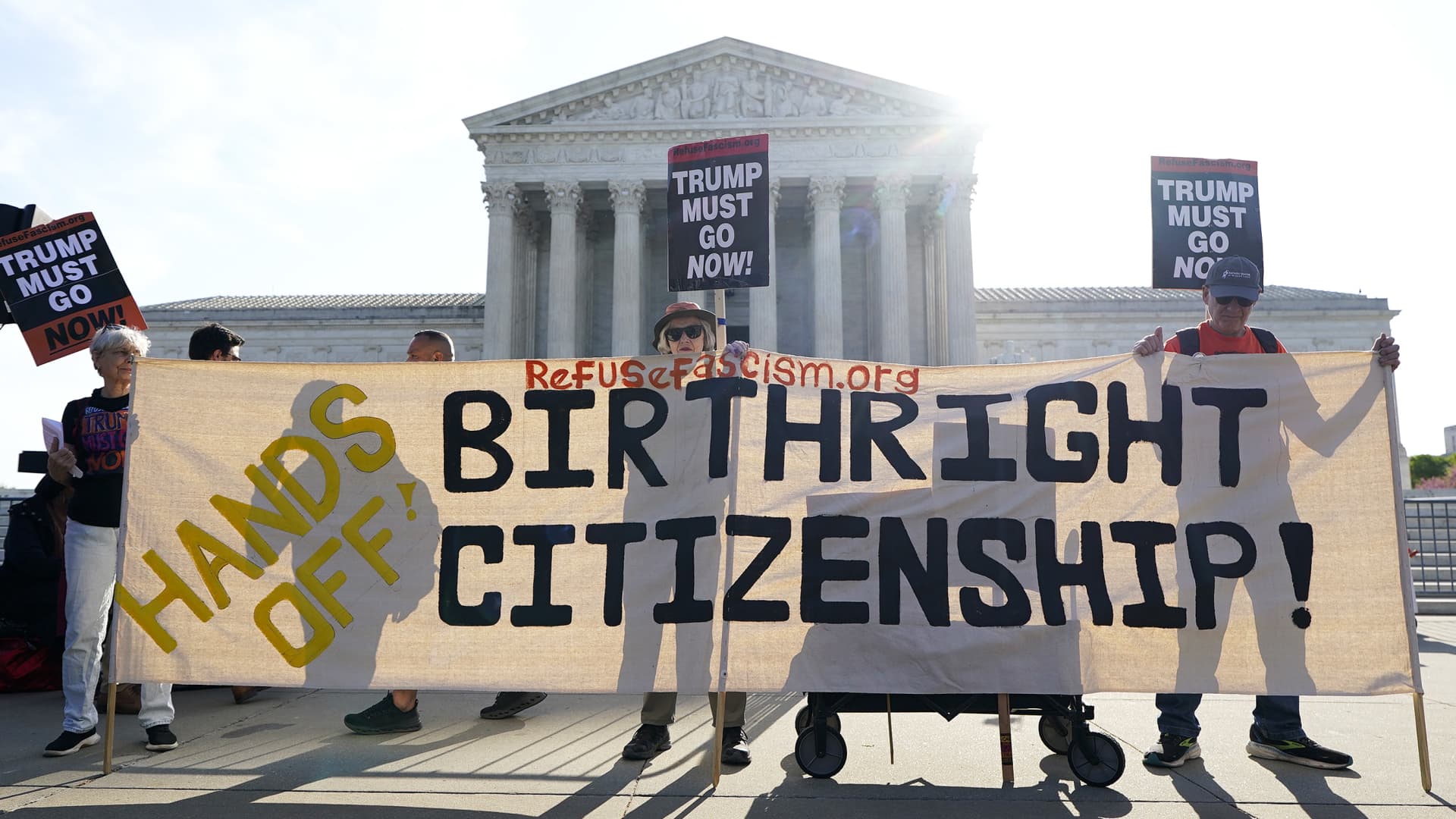
Supreme Court Weighs Constitutional Challenge to Birthright Citizenship
The U.S. Supreme Court has convened to hear arguments in a landmark legal battle that could fundamentally alter the nation’s approach to citizenship. At the center of the debate is a proposed executive order championed by former President Donald Trump, which seeks to end the long-standing practice of granting automatic citizenship to children born on U.S. soil if their parents are undocumented immigrants or temporary visitors. The proceedings drew significant attention, marked by the rare presence of the former president himself, highlighting the high stakes of the constitutional interpretation at play.
During the session, Solicitor General D. John Sauer argued on behalf of the proposed policy, suggesting that the current interpretation of the 14th Amendment serves as a magnet for illegal immigration and has facilitated a global industry of birth tourism. Sauer contended that the automatic conferral of citizenship undermines the value of American status, suggesting that the government should have the authority to restrict such rights for those without established ties to the country. This perspective aligns with concerns regarding national security and the potential for foreign nationals to exploit existing laws.
Conversely, legal advocates, including representatives from the American Civil Liberties Union, pushed back by citing the 14th Amendment’s clear mandate that all persons born in the United States are citizens. They pointed to the 1898 Supreme Court precedent in Wong Kim Ark, which solidified the principle that birthright citizenship applies regardless of parental status. Chief Justice John Roberts also signaled skepticism toward the government’s attempt to reinterpret the ‘subject to the jurisdiction thereof’ clause, questioning whether the narrow exceptions historically applied to diplomats or enemy combatants could be broadly expanded to include the millions of undocumented individuals currently residing in the country.
As the court deliberates, the potential impact of a ruling in favor of the executive order remains profound, threatening to disrupt over 150 years of established legal precedent. With federal courts having already issued injunctions against the policy, the Supreme Court’s final decision will serve as a definitive resolution on whether the executive branch possesses the authority to unilaterally redefine the constitutional requirements for American citizenship.
Key Takeaways
- The Supreme Court is reviewing a challenge to birthright citizenship, a policy that has been a cornerstone of U.S. law for over 150 years.
- The proposed executive order aims to deny citizenship to children of undocumented immigrants and temporary visitors, a move critics argue violates the 14th Amendment.
- Legal arguments center on the interpretation of the 'subject to the jurisdiction thereof' clause, with the government arguing it acts as a 'pull factor' for illegal immigration.
Editor’s Analysis & Impact
The legal challenge to birthright citizenship represents one of the most significant constitutional confrontations in modern American history. By attempting to bypass legislative channels through executive action, the proposal tests the boundaries of executive power versus the established interpretation of the 14th Amendment. If the Supreme Court were to side with the executive order, it would trigger a seismic shift in immigration policy, potentially creating a new class of stateless individuals and sparking years of litigation regarding the status of children born to non-citizens. The case highlights a deep ideological divide regarding the definition of national identity and the role of the judiciary in interpreting constitutional mandates. Regardless of the outcome, the case will likely serve as a focal point for future immigration reform debates and could influence the political landscape for years to come.
Frequently Asked Questions
Q: What is birthright citizenship?
A: Birthright citizenship is the legal principle, rooted in the 14th Amendment, that grants automatic citizenship to almost everyone born within the territory of the United States, regardless of their parents' citizenship status.
Q: What was the Supreme Court's 1898 ruling in Wong Kim Ark?
A: The Supreme Court ruled in Wong Kim Ark that the 14th Amendment guarantees citizenship to children born in the U.S. to foreign parents, establishing the precedent that birthright citizenship is a constitutional right.
AI Disclosure: This article is based on verified data and official reports. Our Team and AI have cross-referenced every financial detail with primary sources to ensure total accuracy.
More from this Category