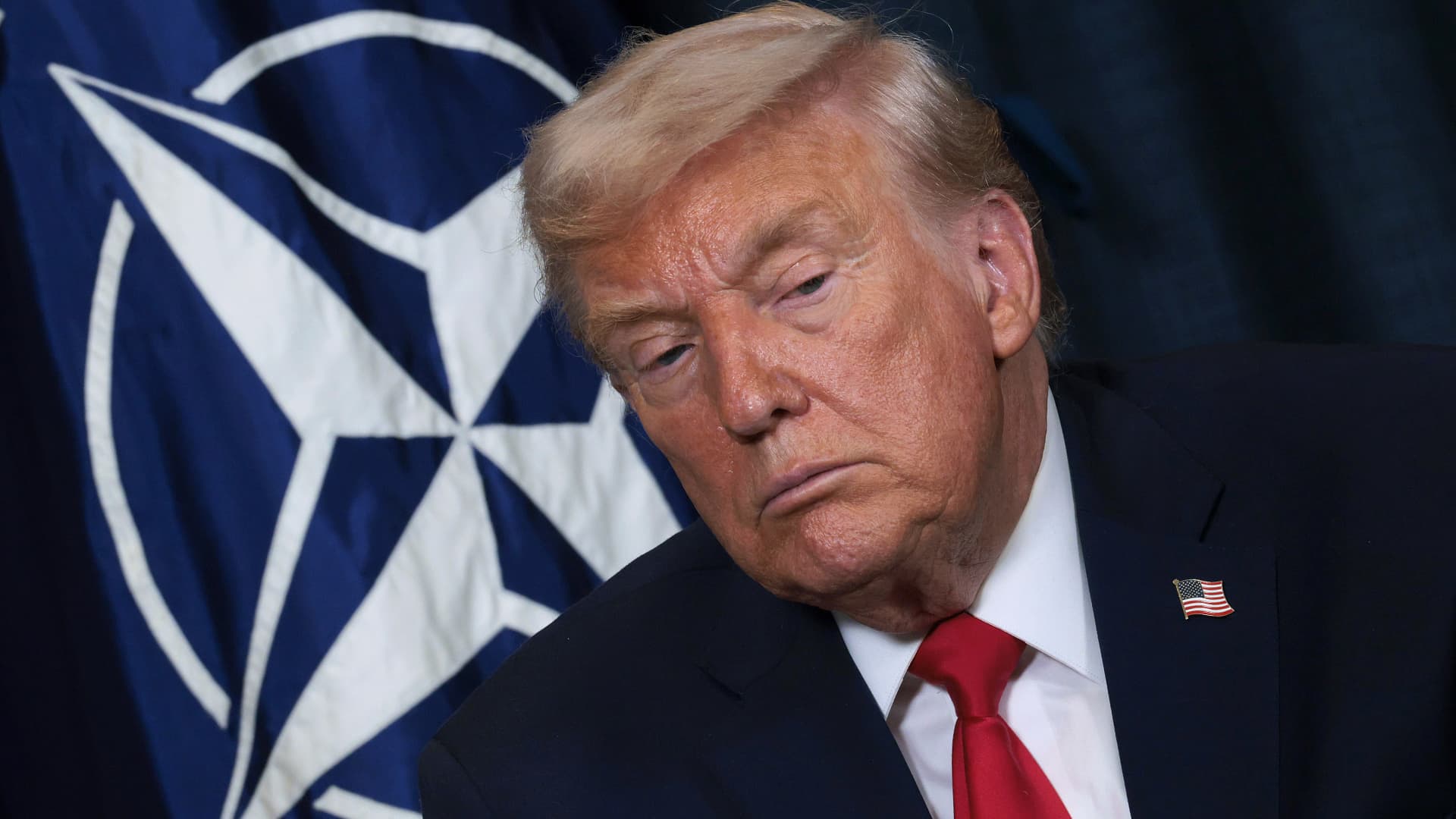
Transatlantic Tensions: The Growing Divide Over NATO and Middle East Strategy
Former U.S. President Donald Trump has reignited debates regarding the future of the North Atlantic Treaty Organization (NATO), openly questioning the alliance’s efficacy and the fairness of the current security burden placed on the United States. These remarks highlight a deepening strategic rift between Washington and its European partners, largely fueled by conflicting approaches to the escalating situation in Iran and the security of the Strait of Hormuz.
The core of the disagreement lies in divergent geopolitical priorities. While the U.S. has actively sought coalition support for operations aimed at curbing Iranian influence, many European nations have remained hesitant. These countries argue that the current standoff is a result of unilateral policy decisions made by Washington without adequate consultation. European leaders have expressed deep-seated concerns that aggressive military posturing could trigger a broader, destabilizing conflict in the Middle East, drawing parallels to the long-term consequences of previous interventions in Iraq and Afghanistan.
This diplomatic friction has manifested in public rebukes of key allies, including the United Kingdom and France. Trump has specifically criticized the operational readiness of the British fleet and challenged French restrictions on airspace for military logistics. While some international figures, such as Finnish President Alexander Stubb, continue to advocate for constructive dialogue to preserve the transatlantic partnership, the ongoing dispute underscores a fundamental challenge: reconciling national security interests with the collective obligations of a decades-old military alliance.
Key Takeaways
- Donald Trump has questioned the value of NATO, citing an unfair distribution of security costs and a lack of support from European allies.
- European nations are resisting U.S.-led military efforts against Iran due to fears of regional escalation and the potential for a repeat of past Middle Eastern conflicts.
- The diplomatic strain has led to public criticism of major allies like the UK and France, testing the long-term stability of the transatlantic security framework.
Editor’s Analysis & Impact
The rhetoric surrounding a potential U.S. withdrawal from NATO marks a significant shift in the geopolitical landscape, signaling a move toward a more transactional approach to international security. If the U.S. were to distance itself from the alliance, it would likely trigger a massive realignment of European defense policies, forcing nations to increase their own military spending and strategic autonomy. The current standoff over Iran serves as a catalyst for these underlying tensions, highlighting the difficulty of maintaining a unified front when national interests diverge. The long-term implication is a potential weakening of the post-WWII security architecture, which could embolden regional adversaries and create a power vacuum that shifts the global balance of influence away from the traditional transatlantic partnership.
Frequently Asked Questions
Q: Why is there tension between the U.S. and European allies regarding Iran?
A: The tension arises because European nations view the U.S. strategy toward Iran as a unilateral conflict that risks regional instability, whereas the U.S. expects its NATO allies to provide military support for its operations.
Q: What is the primary concern of European leaders regarding the Strait of Hormuz?
A: European leaders are concerned that aggressive military intervention to secure the Strait of Hormuz could escalate into a prolonged and costly conflict in the Middle East, similar to previous wars in Iraq and Afghanistan.
AI Disclosure: This article is based on verified data and official reports. Our Team and AI have cross-referenced every financial detail with primary sources to ensure total accuracy.
More from this Category