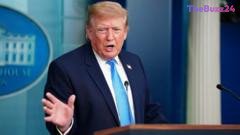
Trump Signals De-escalation in Iran Amid Diplomatic Push and Congressional Pressure
President Donald Trump has declared the conflict with Iran “effectively over” militarily, indicating that further US attacks on the nation are “highly unlikely.” These remarks come amidst what he described as “positive momentum” in ongoing negotiations aimed at resolving the Middle East conflict. Despite this, Trump affirmed the US remains “locked and loaded” should circumstances necessitate a change in posture, emphasizing that the current “status quo” is maintained at the request of neighboring countries.
Trump’s statements followed a meeting with Qatari Prime Minister Sheikh Mohammed bin Abdul Rahman Al Thani, a key mediator in efforts to end the war and a crucial US ally in the Gulf region. The shift towards de-escalation appears to be influenced by recent political developments, including a challenging set of midterm election results for Republicans, which Vice-President JD Vance and other senior figures attributed partly to the Iran conflict. While Trump had previously authorized “minor strikes” on an Iranian island in the Strait of Hormuz, he now states there is “no reason” to escalate. He also clarified that the US maintains a naval blockade on Iranian ports to protect Gulf allies from potential aggression, explaining why a formal end to the war has not been declared. Global oil prices, including Brent crude and US-traded oil, saw further dips following Trump’s comments, reflecting market reactions to potential de-escalation.
Diplomatic efforts have been ongoing, with the Qatari Prime Minister confirming “positive discussions” with Trump and Vance regarding a peace deal. These indirect mediation attempts have been in motion since joint US-Israeli strikes initiated the conflict in February, impacting Gulf allies such as Saudi Arabia, Qatar, and the United Arab Emirates. Domestically, the administration faces mounting pressure, as Republican Congressman Thomas Massie has moved to force a vote in the House of Representatives to impeach Defense Secretary Pete Hegseth over his handling of the war. Trump has publicly supported Hegseth, dismissing Massie’s initiative as a “sham,” though Democrats have signaled their intent to pursue impeachment once they assume control of Congress in the new session.
Key Takeaways
- President Trump believes the Iran conflict is "effectively over" militarily and renewed US attacks are "highly unlikely," citing "positive momentum" in negotiations.
- The shift towards de-escalation follows recent midterm election setbacks for Republicans and ongoing diplomatic efforts, particularly with Qatar acting as a key mediator.
- Despite de-escalation rhetoric, political pressure is mounting on the Trump administration, with Republican Congressman Thomas Massie initiating impeachment proceedings against Defense Secretary Pete Hegseth.
Editor’s Analysis & Impact
President Trump’s declaration of the Iran conflict as “effectively over” and the unlikelihood of further US attacks signals a significant pivot in foreign policy, potentially ushering in a period of de-escalation. This shift, influenced by domestic political pressures post-midterms and active diplomatic engagement with allies like Qatar, could lead to increased stability in the Middle East. For energy markets, the immediate dip in oil prices suggests that reduced geopolitical tensions are welcomed, potentially stabilizing global crude supplies. However, the “locked and loaded” caveat indicates continued vigilance, and the ongoing congressional efforts to impeach Defense Secretary Hegseth highlight deep internal divisions. Should Democrats gain control of Congress, the administration’s foreign policy could face even greater scrutiny and potential legislative challenges, shaping the future trajectory of US-Iran relations and regional security.
Frequently Asked Questions
Q: What prompted President Trump's recent comments on Iran?
A: President Trump's comments followed a meeting with Qatari Prime Minister Sheikh Mohammed bin Abdul Rahman Al Thani, a key mediator in the conflict. The remarks also come in the wake of recent midterm election results that were unfavorable for Republicans, with some senior figures attributing the outcome partly to the ongoing conflict with Iran.
Q: What role is Qatar playing in the US-Iran situation?
A: Qatar, a US ally and neighbor to Iran, is serving as a crucial mediator in efforts to de-escalate the conflict and broker a peace deal between Washington and Tehran. The Qatari Prime Minister held "positive discussions" with President Trump and Vice-President Vance regarding these negotiations.
Q: What is the significance of Congressman Massie's impeachment effort against Secretary Hegseth?
A: Republican Congressman Thomas Massie's move to impeach Defense Secretary Pete Hegseth highlights significant internal political pressure and disagreement within the US government regarding the Iran conflict. While President Trump has dismissed the effort as a "sham," it signals potential legislative challenges, especially if Democrats gain control of Congress and express willingness to pursue impeachment.
AI Disclosure: This article is based on verified data and official reports. Our Team and AI have cross-referenced every financial detail with primary sources to ensure total accuracy.
More from this Category