High-Stakes Diplomacy: Trump’s China Visit to Test Fragile Trade Truce
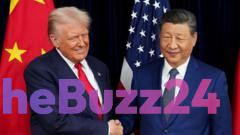
President Trump is scheduled to visit China from May 13-15, marking the first such trip by a U.S. leader in nearly a decade. This diplomatic mission arrives at a critical juncture for the world’s two largest economies, as both nations attempt to navigate a complex landscape of trade disputes, shifting alliances, and the ongoing economic pressures of global conflict. Accompanying the President will be a delegation of executives from major American corporations, including Boeing, Citigroup, and Qualcomm, signaling a push for new commercial agreements.
The visit serves as a litmus test for the tenuous trade truce established between Washington and Beijing following a face-to-face meeting in South Korea last October. Since 2018, the two nations have engaged in a volatile cycle of protectionist policies, with tariffs reaching as high as 100% at the height of the trade war. While the October agreement provided a temporary reprieve—leading to the suspension of certain export controls and a commitment from China to purchase U.S. agricultural goods—a permanent resolution remains elusive.
Beijing enters these negotiations from a position of relative resilience. Despite facing significant headwinds, including a domestic property crisis and high unemployment, China has successfully diversified its trade partnerships and continues to invest heavily in robotics and domestic semiconductor production. Meanwhile, the Trump administration faces its own domestic challenges, including recent judicial setbacks regarding the legality of certain import tariffs. As the global economy grapples with the fallout of the ongoing war in Iran, the meeting between Trump and Xi will be closely watched to see if the two powers can reconcile their divergent interests to stabilize global supply chains.
Key Takeaways
- President Trump’s upcoming visit to China aims to solidify a fragile trade truce and foster new deals for major U.S. corporations.
- Despite years of aggressive tariff policies and trade wars, China has maintained economic stability by diversifying its global trade partners and investing in domestic technology.
- The ongoing war in Iran remains a significant point of tension, complicating the diplomatic agenda as both nations navigate energy security and conflicting geopolitical interests.
Editor’s Analysis & Impact
The upcoming summit between the U.S. and China represents a pivotal shift from the purely confrontational trade policies of the past several years toward a more pragmatic, albeit cautious, engagement. The inclusion of major corporate leaders suggests that the administration is pivoting toward a ‘deal-making’ phase to bolster domestic industries like agriculture and aerospace. However, the structural rivalry—particularly in high-tech sectors like semiconductors—remains a long-term friction point. The market impact will likely be defined by the degree of regulatory certainty provided by this meeting. If the two sides can formalize a framework for de-escalation, global markets may see a reduction in volatility. Conversely, if the talks fail to address the underlying issues of intellectual property and market access, the current ‘fragile truce’ could quickly devolve into a more entrenched and unpredictable economic standoff.
Frequently Asked Questions
Q: Why is this visit considered a test for the trade truce?
A: The visit is a test because the previous trade truce was a temporary measure. Both nations still have significant unresolved disputes regarding tariffs, technology restrictions, and market access that require long-term diplomatic solutions.
Q: How has the war in Iran affected the U.S.-China relationship?
A: The war in Iran has created new economic pressures. While China has utilized its energy reserves and Russian oil imports to cushion the impact, the conflict is testing its supply chains and forcing both the U.S. and China to consider how their differing views on the region affect their broader economic cooperation.
AI Disclosure: This article is based on verified data and official reports. Our Team and AI have cross-referenced every financial detail with primary sources to ensure total accuracy.
More from this Category