Trump’s Controversial Intervention in Nvidia Leadership Sparks Political Firestorm
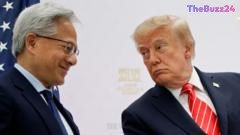
The return of Jensen Huang to the helm of AI chipmaker Nvidia has ignited a political controversy, with former President Donald Trump publicly taking credit for the move. Following the announcement, Nvidia’s stock experienced a significant rally, prompting Trump to declare, “I made the deal.” His public endorsement included a provocative AI-generated image posted on his social media platform, depicting Huang in a scene reminiscent of a post-assassination attempt, surrounded by Secret Service and clutching a red bra, replacing the US flag with an Nvidia banner. This imagery, while ambiguous, underscored a perceived inextricable link between Huang and Trump, particularly in light of prior allegations against Huang concerning reckless jeopardizing of U.S. national security through alleged ties to a suspected Chinese spy.
Despite Trump’s assertion that a “very thorough investigation” by federal officials had “exonerated” Huang and that his reinstatement posed no national security threat, this view is not universally accepted. Democrats and some concerned Republicans in Congress are promising to launch their own oversight initiatives, including subpoenas and compelled witness testimony. Their aim is to assess whether Huang and Nvidia violated laws by allowing China access to sophisticated microchip technology. Senator Tom Cotton, a Republican, has voiced concerns about advanced chips reaching Communist China through various means, emphasizing the need for congressional investigation.
The controversy extends beyond national security, touching upon broader public sentiment and internal administration dynamics. Public opinion in the U.S. has shown growing apprehension towards AI, with calls for new restrictions on data center construction and legal frameworks to mitigate potential economic and social disruption. This skepticism is even present within Trump’s own political base. Furthermore, the incident has exposed rifts within Trump’s administration, with Treasury Secretary Scott Bessent, a China hawk, and Commerce Secretary Howard Lutnick, an AI proponent, reportedly clashing over potential new restrictions on AI chip exports. Trump’s willingness to intervene in a major private company, in which he reportedly holds stock, also raises concerns about political corruption and the perception that powerful individuals operate under different rules.
Trump’s dramatic intervention appears rooted in his belief that the success of the U.S. economy, a cornerstone of his political legacy, is increasingly tied to the advancement of AI technology. He has championed AI as “super intelligence” and a critical race for global supremacy. Nvidia’s stock had experienced a substantial decline in the weeks leading up to his intervention, with broader tech indices also falling. While Trump’s actions temporarily halted Nvidia’s slide, the long-term economic and political ramifications remain uncertain, suggesting that this intervention may merely be a delay rather than a full resolution of an impending “AI reckoning.”
Key Takeaways
- Former President Donald Trump publicly claimed credit for the return of Jensen Huang as Nvidia's head, following a significant stock surge.
- Huang's reinstatement, despite prior allegations of national security risks related to China, has ignited a political battle with congressional Democrats and some Republicans vowing investigations.
- Trump's intervention, driven by his view of AI as crucial to the US economy, carries substantial political risks amid public skepticism about AI and concerns over political influence.
Editor’s Analysis & Impact
Donald Trump’s direct intervention in Nvidia’s leadership, particularly concerning Jensen Huang’s return amidst national security allegations, sets a significant and potentially problematic precedent for the intersection of politics, technology, and corporate governance. This move underscores the immense strategic importance placed on AI by political leaders, viewing it as a linchpin for economic growth and global power. However, it also introduces substantial political risk for Trump and the Republican party, as it invites intense congressional scrutiny and fuels public concerns about political influence and potential corruption. The market’s initial positive reaction to the intervention, followed by subsequent volatility, highlights the fragility of investor confidence in this high-stakes environment. Future implications include increased regulatory oversight on AI companies, a heightened focus on national security implications of tech exports, and a more politicized landscape for the technology sector, potentially impacting innovation and international collaborations.
Frequently Asked Questions
Q: What were the allegations against Jensen Huang that prompted controversy?
A: Jensen Huang faced allegations of recklessly jeopardizing U.S. national security by consorting with a suspected Chinese spy. These claims became a central point of contention surrounding his return to Nvidia.
Q: Why did former President Donald Trump publicly intervene in Nvidia's leadership decision?
A: Trump publicly claimed credit for Huang's return, stating he "made the deal." His intervention appears driven by his belief that AI technology is crucial for the U.S. economy and his political legacy, viewing Nvidia as central to America's AI industry.
Q: What are the main political risks associated with Trump's intervention?
A: The intervention carries significant political risks, including promises of congressional investigations from Democrats and some Republicans into Huang and Nvidia's compliance with laws regarding chip technology access for China. It also raises concerns about political corruption and the perception of undue influence in private sector decisions.
AI Disclosure: This article is based on verified data and official reports. Our Team and AI have cross-referenced every financial detail with primary sources to ensure total accuracy.
More from this Category