Trump’s Disruptive Presence Looms Large as NATO Grapples with European Defense Crisis
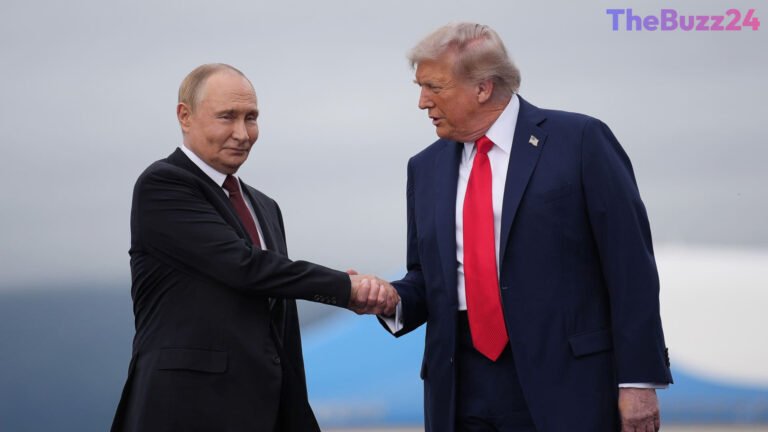
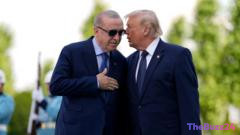
The NATO summit in Ankara, Turkey, opened with a striking display of hospitality for former US President Donald Trump, hosted by Turkish President Recep Tayyip Erdogan. Despite Trump’s historical skepticism toward the alliance, his arrival was marked by ceremonial fanfare, including a personal airport welcome by Erdogan and a military flypast. However, the display of unity was quickly tested by Trump’s characteristic rhetoric, which included reviving controversial remarks about acquiring Greenland and criticizing key allies.
Trump’s comments highlighted lingering tensions within the alliance. He openly criticized NATO members for not supporting his unilateral actions against Iran earlier this year and singled out British Prime Minister Sir Keir Starmer. Despite the UK permitting airstrikes from its bases, Trump dismissed Starmer’s offer of post-conflict assistance as insufficient, framing it as a test of loyalty. Meanwhile, the British delegation faced scrutiny of its own, as Starmer’s Defence Investment Plan was criticized for falling short of the funding targets established in the UK’s recent Strategic Defence Review.
Beyond the political friction, the summit focused heavily on the urgent logistical challenge of rearming Europe. NATO delegates advanced several major defense agreements, including contracts for a new fleet of Airbus transport aircraft and the replacement of aging AWACS early warning planes with Sweden’s GlobeEye systems. These initiatives reflect a broader push to enhance European defense capabilities and foster deeper industrial cooperation among member states.
The urgency of these defense measures was underscored by Ukrainian President Volodymyr Zelensky, who attended the summit to plead for immediate air defense support. Following devastating Russian ballistic missile strikes on Kyiv, Zelensky urged allies to prioritize the rapid, mass production of affordable anti-ballistic missile systems. With the United States gradually shifting its defense priorities, European leaders face a critical window to establish robust deterrence capabilities, amid fears that Russia could rapidly rebuild its military strength and threaten NATO territory within years of any potential ceasefire in Ukraine.
Key Takeaways
- Donald Trump's controversial rhetoric on Greenland and criticism of allies, including UK Prime Minister Keir Starmer, disrupted the unified front at the NATO summit in Ankara.
- NATO members finalized major defense procurement deals, including Airbus transport planes and Swedish GlobeEye early warning aircraft, to accelerate European rearmament.
- Ukrainian President Volodymyr Zelensky issued an urgent appeal for immediate, mass-produced air defense systems to counter escalating Russian missile strikes.
Editor’s Analysis & Impact
The Ankara summit highlights a critical inflection point for NATO as it navigates internal political volatility alongside external security threats. Donald Trump’s disruptive rhetoric serves as a stark reminder of the potential fragility of transatlantic security commitments, forcing European nations to confront the reality of a self-reliant defense strategy. The transition from reliance on US military hegemony to localized European deterrence is already visible in the newly announced procurement contracts with Airbus and Sweden’s Saab. However, the pace of European defense industrial production remains a major bottleneck. As Ukraine faces devastating aerial bombardments, the alliance’s ability to rapidly scale up missile defense manufacturing will not only dictate the outcome of the current conflict but will also determine NATO’s readiness to deter a potentially resurgent Russia in the near future.
Frequently Asked Questions
Q: Why did Donald Trump's presence cause tension at the NATO summit?
A: Trump revived controversial statements about acquiring Greenland and openly criticized allies, including the UK, for their level of support in past conflicts, challenging the summit's projected image of unity.
Q: What major defense agreements were reached at the summit?
A: NATO members secured contracts for a new fleet of Airbus transport aircraft and agreed to replace aging AWACS early warning planes with Sweden's advanced GlobeEye systems.
Q: What was Ukrainian President Zelensky's primary request to NATO?
A: Zelensky urged European allies to immediately prioritize the development and mass production of affordable anti-ballistic missile systems to defend against ongoing Russian strikes.
AI Disclosure: This article is based on verified data and official reports. Our Team and AI have cross-referenced every financial detail with primary sources to ensure total accuracy.
More from this Category