Trump’s Iran Standoff: Threats, Funeral, and the Unavoidable Path to Negotiation
President Donald Trump’s recent strong rhetoric regarding Iran, including threats of further military action and harsh condemnations, has underscored the complex and volatile relationship between the two nations. Despite escalating tensions and public pronouncements suggesting an end to diplomatic engagement, the underlying reality points towards an ongoing, albeit strained, negotiation process.
Following a period of intense military exchanges and the recent funeral of Iran’s former Supreme Leader Ayatollah Ali Khamenei, who was reportedly killed in a joint US-Israel operation, the situation remains precarious. Trump himself has acknowledged that while he believes his negotiators might be “wasting their time,” the talks are, in fact, continuing. This duality in his public statements—alternating between aggressive threats and the implicit acceptance of ongoing diplomatic efforts—highlights the difficult position the US finds itself in.
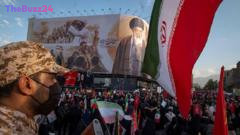
The core of the conflict appears to be Iran’s unwavering stance on maintaining control over the Strait of Hormuz. This strategic waterway, crucial for global energy transport, represents a significant leverage point for Tehran. Iran’s determination to preserve this control, even at the risk of prolonged conflict and potential economic repercussions, suggests a refusal to revert to the pre-conflict status quo. The regime’s resilience, bolstered by domestic support demonstrated during the recent funeral ceremonies, indicates that military pressure alone has not achieved its intended objectives.
Mediators involved in the process acknowledge the significant setbacks and the deeply tense atmosphere, characterized by a profound lack of trust between the two nations. However, they maintain that a potential agreement remains possible. Such a deal would likely involve Iran accepting limitations on its uranium enrichment program and allowing international nuclear inspections, in exchange for the unfreezing of assets, the ability to sell oil, and a broader acknowledgment of its regional influence, including its control over the Strait of Hormuz.
Key Takeaways
- Despite President Trump's aggressive rhetoric and threats of military action against Iran, diplomatic negotiations appear to be continuing.
- Iran's control over the Strait of Hormuz remains a central point of contention, with Tehran unwilling to relinquish this strategic leverage.
- A potential deal hinges on Iran accepting nuclear program limits and inspections in exchange for economic concessions and recognition of its regional role.
Editor’s Analysis & Impact
The ongoing confrontation between the US and Iran, marked by sharp rhetoric and military exchanges, paradoxically underscores the persistent need for diplomatic engagement. Iran’s firm stance on the Strait of Hormuz demonstrates its strategic priorities, suggesting that economic sanctions and military pressure alone are insufficient to compel concessions. The situation highlights the delicate balance of power in the Middle East, where control over vital trade routes can be leveraged as a significant geopolitical tool. For the global economy, particularly energy markets, the continued instability and the potential for escalation pose substantial risks. The path forward likely involves complex negotiations that address Iran’s security concerns and economic needs alongside international demands for nuclear transparency.
Frequently Asked Questions
Q: What is the significance of the Strait of Hormuz?
A: The Strait of Hormuz is a vital chokepoint for global oil and gas transportation, with approximately one-fifth of the world's total oil consumption passing through it annually. Control over this strait gives Iran significant economic and strategic leverage.
Q: What were the circumstances surrounding the death of Ayatollah Ali Khamenei?
A: According to the provided text, Iran's former Supreme Leader Ayatollah Ali Khamenei was killed in an air strike on February 28th, attributed to a joint operation by the US and Israel.
Q: What are the key demands being discussed in the potential negotiations between the US and Iran?
A: Key points of discussion likely include Iran accepting limits on its uranium enrichment, allowing UN nuclear inspections, and accounting for nuclear materials. In return, Iran seeks the unfreezing of assets, the ability to sell oil, and acknowledgment of its authority over the Strait of Hormuz.
AI Disclosure: This article is based on verified data and official reports. Our Team and AI have cross-referenced every financial detail with primary sources to ensure total accuracy.
More from this Category