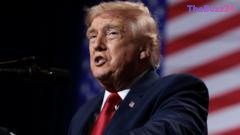
Trump’s Remarks on Irish Reunification Spark Debate Ahead of Midterms
During a high-profile diplomatic visit to Ireland, former U.S. President Donald Trump made unexpected comments expressing support for a unified Ireland. The remarks immediately generated global headlines and caught political observers off guard, raising questions about whether the statement signaled a significant pivot in American foreign policy or simply reflected an impromptu thought during a free-flowing press conference. Despite the initial shockwaves across Dublin and London, former administration officials and congressional leaders quickly moved to clarify that the long-standing U.S. commitment to the Good Friday Agreement remains fully intact.
Following the initial press conference, Trump doubled down on the sentiment during an address to business leaders and dignitaries at the U.S. Ambassador’s residence. However, the remainder of the speech drifted into domestic American politics, touching on border security, defense manufacturing, and foreign policy grievances. This eclectic speaking style, characterized by frequent shifts between international diplomacy and domestic grievances, left many analysts evaluating the true intent behind the timing and messaging of the remarks.
Political analysts suggest that the comments regarding a united Ireland may have been strategically aimed at a very different audience located thousands of miles away. With crucial midterm elections rapidly approaching and the Republican Party facing intense political headwinds, securing swing voters is a top priority. Approximately ten percent of the U.S. population claims Irish heritage, representing a vital demographic of independent voters. Historically, appealing to Irish-American voters has been a successful strategy for U.S. politicians, and invoking the emotive topic of Irish unity could be viewed as an effort to mobilize this critical constituency ahead of a challenging electoral cycle.
Key Takeaways
- Donald Trump expressed support for a unified Ireland during a diplomatic visit, creating immediate international headlines.
- Former officials and lawmakers confirmed that U.S. foreign policy and support for the Good Friday Agreement remain unchanged.
- Political analysts believe the remarks were strategically targeted at Irish-American swing voters ahead of the U.S. midterm elections.
Editor’s Analysis & Impact
The intersection of international diplomacy and domestic electoral strategy is a delicate dance, particularly in the polarized landscape of modern American politics. Donald Trump’s remarks on a united Ireland highlight how foreign policy statements are frequently leveraged for domestic political consumption. While diplomatic partners in the UK and Ireland momentarily braced for a shift in U.S. stance, the reality points toward political pandering to the lucrative Irish-American voting bloc. As the midterm elections approach, politicians across the political spectrum are increasingly utilizing diaspora politics to capture undecided voters. However, such rhetoric risks causing unnecessary diplomatic friction with traditional allies, proving that domestic political survival often supersedes nuanced foreign relations in high-stakes election years.
Frequently Asked Questions
Q: Did Donald Trump's comments represent an official change in U.S. foreign policy?
A: No. Former officials and congressional leaders clarified that the remarks did not signal a shift in U.S. policy, and that the United States remains firmly committed to the Good Friday Agreement.
Q: Why might Donald Trump have made comments about a united Ireland?
A: Political analysts suggest the remarks were likely aimed at capturing the attention of Irish-American independent and swing voters in the United States ahead of the crucial midterm elections.
Q: What is the Good Friday Agreement?
A: The Good Friday Agreement is a historic 1998 peace accord that largely brought an end to decades of conflict in Northern Ireland, establishing a framework for devolved government and cross-border cooperation.
AI Disclosure: This article is based on verified data and official reports. Our Team and AI have cross-referenced every financial detail with primary sources to ensure total accuracy.
More from this Category