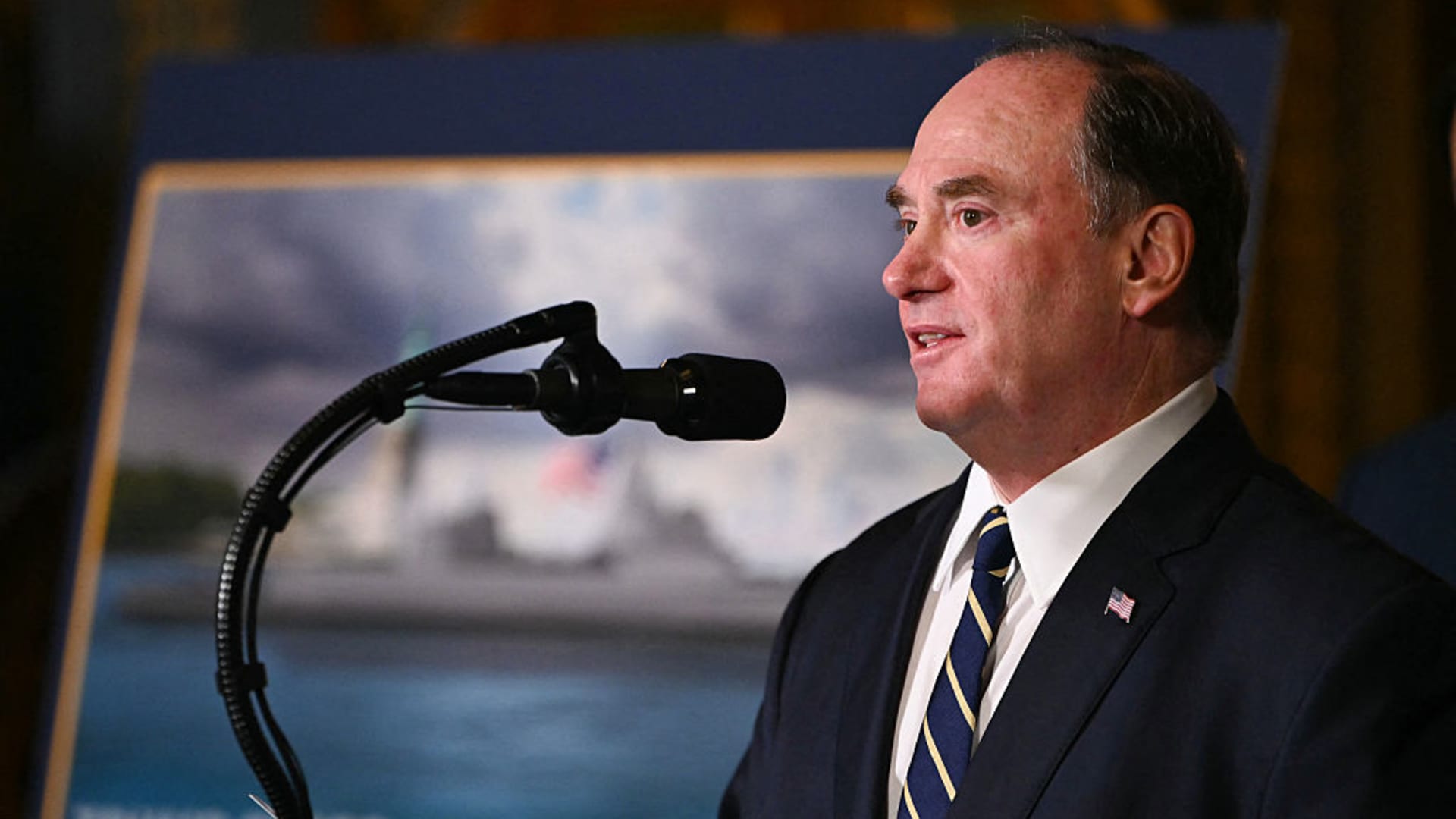
Navy Secretary John Phelan Ousted Amid Leadership Shakeup and Past Associations
The United States Navy is navigating a major leadership transition following the immediate dismissal of Secretary John Phelan. In his absence, Under Secretary Hung Cao has assumed the role of acting head, taking command of the naval branch and the U.S. Marine Corps during a period of significant geopolitical instability.
This leadership change arrives at a critical juncture for American maritime operations, particularly in the Strait of Hormuz. The Navy is currently tasked with maintaining a blockade of Iranian ports, a strategic maneuver that remains vital to the flow of global oil shipments. The ongoing standoff in the region has heightened the need for consistent and experienced oversight, making the sudden vacancy at the top of the naval hierarchy a point of concern for military analysts.
Phelan’s removal is part of a broader trend of high-level military turnover under the current administration. His departure follows the controversial ousting of U.S. Army Chief of Staff Randy George by Defense Secretary Pete Hegseth less than three weeks ago. Since taking office, Hegseth has overseen the removal of over a dozen senior military officers, a series of maneuvers that have drawn significant scrutiny from observers of the defense establishment.
Appointed by President Donald Trump in March 2025, Phelan’s background as an art collector and private equity investor set him apart from traditional military leadership. His tenure was further complicated by the emergence of documents from the Department of Justice, which linked him to the late sex offender Jeffrey Epstein. A 2006 flight manifest revealed that Phelan had traveled on Epstein’s private aircraft, a disclosure that intensified the controversy surrounding his brief time in office.
Key Takeaways
- Secretary John Phelan has been dismissed from his role as Navy Secretary, with Under Secretary Hung Cao stepping in as acting head.
- The leadership change occurs during a volatile period of naval operations in the Strait of Hormuz, where the U.S. is currently blockading Iranian ports.
- Phelan’s departure follows reports of his inclusion on a 2006 flight manifest associated with Jeffrey Epstein, adding to a pattern of recent high-level military removals.
Editor’s Analysis & Impact
The dismissal of John Phelan reflects a broader, aggressive restructuring of the U.S. military’s senior command structure under the current administration. By replacing traditional military careerists with political appointees and subsequently purging those who do not align with the administration’s strategic vision, the Department of Defense is undergoing a fundamental shift in institutional culture. The impact of these rapid changes on operational readiness, particularly in high-stakes theaters like the Strait of Hormuz, remains a significant concern for national security. The revelation of Phelan’s association with Jeffrey Epstein provided a convenient catalyst for his removal, but the trend of replacing top-tier generals suggests a desire for greater executive control over military policy. Moving forward, the stability of the naval command will be tested as the administration continues to prioritize ideological alignment over conventional military experience.
Frequently Asked Questions
Q: Who is currently leading the U.S. Navy following Phelan's dismissal?
A: Under Secretary Hung Cao has stepped into the role of acting head of the Navy and the U.S. Marine Corps.
Q: What specific controversy was linked to John Phelan prior to his dismissal?
A: Phelan was linked to the late sex offender Jeffrey Epstein after a 2006 Department of Justice flight manifest identified him as a passenger on Epstein's private plane.
AI Disclosure: This article is based on verified data and official reports. Our Team and AI have cross-referenced every financial detail with primary sources to ensure total accuracy.
More from this Category