U.S. Treasury Issues Sanctions Warning to Banks Over Iranian Oil Trade with Chinese Refineries
The U.S. Treasury has issued a stern warning to global financial institutions, cautioning that they face significant sanctions risks if they facilitate transactions involving Chinese independent refineries—often referred to as ‘teapot’ refineries—that process Iranian crude oil. This directive aims to tighten the enforcement of the ‘maximum pressure’ campaign, which seeks to sever the financial lifelines supporting the Iranian government and its military initiatives.
According to the Treasury, China currently imports approximately 90% of Iran’s oil exports, with these smaller, independent refineries serving as the primary conduits for the trade. The U.S. government has expressed concern that these entities are utilizing the U.S. financial system to conduct dollar-denominated transactions and procure American goods, effectively bypassing international restrictions. Financial institutions are now being urged to implement enhanced due diligence, particularly regarding entities based in China’s Shandong province and other logistics hubs involved in the Iranian supply chain.
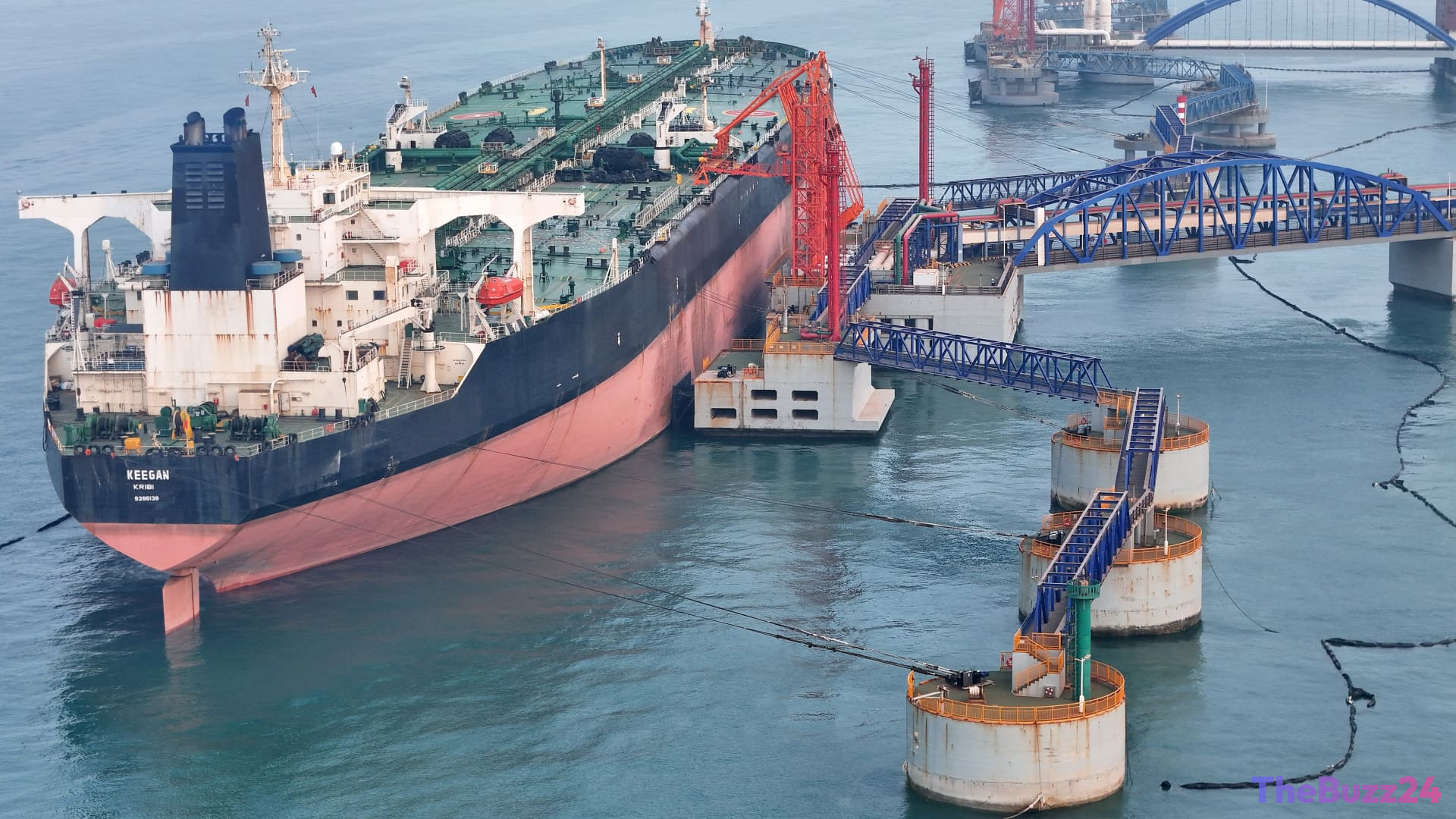
To obscure the origin of the crude, the Treasury noted that illicit actors frequently employ a ‘shadow fleet’ of tankers that manipulate location data and engage in ship-to-ship transfers. A common tactic involves blending Iranian oil with other supplies or relabeling shipments with forged documentation, a practice frequently referred to as ‘Malaysian blend.’ In response to these activities, the U.S. has already begun sanctioning major Chinese refineries, such as Hengli Petrochemical (Dalian) Refinery, alongside various port operators and logistics providers.
This escalation comes at a delicate time for international relations, as Washington and Beijing prepare for high-level diplomatic discussions. While the U.S. continues to enforce its blockade and sanctions, China has publicly voiced opposition to unilateral measures. Meanwhile, the pressure on Iran is mounting, with reports indicating that the country’s primary export terminal on Kharg Island is nearing storage capacity, potentially forcing a significant reduction in production and daily revenue.
Key Takeaways
- The U.S. Treasury is threatening sanctions against banks that process transactions for Chinese 'teapot' refineries handling Iranian oil.
- Illicit Iranian oil is often disguised through 'shadow fleet' tankers and 'Malaysian blend' labeling to evade international detection.
- The U.S. is intensifying its 'maximum pressure' campaign as Iran faces potential production cuts due to limited storage capacity at its primary export terminals.
Editor’s Analysis & Impact
The U.S. Treasury’s latest warning signals a strategic shift toward targeting the financial infrastructure that enables sanctions evasion rather than just the oil producers themselves. By putting global banks on notice, the U.S. is effectively weaponizing the dollar-denominated financial system to force compliance from Chinese refineries. This move creates a significant compliance burden for international financial institutions, which must now conduct rigorous, potentially costly due diligence on their clients’ supply chains. The broader implication is a heightened risk of friction in U.S.-China trade relations, especially as both nations navigate a fragile ceasefire with Iran. If the U.S. continues to sanction major Chinese industrial players, it could lead to retaliatory economic measures, further complicating global energy markets and the stability of the Strait of Hormuz.
Frequently Asked Questions
Q: What are 'teapot' refineries?
A: Teapot refineries are smaller, independent oil refineries in China that operate outside of the major state-owned oil companies. They have become central to the trade of Iranian crude oil.
Q: What is the 'Malaysian blend' tactic?
A: This is a deceptive shipping practice where Iranian oil is mixed with other crude or relabeled with forged documentation to hide its true origin and bypass international sanctions.
AI Disclosure: This article is based on verified data and official reports. Our Team and AI have cross-referenced every financial detail with primary sources to ensure total accuracy.
More from this Category