United Airlines Adjusts Long-Term Outlook as Fuel Costs Weigh on Profitability
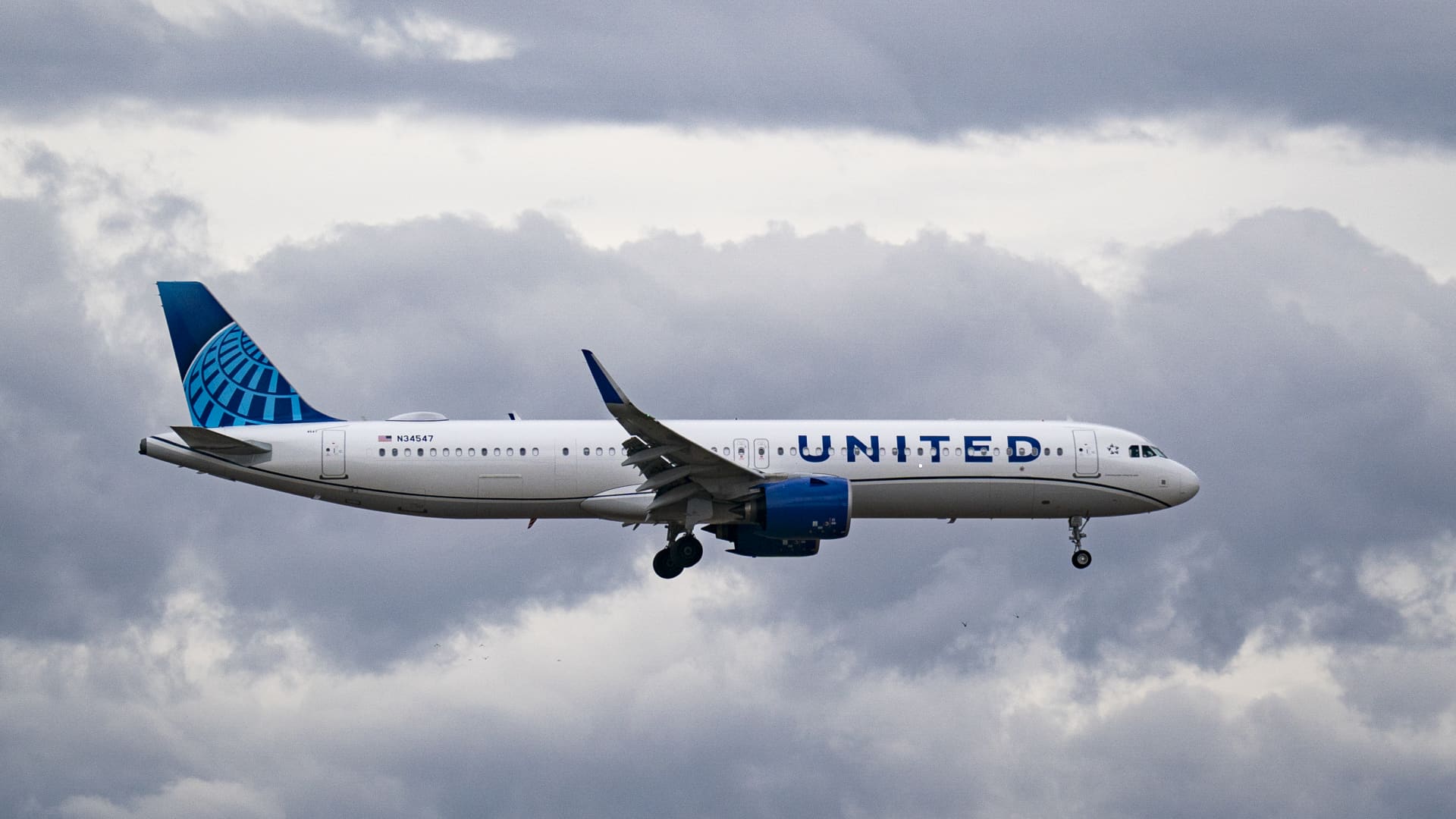
United Airlines has officially lowered its financial expectations for 2026, citing the persistent impact of rising jet fuel prices and broader market instability. The carrier now projects an adjusted earnings per share (EPS) between $7 and $11, a significant downward revision from its previous guidance of $12 to $14. This strategic adjustment reflects the airline’s attempt to navigate a volatile energy market that continues to pressure operational margins across the aviation sector.
Despite the cautious long-term outlook, United’s immediate financial performance remains strong. For the first quarter ending March 31, the company reported revenue of $14.61 billion, a 10% increase year-over-year that comfortably beat market expectations. Net income surged by 80% to $699 million, bolstered by robust demand and pricing power in domestic travel segments. These results highlight the airline’s ability to maintain operational resilience even as it prepares for a more challenging second quarter.
To mitigate the impact of fuel costs, which are expected to average $4.30 per gallon in the coming months, United is implementing a more conservative capacity strategy. The airline plans to keep capacity growth flat or limited to 2% for the remainder of the year. Management aims to offset fuel price volatility by gradually increasing revenue coverage of these costs, targeting 85% to 100% coverage by the end of the year. While the industry faces similar headwinds, United continues to focus on long-term structural efficiency to maintain its competitive edge.
Key Takeaways
- United Airlines lowered its 2026 adjusted EPS forecast to a range of $7–$11 due to rising fuel costs.
- The company exceeded Q1 revenue expectations with $14.61 billion, marking a 10% year-over-year increase.
- United is curbing capacity growth and adjusting schedules to offset fuel price volatility throughout the remainder of the year.
Editor’s Analysis & Impact
United Airlines’ decision to lower its long-term earnings forecast underscores the precarious nature of the aviation industry, where profitability is heavily tethered to volatile energy markets. While the airline demonstrated strong demand-side resilience in Q1, the shift toward a more conservative capacity strategy suggests that management is prioritizing margin protection over aggressive expansion. This move is indicative of a broader industry trend where carriers are increasingly forced to pass operational costs to consumers through higher fares and fees. Looking ahead, the ability of airlines to successfully hedge against fuel price spikes while maintaining passenger volume will be the primary determinant of their financial health. Investors should monitor whether these capacity constraints lead to sustained pricing power or if they signal a cooling in the post-pandemic travel boom.
Frequently Asked Questions
Q: Why did United Airlines lower its 2026 earnings forecast?
A: The revision was primarily driven by escalating jet fuel expenses and broader market volatility, which forced the company to adopt a more conservative long-term financial outlook.
Q: How does United plan to handle rising fuel costs in the short term?
A: United is strategically adjusting its flight schedules and limiting capacity growth to 0–2% for the second half of the year, aiming to increase revenue coverage of fuel costs to 85–100% by year-end.
AI Disclosure: This article is based on verified data and official reports. Our Team and AI have cross-referenced every financial detail with primary sources to ensure total accuracy.
More from this Category