Cosmic X-ray Dot Offers New Clues to Early Universe Black Holes
Astronomers have recently unveiled a groundbreaking discovery: a unique celestial object, dubbed an “X-ray dot,” which could unlock the mysteries surrounding a class of enigmatic sources observed in the early universe. Detected by NASA’s Chandra X-ray Observatory, this object offers a crucial clue to understanding hundreds, possibly thousands, of similar phenomena.
The emergence of these mysterious objects, known as “little red dots” (LRDs), followed the commencement of scientific observations by NASA’s James Webb Space Telescope. These LRDs are characterized by their modest size, reddish hue, and extreme distance, often located 12 billion light-years or more from Earth. The newly identified X-ray dot shares these defining features—it is tiny, red, and situated at an immense distance of approximately 11.8 billion light-years. Its distinguishing characteristic, however, is its emission of X-ray light, a trait not observed in other LRDs, hence its specific designation.
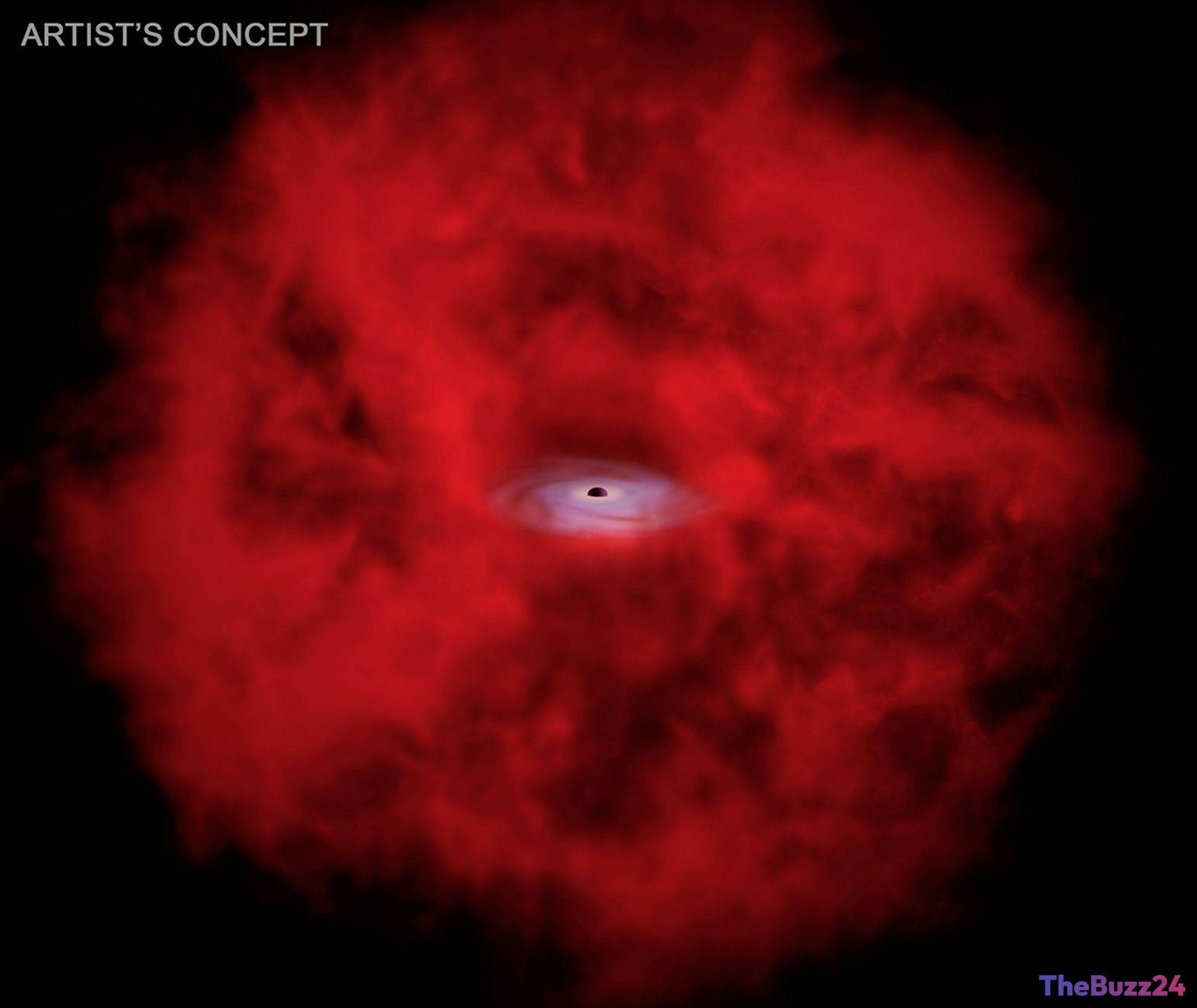
This particular object, officially cataloged as 3DHST-AEGIS-12014, holds significant promise for bridging a critical gap in astrophysical understanding. Scientists hypothesize that it may represent an evolutionary link between black hole stars and the more commonly recognized growing supermassive black holes. Its unique properties could provide unprecedented insights into the formation and evolution of black holes in the nascent stages of the cosmos.
Key Takeaways
- A newly discovered "X-ray dot" by NASA's Chandra X-ray Observatory could explain the nature of "little red dots" (LRDs) found by the James Webb Space Telescope.
- Unlike other LRDs, this object emits X-ray light, despite sharing characteristics like being tiny, red, and extremely distant (11.8 billion light-years away).
- The X-ray dot (3DHST-AEGIS-12014) may represent a crucial link between black hole stars and growing supermassive black holes, offering insights into early universe black hole evolution.
Editor’s Analysis & Impact
This discovery marks a significant advancement in astrophysics, potentially revolutionizing our understanding of the early universe and black hole formation. By identifying an “X-ray dot” that bridges the characteristics of “little red dots” and X-ray emissions, astronomers gain a vital tool for studying the initial stages of cosmic structure development. This finding could lead to a re-evaluation of current models for how supermassive black holes emerge and grow, especially in the universe’s infancy. The unique X-ray signature provides a new observational pathway, prompting further investigations with both X-ray and infrared telescopes to confirm its nature and explore similar objects. This could unlock deeper insights into the interplay between galaxies and their central black holes in the nascent cosmos.
Frequently Asked Questions
Q: What are "little red dots" (LRDs)?
A: LRDs are a class of mysterious, modest-sized, red celestial objects discovered by NASA's James Webb Space Telescope, located approximately 12 billion light-years or more from Earth in the early universe.
Q: How is the "X-ray dot" different from other LRDs?
A: While sharing the characteristics of being tiny, red, and extremely distant like other LRDs, the "X-ray dot" (3DHST-AEGIS-12014) uniquely glows in X-ray light, a feature not observed in other LRDs.
Q: What is the significance of this "X-ray dot" discovery?
A: Astronomers believe this X-ray dot could provide a crucial link between black hole stars and typical growing supermassive black holes, offering new insights into the formation and evolution of black holes in the early universe.
AI Disclosure: This article is based on verified data and official reports. Our Team and AI have cross-referenced every financial detail with primary sources to ensure total accuracy.
More from this Category