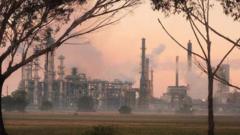
Geelong Refinery Fire Sparks Renewed Debate Over Australia’s Fuel Vulnerability
A major fire at the Viva Energy Corio oil refinery in Geelong has been successfully extinguished after a 13-hour emergency response. The blaze, which began late Wednesday night following reports of explosions, forced the immediate evacuation of all on-site personnel. Authorities have confirmed that there were no injuries, and the incident has been attributed to a mechanical equipment failure. While the facility is currently undergoing an investigation, the event has reignited national concerns regarding the stability of Australia’s fuel supply chain.
As one of the nation’s most vital energy assets, the Corio refinery processes roughly 120,000 barrels of oil per day, accounting for half of Victoria’s fuel needs and 10% of the total national supply. Viva Energy CEO Scott Wyatt confirmed that while the plant is partially operational, production of petrol, diesel, and jet fuel has been scaled back as a safety precaution. This reduction comes at a precarious time, as global energy markets remain volatile due to ongoing geopolitical tensions, which have already contributed to rising costs and supply constraints across the aviation and transport sectors.
Industry experts suggest that Australia’s reliance on imported refined fuels from regional partners like South Korea, Singapore, and Malaysia may provide a necessary buffer against immediate shortages. However, the incident has highlighted the fragility of domestic infrastructure. While analysts believe the average consumer is unlikely to face an immediate fuel crisis, the fire has significantly diminished the nation’s ability to absorb further supply shocks. Local officials have described the event as an unprecedented challenge, prompting a broader discussion on the necessity of strengthening domestic energy resilience.
Key Takeaways
- A fire at the Viva Energy Corio refinery was caused by equipment failure, resulting in no injuries but significant operational disruptions.
- The facility provides 10% of Australia's total fuel supply, and the incident has forced a reduction in petrol, diesel, and jet fuel output.
- While experts believe imports will prevent immediate shortages, the fire has exposed the limited buffer capacity in Australia's energy infrastructure.
Editor’s Analysis & Impact
The fire at the Corio refinery serves as a stark reminder of the fragility inherent in Australia’s energy sector. By relying heavily on a small number of domestic refineries supplemented by international imports, the nation remains highly susceptible to both mechanical failures and global geopolitical volatility. This incident underscores the urgent need for a strategic review of fuel security, particularly as the global energy landscape faces ongoing instability. Moving forward, the industry must balance the cost-efficiency of current supply chains with the necessity of maintaining robust domestic reserves. The market impact will likely manifest as localized price volatility and increased pressure on the government to incentivize infrastructure upgrades to prevent future supply bottlenecks.
Frequently Asked Questions
Q: Was there any environmental or human impact from the fire?
A: No injuries were reported, as all staff were safely evacuated. While the fire caused significant operational damage, authorities have not reported major environmental hazards.
Q: Will this fire lead to fuel shortages for Australian drivers?
A: Experts suggest that while the incident reduces the nation's buffer, Australia's diversified import strategy should prevent immediate fuel shortages for the general public.
AI Disclosure: This article is based on verified data and official reports. Our Team and AI have cross-referenced every financial detail with primary sources to ensure total accuracy.
More from this Category