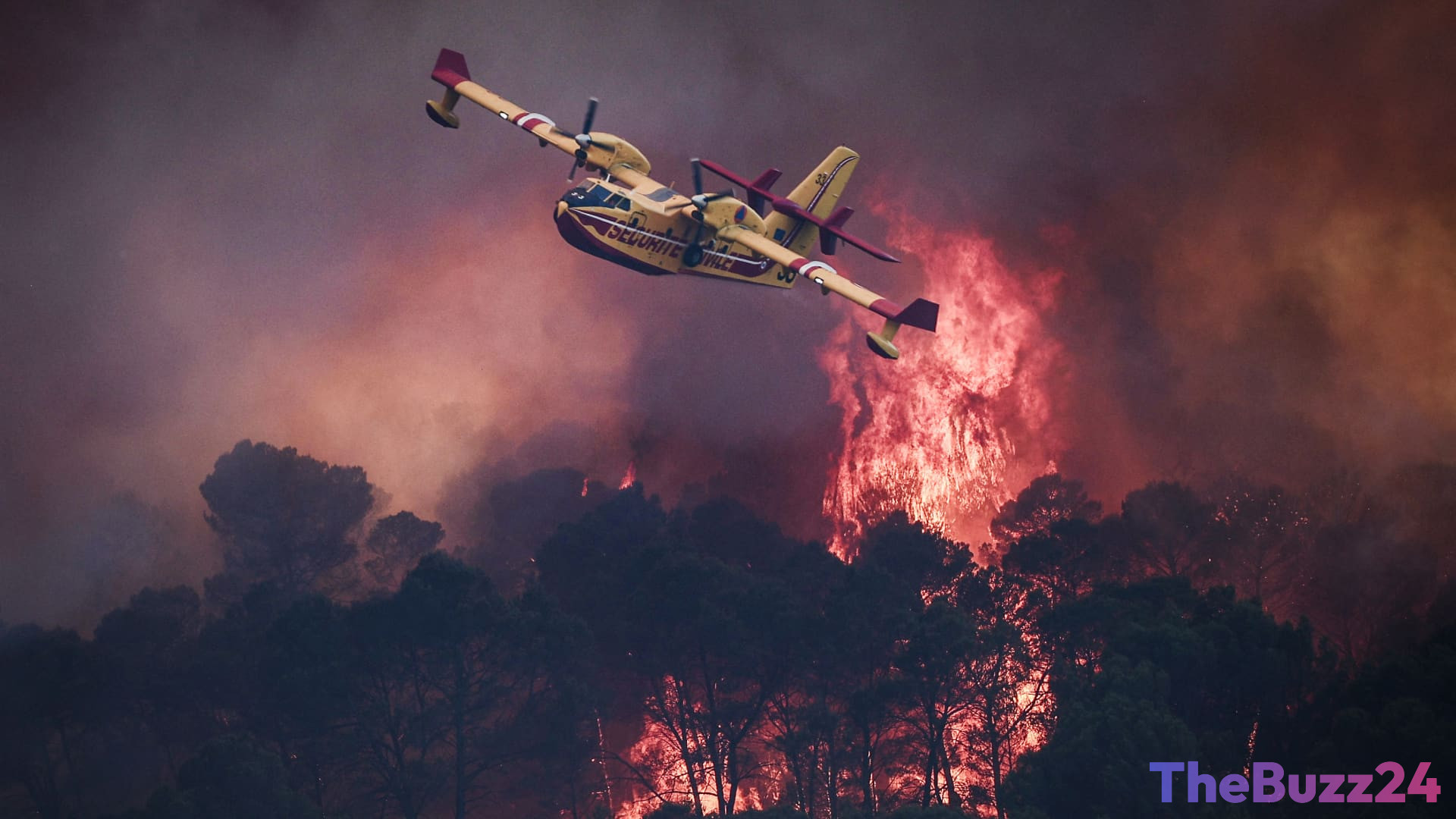
Unprecedented Monster Wildfires Unleash Self-Generating Fire Clouds Across France and Spain
Massive wildfires continue to rage across Southwestern France and Central Spain, triggering one of the largest emergency evacuation efforts in recent European history. The catastrophic blazes have engulfed hundreds of thousands of acres, sweeping from the historic wine regions near Bordeaux into the provinces of Ávila and Toledo near Madrid. Emergency response teams report that over 300,000 residents and visitors have been evacuated as extreme heat and dry conditions fuel the unrelenting flames.
The severity of the crisis is compounded by the emergence of a rare and highly volatile atmospheric phenomenon known as a pyrocumulonimbus storm. These fire-driven thunderstorm clouds create localized extreme weather, generating unpredictable winds, lightning, and fire whirlwinds. Fire officials note that these volatile clouds render traditional containment strategies largely ineffective, allowing the flames to jump firebreaks and spread rapidly in erratic directions.
In France alone, nearly 104,000 acres have been reduced to ashes in the Gironde department, pushing the total area burned nationwide this year past a record-breaking 250,000 acres. Meanwhile, neighboring Spain has seen approximately 190,000 acres scorched across its western territories. Authorities describe the situation as a historic ecological and humanitarian emergency, necessitating massive resource mobilization across multiple municipalities.
Key Takeaways
- More than 300,000 people have been evacuated as aggressive wildfires destroy vast swathes of France and Spain.
- The fires have created pyrocumulonimbus clouds, which generate localized thunderstorms and erratic winds that hinder firefighting operations.
- Over 250,000 acres have burned in France this year alone, alongside nearly 190,000 acres destroyed in central regions of Spain.
Editor’s Analysis & Impact
The unprecedented scale and erratic behavior of the current European wildfires highlight the escalating climate vulnerability facing Southern Europe. The formation of pyrocumulonimbus clouds demonstrates how extreme thermal intensity can alter local atmospheric dynamics, creating secondary hazard events that significantly complicate emergency management and inflate economic damages. Moving forward, European nations will be forced to re-evaluate disaster preparedness protocols, expand cross-border resource sharing, and invest heavily in early detection and vegetation management to build resilience against increasingly severe summer heat events.
Frequently Asked Questions
Q: What is a pyrocumulonimbus fire cloud?
A: A pyrocumulonimbus cloud is a extreme atmospheric phenomenon formed when intense fire heat creates strong updrafts, generating a thunderstorm cloud capable of producing unpredictable winds and lightning.
Q: How many people have been displaced by the fires?
A: Over 300,000 residents and tourists have been forced to evacuate their homes and accommodations across the affected regions in France and Spain.
Q: Which specific areas are facing the worst impact?
A: The most severely impacted locations include the Gironde region near Bordeaux in Southwestern France, as well as the Ávila and Toledo provinces near Madrid in Spain.
AI Disclosure: This article is based on verified data and official reports. Our Team and AI have cross-referenced every financial detail with primary sources to ensure total accuracy.
More from this Category