Unrest Flares in Bangladesh as Ousted Leader’s Loyalists Demand Return
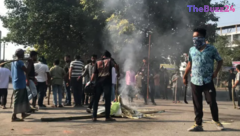
Security forces in Bangladesh deployed tear gas and rubber bullets to break up demonstrations organized by loyalists of ousted Prime Minister Sheikh Hasina, who are calling for her reinstatement. The clashes broke out in the Gopalganj district after members of the banned Bangladesh Chhatra League (BCL) student organization confronted law enforcement, resulting in a police vehicle being torched.
The nationwide demonstrations mark the initial major mobilization by Hasina’s supporters since her ouster following mass civil unrest in August 2024, which ended her 15-year tenure. The protests were ignited shortly after the former prime minister announced she had applied for a passport to travel back to Bangladesh from India, where she has been living in exile. Throughout the country, demonstrators disrupted traffic by igniting tires and setting up roadblocks, while several passenger vehicles were targeted in arson attacks, tragically resulting in the death of a 60-year-old bus driver in Faridpur.
Government officials have strongly condemned the violence, asserting that any conspiracies or efforts to destabilize national security from across the border will be thwarted. Meanwhile, representatives for the BCL maintained that their movement advocates for peaceful demonstration, blaming external provocateurs for the destructive incidents. Authorities remain on high alert as tensions persist, with the government refusing to issue travel documents to Hasina, whom officials have labeled a fugitive facing an active extradition request and a prior death sentence handed down by a domestic tribunal.
Key Takeaways
- Pro-Hasina supporters clashed with security forces across Bangladesh, marking their first major organized demonstration since her 2024 ouster.
- The protests erupted after the former prime minister announced she requested a passport to return from India.
- Bangladeshi authorities have refused to issue travel documents, labeling her a fugitive facing outstanding legal judgments.
Editor’s Analysis & Impact
The resurgence of pro-Hasina demonstrations highlights the deep political polarization and lingering instability that continues to grip Bangladesh following the 2024 uprising. The return of organized protests by the Awami League’s student wing poses a significant security challenge for the current administration as it attempts to consolidate power and navigate diplomatic friction with neighboring India, where Hasina remains in exile. From an economic and societal perspective, sustained civil unrest threatens to disrupt ongoing recovery efforts and foreign investment. Furthermore, the government’s hardline stance—refusing passport issuance and threatening immediate execution of her trial verdict—guarantees that political tensions will remain elevated, increasing the risk of further sporadic violence and compounding the challenges of national reconciliation.
Frequently Asked Questions
Q: Why are supporters of Sheikh Hasina protesting in Bangladesh?
A: Supporters are protesting to demand her return from exile in India and are calling for political change, marking their first major organized demonstration since she was ousted in August 2024.
Q: What is the Bangladeshi government's stance on Sheikh Hasina's return?
A: The government has refused to issue a passport to Hasina, labeling her a fugitive criminal, and maintains that an active extradition treaty exists with India to bring her back to face legal judgments.
AI Disclosure: This article is based on verified data and official reports. Our Team and AI have cross-referenced every financial detail with primary sources to ensure total accuracy.
More from this Category