Global Health Alert: Hantavirus Cases Confirmed Post-Cruise Ship Outbreak
An international health alert has been raised following confirmed cases of hantavirus among passengers who recently disembarked the MV Hondius cruise ship. Nationals from the United States and France are among those who have tested positive for the virus after returning to their home countries. This development is part of a larger cluster of infections linked to the vessel, which has seen a coordinated global response to monitor and repatriate passengers.
In total, seven cases of hantavirus have been confirmed in connection with the MV Hondius, with an additional two cases currently under suspicion. Health authorities have indicated that a second American national on a repatriation flight also exhibited mild symptoms, necessitating their return in specialized biocontainment units as a precautionary measure. In France, Health Minister Stéphanie Rist reported that a woman is in isolation in Paris with her condition deteriorating, and 22 contacts have been traced. Tragically, three passengers who traveled on the ship have died, with two of these deaths confirmed to be due to the virus. The individual believed to be the initial source of the outbreak passed away before testing could be conducted. Furthermore, two British nationals with confirmed infections are receiving treatment in the Netherlands and South Africa.
Hantaviruses are typically carried by rodents, but the Andes strain, which is suspected to have infected some passengers during the ship’s journey in South America, is known to be transmissible between humans. Symptoms can manifest as fever, extreme fatigue, muscle aches, stomach pain, vomiting, diarrhea, and shortness of breath. Despite the severity of individual cases, officials maintain that the overall risk of a major outbreak is low. The MV Hondius, which departed Ushuaia, Argentina, on April 1, is currently docked in Spain’s Canary Islands, with over 90 passengers having already been repatriated to various countries, including Canada, the UK, Spain, and the Netherlands.
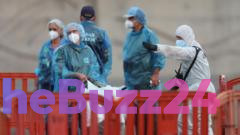
The international repatriation effort has involved complex logistics and varying health protocols. While the World Health Organization recommended a 42-day isolation period for those leaving the MV Hondius, the acting head of the U.S. Centers for Disease Control (CDC), Dr. Jay Bhattacharya, expressed a desire to avoid public panic, emphasizing the rarity of human-to-human transmission for this specific virus and distinguishing it from pathogens like COVID-19. Passengers disembarking in Tenerife were observed wearing protective gear, including gowns, caps, and masks, underscoring the cautious approach taken by health officials worldwide as they manage the ongoing situation and monitor all individuals who were aboard the affected cruise.
Key Takeaways
- Multiple nationalities, including American and French, have tested positive for hantavirus after disembarking the MV Hondius cruise ship.
- The outbreak, linked to the Andes strain likely contracted in South America, has resulted in seven confirmed cases and three deaths, prompting an international repatriation and monitoring effort.
- While health authorities are taking precautions, the risk of a widespread human-to-human outbreak is considered low, though isolation guidelines vary between organizations.
Editor’s Analysis & Impact
This hantavirus outbreak on the MV Hondius cruise ship highlights the persistent challenges in managing infectious diseases in a highly globalized travel environment. For the cruise industry, such incidents can severely impact public perception and booking confidence, potentially leading to calls for stricter pre-boarding health screenings and onboard medical protocols. The differing isolation recommendations between the WHO and the US CDC also underscore the complexities of international health coordination and the need for unified guidelines during cross-border health crises. While officials deem the risk of a major outbreak low, the event serves as a critical reminder of the potential for rare pathogens to emerge and spread, necessitating robust global surveillance and rapid response mechanisms. Future implications could include increased scrutiny on travel insurance policies and a greater emphasis on health preparedness for long-distance voyages.
Frequently Asked Questions
Q: What is hantavirus?
A: Hantavirus is a family of viruses carried by rodents that can cause various disease syndromes in humans. The specific strain linked to the MV Hondius outbreak is believed to be the Andes strain, which is notable for its potential for human-to-human transmission.
Q: How is hantavirus transmitted?
A: Typically, hantavirus is transmitted to humans through contact with infected rodent droppings, urine, or saliva, or by inhaling aerosolized particles from these sources. However, the Andes strain, implicated in this outbreak, is one of the few hantaviruses that can also be transmitted from person to person, usually through close contact with an infected individual's bodily fluids.
Q: What are the symptoms of hantavirus infection?
A: Symptoms of hantavirus can vary but often include fever, extreme fatigue, muscle aches, headache, dizziness, and chills. More severe symptoms can develop, such as stomach pain, nausea, vomiting, diarrhea, and shortness of breath, which can progress to a severe respiratory illness known as Hantavirus Pulmonary Syndrome (HPS).
AI Disclosure: This article is based on verified data and official reports. Our Team and AI have cross-referenced every financial detail with primary sources to ensure total accuracy.
More from this Category