Orbital View: Astronauts Capture FIFA World Cup 2026 Host Cities from Space
From an altitude of 250 miles, astronauts aboard the International Space Station (ISS) have provided a unique, top-down perspective of the North American cities preparing to host the FIFA World Cup in 2026. These orbital observations offer a striking blend of human-made infrastructure, sprawling urban landscapes, and the natural ecosystems that surround the sixteen venues slated for the prestigious global tournament.
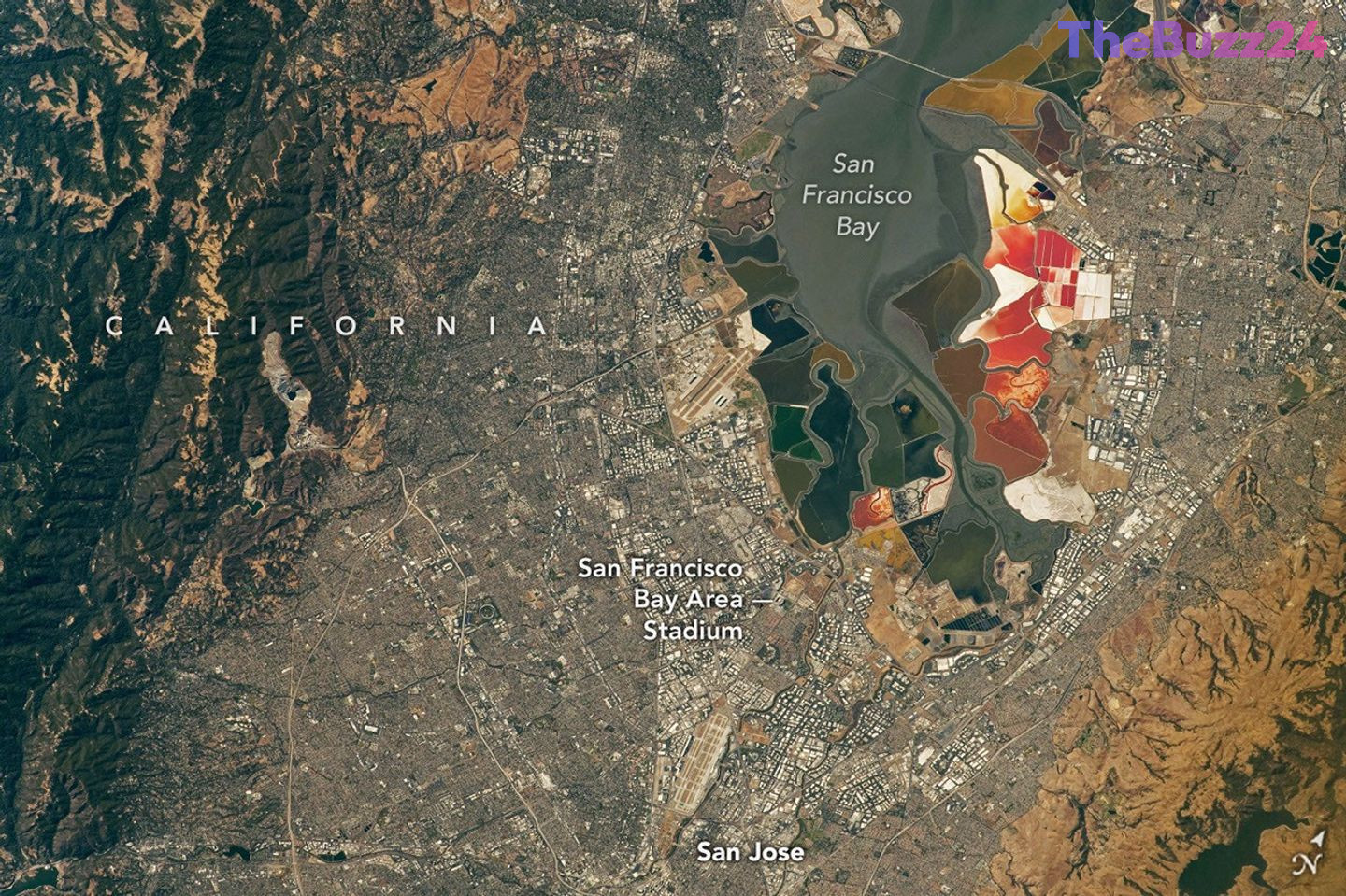
Among the prominent locations captured is the San Francisco Bay Area Stadium, also known as Levi’s Stadium, situated in Santa Clara, California. This venue, which will host several matches including a fixture between Qatar and Switzerland, and a knockout match where the U.S. faced Bosnia and Herzegovina, is nestled amidst a diverse environment of recreational facilities, housing, and business districts. The imagery also reveals the southern expanse of San Francisco Bay, an area undergoing a significant 50-year initiative to restore up to 90 percent of its former salt ponds into vital tidal wetlands and marshlands, while preserving some of its historical salt-making practices.
Further east, the New York New Jersey Stadium, or MetLife Stadium, in East Rutherford, New Jersey, stands as another focal point of the orbital photography. This stadium, set to host the FIFA World Cup final, is strategically located along the New Jersey Turnpike, west of Midtown Manhattan. The surrounding Meadowlands region bears the marks of centuries of human activity, from early colonial settlements that cleared wetlands and forests to its 20th-century use as an unregulated dumping ground. However, recent decades have seen concerted wetland restoration efforts coinciding with the development of the modern sports and entertainment complex.
Astronauts have also documented other future World Cup venues, including Guadalajara Stadium (Estadio Akron), Los Angeles Stadium (SoFi Stadium), Houston Stadium (NRG Stadium), and BC Place Vancouver. These images collectively underscore the vast scale of the tournament’s infrastructure and the intricate relationship between urban development and the natural world, all viewed from an extraordinary vantage point.
Key Takeaways
- Astronauts on the International Space Station offer unique aerial perspectives of the North American cities and stadiums preparing for the FIFA World Cup 2026.
- Detailed observations highlight key venues like Levi's Stadium (San Francisco Bay Area) and MetLife Stadium (New York/New Jersey), showcasing their integration within urban and natural landscapes.
- The imagery reveals ongoing environmental restoration efforts, such as wetland projects in the San Francisco Bay and New Jersey Meadowlands, adjacent to major sports infrastructure.
Editor’s Analysis & Impact
The use of space-based imagery for monitoring global events like the FIFA World Cup underscores a growing trend in leveraging advanced technology for urban planning and environmental oversight. This perspective offers invaluable insights into the scale of infrastructure development required for such large-scale events and their interaction with surrounding ecosystems. For host cities, the tournament represents a significant economic boost through tourism and local investment, but also brings heightened scrutiny on sustainable development practices. The focus on wetland restoration around stadiums highlights a broader industry shift towards integrating ecological considerations into major construction projects. This approach sets a precedent for future global events, emphasizing environmental stewardship alongside economic growth.
Frequently Asked Questions
Q: What is the significance of viewing World Cup stadiums from space?
A: Viewing the stadiums from space provides a unique, broad perspective on the urban development, infrastructure, and environmental context of the host cities. It allows for observation of how these large venues integrate with their surroundings and highlights ongoing ecological restoration efforts.
Q: Which specific stadiums are highlighted in the orbital observations?
A: The article specifically highlights the San Francisco Bay Area Stadium (Levi's Stadium) in Santa Clara, California, and the New York New Jersey Stadium (MetLife Stadium) in East Rutherford, New Jersey. Other mentioned venues include Guadalajara Stadium, Los Angeles Stadium, Houston Stadium, and BC Place Vancouver.
Q: Are there environmental aspects discussed in relation to these stadiums?
A: Yes, the article notes significant environmental efforts, such as the 50-year project to restore salt ponds to tidal wetlands in the San Francisco Bay Area near Levi's Stadium. Similarly, it mentions recent wetland restoration initiatives in the New Jersey Meadowlands surrounding MetLife Stadium, an area historically impacted by human development.
AI Disclosure: This article is based on verified data and official reports. Our Team and AI have cross-referenced every financial detail with primary sources to ensure total accuracy.
More from this Category