Curiosity Rover Marks Milestone: 49 Rock Samples Drilled on Mars
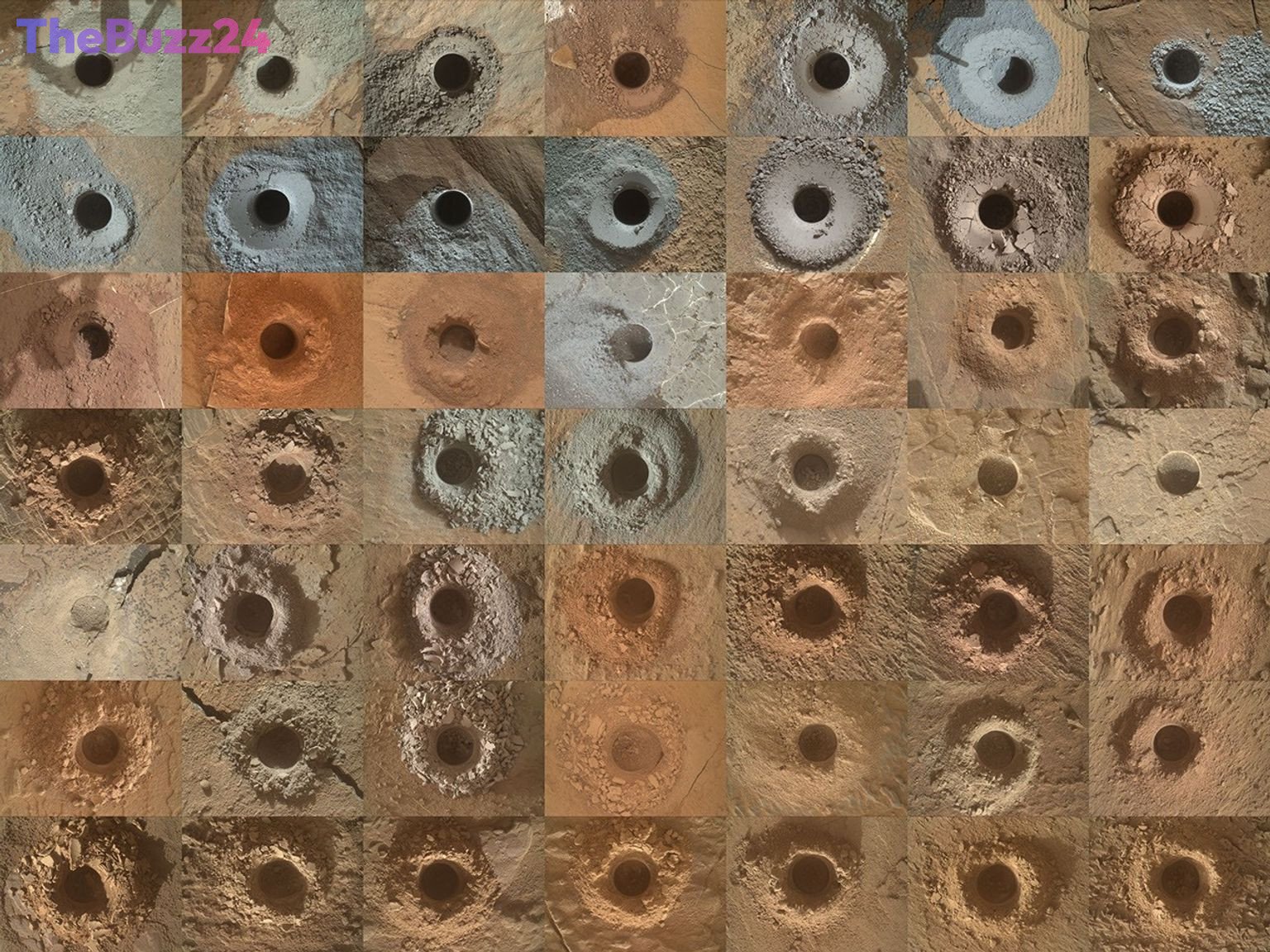
NASA’s venerable Curiosity rover has achieved a significant milestone in its ongoing exploration of the Red Planet, having successfully drilled and collected samples from 49 distinct locations on the Martian surface. This achievement, documented in a recent collage released by the space agency, highlights the rover’s persistent work in analyzing the geological history of Mars.
Each of the 49 drill holes represents a meticulously collected sample of Martian rock. The rover’s sophisticated drill, situated at the tip of its robotic arm, pulverizes rock material, which is then transferred to internal instruments for detailed compositional analysis. This process is crucial for understanding the planet’s past habitability and geological evolution.
The images capturing these drill sites were taken by the Mars Hand Lens Imager (MAHLI), a high-resolution camera also mounted on Curiosity’s robotic arm. These close-up views reveal the texture and characteristics of the rocks from which samples were extracted. The standard diameter for each drill hole is approximately 0.63 inches (16 millimeters), a testament to the precision of the rover’s drilling mechanism.
Developed and operated by NASA’s Jet Propulsion Laboratory (JPL), which is managed by the California Institute of Technology (Caltech), the Curiosity mission is a cornerstone of NASA’s Mars Exploration Program. The MAHLI instrument itself was developed by Malin Space Science Systems. This ongoing data collection continues to provide invaluable insights into the Red Planet’s ancient environments.
Key Takeaways
- NASA's Curiosity rover has drilled and collected samples from 49 locations on Mars.
- The collected rock samples are analyzed by instruments within the rover to understand Martian composition.
- The drill holes, each 0.63 inches in diameter, were photographed using the rover's MAHLI camera.
Editor’s Analysis & Impact
The milestone of 49 drill holes by the Curiosity rover underscores the longevity and scientific productivity of NASA’s Mars Exploration Program. Each sample collected offers a unique data point, contributing to a more comprehensive understanding of Mars’ geological history and potential for past life. This sustained data acquisition is vital for informing future missions, including sample return initiatives and human exploration planning. The continued success of such complex robotic missions highlights advancements in engineering and autonomous operation, paving the way for more ambitious scientific endeavors in deep space.
Frequently Asked Questions
Q: What is the purpose of the drill holes made by the Curiosity rover?
A: The drill holes are made to collect pulverized rock samples from the Martian surface. These samples are then analyzed by instruments inside the rover to determine their chemical and mineral composition, providing insights into Mars' geological history and past environment.
Q: What is MAHLI and what does it do?
A: MAHLI stands for Mars Hand Lens Imager. It is a high-resolution camera located on the end of Curiosity's robotic arm. Its primary function is to take close-up images of rocks and soil, allowing scientists to examine their texture and features in detail.
Q: Who manages the Curiosity rover mission?
A: The Curiosity rover mission is managed by NASA's Jet Propulsion Laboratory (JPL) in Pasadena, California. JPL is managed by the California Institute of Technology (Caltech) on behalf of NASA's Science Mission Directorate.
AI Disclosure: This article is based on verified data and official reports. Our Team and AI have cross-referenced every financial detail with primary sources to ensure total accuracy.
More from this Category