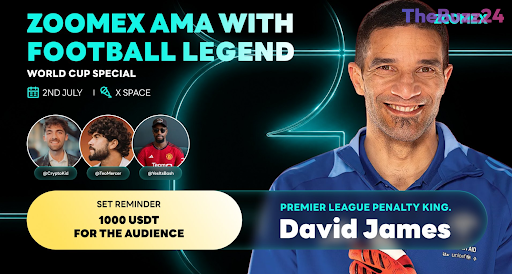
Goalkeeping Legend David James Draws Parallels Between Elite Sports and Market Trading
Former England goalkeeper David James recently joined a panel of expert traders to discuss the intersection of high-stakes sports performance and financial market strategy. During the discussion, James emphasized that the pressure faced by a goalkeeper is not found in the chaos of a match, but in the quiet moments of concentration required to make a game-changing save. He argued that success in both the penalty box and the trading floor relies heavily on rigorous preparation rather than mere instinct.
James, who enjoyed a storied career with clubs like Liverpool and Manchester City, explained that his approach to penalties was rooted in data—analyzing foot placement, run-up angles, and historical tendencies of opposing strikers. He noted that when a goalkeeper relies solely on ‘gut feeling’ without the backing of research, they are far more likely to dive the wrong way. The panel of traders, including Crypto Kid and Theo Mercier, echoed this sentiment, noting that the ability to analyze data and market trends is what separates successful traders from those who act on impulse.
Beyond the technical aspects of the game, the discussion touched on the psychological resilience required to handle errors. James highlighted that in the modern era, technology allows players to review mistakes immediately, turning failures into actionable data rather than lingering sources of anxiety. This shift in perspective—viewing errors as information rather than ghosts—is a philosophy he believes is essential for anyone navigating volatile environments, whether in professional sports or global finance.
Looking ahead to the remainder of the World Cup, James remained steadfast in his support for England, citing the team’s ability to step up in critical moments. The event also served as part of a broader charitable initiative, with the platform hosting the discussion committing funds to the UEFA Foundation, reinforcing the connection between professional excellence and social impact.
Key Takeaways
- Elite performance in both sports and trading is driven by thorough preparation and data analysis rather than spontaneous instinct.
- Modern technology has transformed how athletes and traders process mistakes, turning errors into valuable data points for future improvement.
- Psychological control is maintained by simulating high-pressure scenarios in advance, which helps eliminate panic during critical moments.
Editor’s Analysis & Impact
The intersection of professional sports and financial trading is a growing niche in digital media, as both fields demand high-speed decision-making under extreme pressure. By framing goalkeeping as a data-driven discipline, David James provides a relatable framework for retail traders who often struggle with emotional decision-making. The industry impact of such content is significant; it humanizes complex trading strategies and attracts a broader audience by leveraging the popularity of football. Future outlooks suggest that platforms will continue to bridge the gap between ‘performance’ sectors, using the discipline of elite athletes to market the necessity of structured, analytical approaches to crypto and stock trading. This trend highlights a shift toward ‘lifestyle-integrated’ financial education, where the focus moves from technical charts to the psychological architecture of the individual trader.
Frequently Asked Questions
Q: How does David James compare goalkeeping to trading?
A: James suggests that both require deep preparation and data analysis. Just as a goalkeeper studies a striker's tendencies to predict a penalty, a trader must analyze market data to make informed decisions rather than relying on emotional impulses.
Q: Why does James believe preparation is more important than instinct?
A: He argues that instinct can be flawed when it is not supported by facts. By preparing for various scenarios in advance, a professional can act quickly and accurately when the moment arrives, effectively turning 'instinct' into a refined, practiced response.
AI Disclosure: This article is based on verified data and official reports. Our Team and AI have cross-referenced every financial detail with primary sources to ensure total accuracy.
More from this Category