US-Made Autonomous Combat Vehicles Face Ultimate Test on Ukrainian Frontlines
In a major milestone for military technology, American defense tech firm Forterra has deployed more than 100 of its autonomous ground vehicles (UGVs) to active conflict zones in Ukraine. Operating on the frontlines for the past nine months, this deployment represents the largest-scale combat integration of self-driving ground vehicles by any U.S. defense technology company to date. The mission, backed by U.S. defense funding, aims to modernize military logistics and support Ukrainian forces navigating highly contested environments.
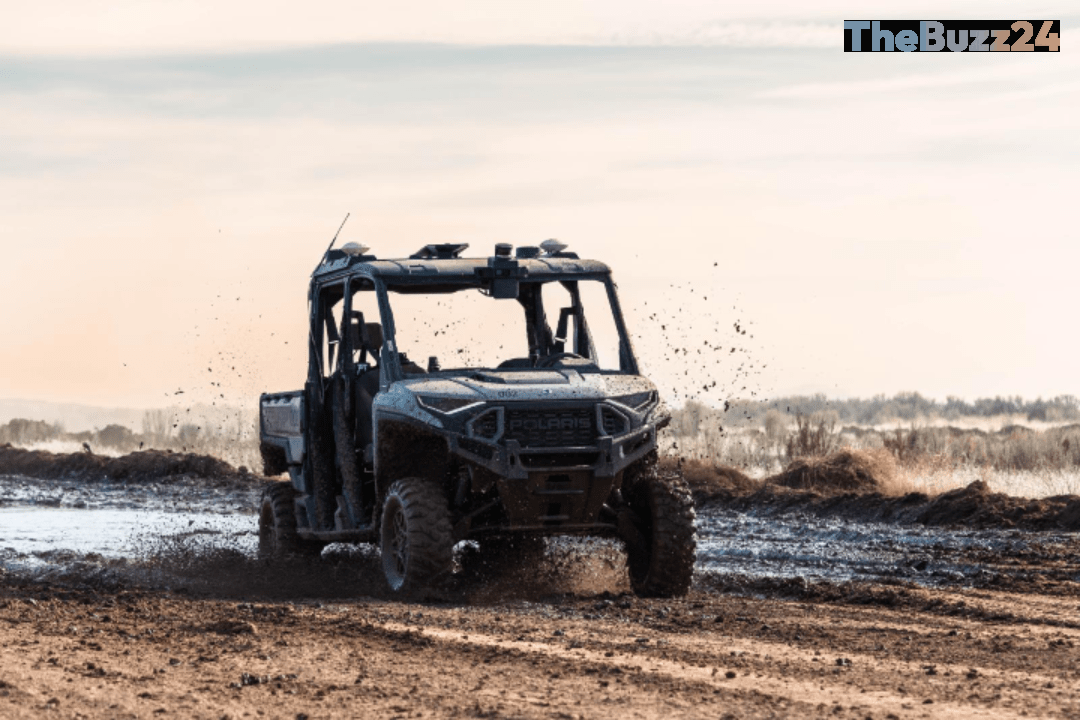
The deployed vehicles, known as Lancers, are built on Polaris ATV platforms and equipped with Forterra’s proprietary sensor and computing systems. Unlike smaller, battery-powered Ukrainian-built UGVs that top out at a 250-kilogram capacity, the gas-powered Lancers can transport up to 750 kilograms of cargo. Initially designed to meet the stringent specifications of the U.S. military, the vehicles were adapted for the Ukrainian battlefield by integrating Starlink satellite internet antennas, significantly boosting their operational utility.
Since their deployment last October, the Lancers have logged over 2,500 miles across more than 1,100 missions. They have transported over 777,000 pounds of supplies and successfully executed 52 casualty evacuations. However, the harsh realities of the battlefield have exposed limitations. Several units have been lost to deep mud and targeted enemy strikes. Currently, Ukrainian operators primarily teleoperate the vehicles rather than relying on full autonomy, as existing AI systems still struggle to dynamically identify and react to live, unpredictable enemy threats in real-time.
Forterra, which has secured over $500 million in venture funding from investors like XYZ Venture Capital and Moore Strategic Partners, is leveraging these battlefield insights to refine its technology. The company is working to merge traditional robotics algorithms with generative AI to improve real-time decision-making. As the demand for ground autonomy grows, other startups like Scout AI, Field AI, and Overland AI are also developing competing platforms. For frontline forces, the immediate challenge remains reducing production costs, as high attrition rates make expensive hardware difficult to sustain in prolonged conflicts.
Key Takeaways
- Forterra has deployed over 100 Lancer autonomous ground vehicles in Ukraine, marking the largest combat deployment of its kind by a U.S. defense tech firm.
- The gas-powered Lancers can carry up to 750 kilograms of cargo and have completed over 1,100 missions, including 52 casualty evacuations.
- While highly effective, current limitations in AI require soldiers to teleoperate the vehicles to navigate live enemy threats, highlighting the need for cheaper, more adaptable systems.
Editor’s Analysis & Impact
The deployment of Forterra’s Lancer vehicles in Ukraine marks a critical pivot point for the defense tech sector, shifting autonomous ground vehicles (UGVs) from theoretical testing grounds to active combat realities. While aerial drones have dominated modern warfare discussions, the emergence of dense electronic warfare and aerial surveillance has made ground-based logistics equally perilous. Forterra’s real-world testing provides invaluable data that laboratory simulations simply cannot replicate, positioning the company favorably for future Pentagon contracts. However, the reliance on teleoperation highlights a significant technological bottleneck: current AI models lack the generalized reasoning required to navigate active, hostile environments autonomously. To truly revolutionize the defense market, UGV manufacturers must bridge the gap between classical robotics and generative AI, while simultaneously driving down production costs to accommodate the high-attrition realities of modern warfare.
Frequently Asked Questions
Q: What is the Forterra Lancer and how is it being used in Ukraine?
A: The Lancer is an autonomous ground vehicle (UGV) built on a Polaris ATV platform. In Ukraine, it is used for logistics, transporting up to 750 kilograms of supplies, and performing casualty evacuations in high-risk zones.
Q: Why are these vehicles being teleoperated instead of running fully autonomously?
A: While the vehicles can navigate complex terrain autonomously, current AI systems cannot yet dynamically identify and react to live enemy threats, such as incoming drone strikes or ambush situations. Teleoperation ensures the valuable vehicles are not easily lost.
Q: What improvements are frontline forces requesting for these UGVs?
A: Ukrainian forces have emphasized the need to make the vehicles cheaper to produce. Because battlefield attrition is high, lower-cost units would allow commanders to deploy them more freely without fearing costly losses.
AI Disclosure: This article is based on verified data and official reports. Our Team and AI have cross-referenced every financial detail with primary sources to ensure total accuracy.
More from this Category