US Basketball Player Arrested in Nigeria with 75 Pounds of Cannabis
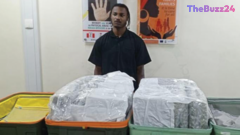
A U.S. basketball player, Greene Da’monte Khiree, 28, from Georgia, has been arrested at Lagos’s main airport in Nigeria after authorities discovered approximately 33.95 kilograms (75 pounds) of cannabis in his luggage. Khiree, who reportedly arrived from Thailand via the United Arab Emirates, was apprehended by the National Drug Law Enforcement Agency (NDLEA) following an incident where he allegedly attempted to abandon his checked-in bags.
Investigators stated that Khiree was taken into custody after airport officials observed him leaving two checked bags and trying to exit the airport with only his carry-on. The abandoned bags, which bore his name, were found to contain 32 packs of a potent cannabis strain known as “Loud,” along with a tracking device. Khiree reportedly informed authorities that he had been playing professional basketball in Thailand and was visiting Nigeria to “build networks” for his career. However, an examination of his phone by the agency reportedly indicated his awareness of and involvement in the drug trafficking activity. Records from the International Basketball Federation (FIBA) list a player named Damonte Greene, whose most recent appearance was at the Phuket Elite Cup in Thailand on September 26.
This arrest highlights Nigeria’s evolving role in the global illicit drug trade. Once primarily a transit point, the West African nation has increasingly become a significant producer, consumer, and distributor of illegal substances, according to international reports. Recent NDLEA operations have uncovered several industrial-scale methamphetamine laboratories, raising concerns about potential links between Nigerian drug producers and Mexican cartels. In a related development in September, the agency dismantled a meth lab and arrested a suspected Mexican drug kingpin attempting to flee Nigeria through Lagos. Earlier in August, a social media influencer was also apprehended in connection with an international drug trafficking network, following the seizure of cocaine valued at nearly $28 million destined for the UK.
Key Takeaways
- US basketball player Greene Da'monte Khiree was arrested at Lagos airport with 33.95kg (75 lbs) of cannabis.
- Authorities allege his phone showed knowledge of drug trafficking, despite his claim of visiting Nigeria for career networking.
- The incident underscores Nigeria's growing challenge as a hub for drug production and distribution, with concerns about links to international cartels.
Editor’s Analysis & Impact
This incident involving a professional athlete underscores the pervasive reach of international drug trafficking networks and the increasing scrutiny at global transit points. For Nigeria, it reinforces the country’s struggle against becoming a major hub for illicit drug production and distribution, moving beyond its historical role as merely a transit nation. The alleged links to Mexican cartels and the discovery of meth labs signal a worrying escalation in the sophistication and scale of drug operations within the country. This case could prompt heightened vigilance from international sports bodies regarding the activities of their athletes abroad and may lead to increased collaboration between Nigerian and international law enforcement agencies to combat organized crime. The arrest also serves as a stark reminder of the severe legal consequences for individuals involved in drug-related offenses, regardless of their public profile.
Frequently Asked Questions
Q: Who is Greene Da'monte Khiree?
A: Greene Da'monte Khiree is a 28-year-old American basketball player from Georgia who was reportedly playing professionally in Thailand before his arrest in Nigeria.
Q: What was he arrested for?
A: He was arrested at Lagos airport for allegedly attempting to traffic approximately 33.95 kilograms (75 pounds) of cannabis.
Q: What is Nigeria's current role in drug trafficking?
A: Nigeria has evolved from primarily being a transit hub for drugs to becoming a significant producer, consumer, and distributor of illegal substances, including methamphetamine, with concerns about links to international cartels.
AI Disclosure: This article is based on verified data and official reports. Our Team and AI have cross-referenced every financial detail with primary sources to ensure total accuracy.
More from this Category