US Bishops Express Regret Over White House Meeting Amid Political Controversy
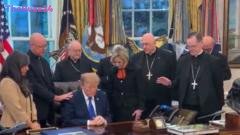
Two prominent US Catholic bishops have voiced regret over a recent meeting at the White House with President Donald Trump, following public backlash over images that appeared to cast the encounter as a political endorsement. The bishops stated their intention was not to engage in partisan politics, but rather to discuss pressing issues.
Archbishop Jeffrey Grob of Milwaukee and Bishop William Joensen of Des Moines were among a group of bishops pictured with President Trump in the Oval Office. Bishop Joensen explained that the meeting, arranged by White House officials, was intended to cover topics such as immigration policy, visa processing for international clergy, and the welfare of vulnerable populations. He emphasized that the bishops did not intend to endorse any political party or candidate, expressing disappointment that the event was subsequently used for partisan purposes.
Archbishop Grob echoed these sentiments, stating he believed the meeting was private and not a political event. He noted that after initial discussions with White House staff, the group was invited to pray with the President. Grob shared that he received numerous messages from concerned congregants, particularly given the proximity to a national election, with some expressing hurt due to the impact of presidential policies on their families. Neither bishop, nor other participants, reportedly granted permission for the public release of photos or videos from the meeting.
The White House, when approached for comment, did not directly address the bishops’ statements. A White House spokesperson asserted that President Trump has been a strong advocate for Catholic Americans. Recent polling data indicates a shift in Catholic voter sentiment towards the President, with approval ratings declining since 2025, potentially influencing upcoming elections.
Key Takeaways
- Two US Catholic bishops regret a meeting with President Trump, stating it was not intended as a political endorsement.
- The bishops aimed to discuss issues like immigration and the welfare of vulnerable persons during the White House visit.
- Images and video of the meeting were released, leading to accusations of political exploitation, which the bishops deny.
- The White House maintains Trump's strong record with Catholic Americans, despite recent polling showing a dip in approval among this demographic.
Editor’s Analysis & Impact
This incident highlights the delicate balance religious leaders must strike when engaging with political figures, especially in an election year. The bishops’ regret underscores the potential for even private meetings to be perceived through a partisan lens, particularly when amplified by social media. The White House’s response suggests a strategic effort to leverage any perceived support, while the bishops’ concerns point to a broader unease within segments of the Catholic community regarding specific administration policies. This dynamic could influence voter turnout and shape political discourse among religious groups.
Frequently Asked Questions
Q: Why did the bishops express regret over meeting President Trump?
A: The bishops expressed regret because images and videos of their meeting were released, leading to public perception that they were endorsing President Trump politically, which was not their intention. They felt the meeting was exploited for partisan purposes.
Q: What issues were the bishops intending to discuss with President Trump?
A: The bishops intended to discuss issues including immigration policy, visa processing for international clergy, and the welfare of vulnerable populations.
Q: Did the bishops give permission for the meeting photos and videos to be released?
A: According to Archbishop Grob, none of the participants in the meeting gave permission for the public distribution or posting of video or photos of the event.
AI Disclosure: This article is based on verified data and official reports. Our Team and AI have cross-referenced every financial detail with primary sources to ensure total accuracy.
More from this Category