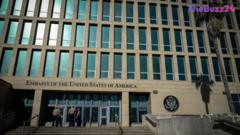
US Government Disburses $3 Million to Diplomats and Spies Suffering From Enigmatic ‘Havana Syndrome’
The United States government has distributed nearly $3 million in compensation to intelligence officers, diplomats, and their families who have suffered from the mysterious neurological condition known as “Havana Syndrome.” These payouts mark the first financial reparations issued to government personnel affected by the unexplained health anomalies, which first came to light about a decade ago among CIA operatives stationed in Cuba. Since those initial reports, numerous American officials stationed globally, including in China, have reported similar health issues.
Officially compensated under the Havana Act of 2021, recipients of the funds have reported a wide array of debilitating physical symptoms. Affected individuals describe experiencing intense pressure in their skulls, severe dizziness, nausea, and auditory disturbances such as low hums, clicks, and the sensation of grinding metal. The Department of Defense reaffirmed its commitment to prioritizing the medical care and support of affected personnel alongside the announcement of these payments.
The origins of the syndrome have been a subject of intense debate and geopolitical speculation. Early theories suggested that foreign adversaries might be utilizing advanced microwave or sonic weaponry to target American personnel overseas, leading to embassy staff reductions in Cuba and Canada. However, a comprehensive assessment by the National Intelligence Council concluded it was highly improbable that a foreign adversary was behind the incidents, though they explicitly validated the genuine pain and trauma experienced by the victims.
Key Takeaways
- The US government has issued nearly $3 million in compensation to personnel suffering from 'Havana Syndrome' under the 2021 Havana Act.
- Symptoms of the mysterious condition include severe headaches, cognitive issues, nausea, and hearing strange high-pitched or grinding noises.
- While intelligence reports suggest a foreign weapon attack is highly unlikely, the government officially recognizes the physical trauma experienced by the victims.
Editor’s Analysis & Impact
The disbursement of compensation under the Havana Act represents a significant pivot in how the US government manages unexplained occupational hazards faced by its intelligence and diplomatic corps. By providing financial relief, the administration acknowledges the severe physical toll on its workforce, even as the scientific and intelligence communities remain divided on the root cause. This move helps maintain morale within sensitive foreign service and intelligence roles, reassuring personnel that the state will support them if they are injured in the line of duty. However, the lack of a definitive cause—and the intelligence community’s skepticism regarding foreign sonic weapons—leaves a lingering cloud of uncertainty. It highlights the evolving nature of modern espionage, where non-traditional health threats can disrupt international diplomacy and force major staffing reconfigurations without a single shot being fired.
Frequently Asked Questions
Q: What is Havana Syndrome?
A: Havana Syndrome is a term used to describe a series of unexplained physical and neurological symptoms—such as dizziness, nausea, migraines, and auditory hallucinations—first reported by US government officials and diplomats in Havana, Cuba, in 2016.
Q: What is the Havana Act of 2021?
A: The Havana Act is a US federal law signed in 2021 that authorizes financial support and specialized medical care for government employees, particularly diplomats and intelligence officers, who have suffered brain injuries or other symptoms associated with anomalous health incidents.
Q: Who is believed to be responsible for these incidents?
A: While initial speculation pointed toward foreign adversaries using microwave or sonic weapons, a major US intelligence assessment concluded it is highly unlikely that a foreign actor or novel weapon is responsible for the symptoms, though some agencies have not entirely ruled out the possibility.
AI Disclosure: This article is based on verified data and official reports. Our Team and AI have cross-referenced every financial detail with primary sources to ensure total accuracy.
More from this Category