US Grants Visas for Iranian Delegation Amidst Ongoing War
The United States has issued visas to a delegation from Iran, allowing them to attend the upcoming United Nations General Assembly (UNGA) in New York. This decision comes as the protracted conflict between the two nations enters its seventh month, with no immediate signs of de-escalation.
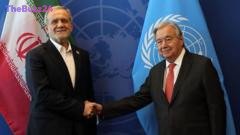
The core Iranian delegation, expected to include President Masoud Pezeshkian and Foreign Minister Abbas Araghchi, will be permitted to participate in the UNGA’s High-Level Week. A spokesperson for the U.S. State Department confirmed the visa approvals, emphasizing that the delegation will operate under specific travel restrictions and prohibitions on purchasing certain American goods.
These restrictions are designed to prevent the Iranian regime’s elites from exploiting the UNGA for personal gain while the Iranian populace faces significant domestic challenges. The U.S. has cited issues such as water and electricity shortages, severe inflation, and what it describes as “brutal repression” within Iran. The delegation’s size is also reportedly smaller than in previous years, and past limitations have included bans on shopping at certain retailers and requirements for pre-approval for luxury item purchases.
The ongoing war, which began in February, has had a considerable impact on global energy prices and has extended into neighboring regions. The conflict has seen Iran repeatedly target U.S. bases and allied nations in the Gulf, as well as Israel, while the U.S. and Israel have conducted joint attacks on Iran. The UN General Assembly’s General Debate is scheduled to commence shortly, with leaders from various nations, including the U.S., UK, France, Ukraine, Syria, and Iran, expected to deliver addresses.
Key Takeaways
- The US has granted visas to an Iranian delegation, including the President and Foreign Minister, to attend the UN General Assembly.
- The delegation will be subject to travel restrictions and limitations on purchasing certain goods.
- The decision occurs amidst a prolonged conflict between the US and Iran, now in its seventh month, which has impacted global energy prices.
Editor’s Analysis & Impact
The US decision to grant visas to the Iranian delegation, despite the ongoing conflict, highlights the complex diplomatic landscape surrounding the UNGA. While framed as a fulfillment of host country obligations, the stringent restrictions underscore the US’s continued pressure on Iran. This move could facilitate crucial, albeit tense, diplomatic exchanges at a critical juncture. The broader implications involve maintaining channels of communication even amidst hostilities, potentially influencing regional stability and global energy markets. The restrictions also serve as a public statement on US policy, aiming to prevent the perceived exploitation of international forums by regimes facing domestic hardship.
Frequently Asked Questions
Q: Why is the US allowing the Iranian delegation to attend the UN General Assembly?
A: The US, as the host country for the UN headquarters, is obligated to grant visas to member state delegations to attend UN General Assembly meetings. However, the US has imposed specific travel restrictions and purchase limitations on the Iranian delegation.
Q: What kind of restrictions are being placed on the Iranian delegation?
A: The delegation will face travel restrictions and will be prohibited from purchasing certain American products, particularly luxury goods. The exact nature of these restrictions may be similar to those imposed in previous years, which included bans on shopping at specific stores and requiring permission for luxury purchases.
Q: How long has the conflict between the US and Iran been ongoing?
A: The conflict mentioned in the article began on February 28th and has been ongoing for seven months.
AI Disclosure: This article is based on verified data and official reports. Our Team and AI have cross-referenced every financial detail with primary sources to ensure total accuracy.
More from this Category