Journalist Shelly Kittleson Released Following Week-Long Captivity in Baghdad
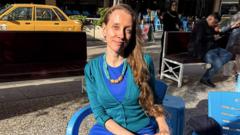
American freelance journalist Shelly Kittleson has been released in Baghdad, Iraq, concluding a harrowing week-long abduction. Kittleson, who was captured on March 31, regained her freedom on Tuesday, April 7, after being held by the Iran-backed militia group Kataib Hezbollah. As a condition of her release, the group mandated that she depart Iraqi territory immediately.
The liberation of the 49-year-old reporter followed an intensive search operation conducted by Iraqi security forces. Prime Minister Mohammed Shiaa al-Sudani had previously ordered a crackdown on those responsible for the kidnapping of foreign nationals, a directive that proved instrumental in locating Kittleson. U.S. officials, including Secretary of State Marco Rubio, confirmed the successful outcome and noted that the government is currently facilitating her safe exit from the country.
Kittleson, a seasoned conflict reporter known for her extensive work in Afghanistan, Iraq, and Syria, had been warned by U.S. officials prior to her disappearance. Reports indicated that she was aware of being on a target list maintained by Kataib Hezbollah, which had allegedly been planning to abduct or assassinate female journalists. Despite these warnings, the volatile security environment in the region remains a significant concern.
In the wake of this incident, the U.S. State Department has reiterated its stringent travel advisory for Iraq. The government continues to warn citizens against all travel to the region, citing persistent threats and the high risk of kidnapping and violence directed at foreign nationals. The case serves as a stark reminder of the extreme dangers faced by journalists operating in conflict zones.
Key Takeaways
- Freelance journalist Shelly Kittleson was released after being held captive for one week by the Iran-backed militia Kataib Hezbollah.
- Iraqi security forces played a critical role in the rescue operation following direct orders from the Prime Minister to protect foreign nationals.
- The U.S. State Department maintains a strict 'do not travel' advisory for Iraq due to ongoing threats against foreign citizens.
Editor’s Analysis & Impact
The kidnapping and subsequent release of Shelly Kittleson highlights the precarious nature of independent journalism in high-conflict regions. The incident underscores the strategic use of hostage-taking by non-state actors, such as Kataib Hezbollah, as a tool for political leverage and intimidation against foreign entities. For the media industry, this event reignites the debate regarding the safety protocols for freelance reporters who often operate without the institutional security infrastructure of major news organizations. Looking ahead, the incident is likely to result in even tighter restrictions on foreign movement within Iraq and may force media outlets to re-evaluate the risk-to-reward ratio of deploying personnel to areas where Iran-backed militias exert significant influence. The broader implication is a potential ‘chilling effect’ on independent reporting in the Middle East, as the cost of access continues to rise.
Frequently Asked Questions
Q: Who was responsible for the abduction of Shelly Kittleson?
A: Kittleson was held by Kataib Hezbollah, an Iran-backed militia group operating in Iraq.
Q: What is the current U.S. government stance on travel to Iraq?
A: The U.S. State Department maintains a stringent travel advisory, cautioning all U.S. citizens against traveling to Iraq due to significant security risks.
AI Disclosure: This article is based on verified data and official reports. Our Team and AI have cross-referenced every financial detail with primary sources to ensure total accuracy.
More from this Category