US Military Aid Waiver Directly Tied to Escalating Crackdown on Egyptian Journalists, Senator Warns
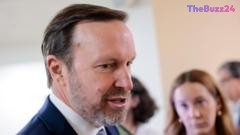
A high-ranking U.S. lawmaker has strongly criticized the decision to lift human rights restrictions on military funding to Egypt, arguing that the policy shift has directly enabled a severe escalation of arrests targeting independent journalists and media outlets in the country. Senator Chris Murphy asserted during a recent policy address in Washington that releasing the aid without conditions effectively abandoned the Egyptian populace, stripping away the last remaining vestiges of independent political discourse and press freedom under President Abdel Fattah al-Sisi’s administration.
The controversy follows a wave of legal actions and detentions in Cairo, including a court-ordered shutdown of the prominent news website Mada Masr and significant legal penalties levied against its editor-in-chief, Lina Attalah. Additionally, authorities recently arrested six journalists associated with the independent fact-checking platform Matsda2sh, slapping them with terrorism-related charges tied to the outlawed Muslim Brotherhood. Human rights organizations have characterized these measures as a devastating blow to the freedom of the press in a nation where traditional broadcasting and print media remain heavily state-controlled.
The U.S. State Department defended its decision to waive conditions on hundreds of millions of dollars in defense assistance, citing Egypt’s critical role in national security interests and vital regional cooperation. Washington provides Cairo with approximately $1.3 billion in annual military support, making it one of the largest recipients of American defense aid globally. While federal law permits withholding a portion of these funds over human rights concerns, successive administrations have frequently exercised waiver authorities based on pressing geopolitical necessities, such as regional mediations and strategic partnerships in the Middle East.
Policy experts and international watchdogs warn that prioritizing strategic and defense alliances over fundamental human rights emboldens authoritarian tendencies. Analysts point out that the lack of robust diplomatic pushback from Western powers sends an unintended green light to Cairo, signaling that crackdowns on civil liberties and freedom of expression will carry few, if any, diplomatic consequences. As Egypt continues to test the boundaries of domestic dissent, the debate over how foreign aid can be leveraged to protect democratic norms remains a central tension in U.S. foreign policy.
Key Takeaways
- Senator Chris Murphy blamed the lifting of U.S. military aid conditions for a renewed crackdown on independent journalism in Egypt.
- Recent actions in Cairo include the shutdown of Mada Masr and the arrest of journalists from the fact-checking platform Matsda2sh.
- The U.S. State Department defended the aid waiver by emphasizing Egypt's vital importance to regional security and national interests.
Editor’s Analysis & Impact
The intersection of foreign aid and human rights compliance remains one of the most delicate balancing acts in modern geopolitics. This development underscores a recurring dilemma for Western powers: how to maintain vital strategic partnerships in volatile regions without inadvertently enabling authoritarian consolidation. By prioritizing immediate security cooperation and regional mediation channels, the U.S. administration has prioritized short-term geopolitical stability over long-term democratic institution-building. For the media and tech industries operating globally, this sets a concerning precedent where the suppression of digital dissent and independent fact-checking is met with diplomatic silence. Moving forward, human rights advocates fear this dynamic will further embolden state actors to silence opposition voices with impunity, reducing the leverage international donors traditionally held to promote democratic reforms.
Frequently Asked Questions
Q: Why did the U.S. government waive human rights conditions on Egypt's military aid?
A: The U.S. State Department justified the waiver by citing Egypt's critical importance to American national security interests, ongoing strategic security cooperation, and its helpful role in regional diplomatic efforts.
Q: What recent actions have Egyptian authorities taken against the press?
A: Egyptian authorities recently ordered the closure of the independent news website Mada Masr, fined its editor-in-chief, and arrested six journalists from the fact-checking platform Matsda2sh on terrorism-related charges.
Q: How much military assistance does Egypt receive from the United States annually?
A: Egypt receives roughly $1.3 billion annually in military assistance from the United States, positioning it as one of the largest recipients of American defense aid in the world.
AI Disclosure: This article is based on verified data and official reports. Our Team and AI have cross-referenced every financial detail with primary sources to ensure total accuracy.
More from this Category