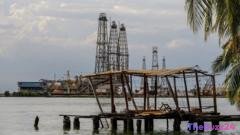
US Secures Unprecedented Deal to Control 65 Billion Barrels of Venezuelan Oil
The United States has finalized a historic agreement with Venezuela’s interim government to take control of more than 65 billion barrels of the South American nation’s proven oil reserves. Announced by President Donald Trump, the deal is projected to more than double American oil reserves, significantly boosting the domestic energy supply and potentially driving down fuel prices for consumers. The agreement follows the dramatic capture of former Venezuelan President Nicolás Maduro by US special forces earlier this year, after which the Trump administration pledged to oversee the country’s transition and manage its vast energy resources.
Under the terms of the agreement, which was negotiated by Secretary of State Marco Rubio and Defense Secretary Pete Hegseth in collaboration with private enterprises, the US government will hold a 55% controlling stake in a joint venture. This venture, partnered with an experienced private operator, has been granted a 100-year concession by Venezuela’s interim President, Delcy Rodriguez, to develop 17 strategic oil fields. Rodriguez expressed optimism about the deal, stating it would catalyze a $100 billion influx of private investment, generate thousands of high-paying jobs, and yield over $209 billion in tax revenues to fund the reconstruction of Venezuela’s battered economy.
Despite the administration’s claims that the deal was secured at no cost to American taxpayers, the arrangement represents an unprecedented level of direct US governance over a sovereign nation’s natural resources. Observers have noted that the scope of this agreement surpasses previous US interventions, such as the post-2003 administration of Iraqi oil revenues. While the interim Venezuelan leadership views the partnership as a vital lifeline for economic revival and infrastructure modernization, the deal is expected to face intense scrutiny and potential legal challenges regarding its constitutional validity under Venezuelan law.
Key Takeaways
- The US has secured a 100-year concession to control 65 billion barrels of Venezuelan oil through a joint venture, holding a 55% stake.
- The deal aims to attract over $100 billion in private investment to rebuild Venezuela's oil infrastructure and economy.
- This unprecedented agreement follows the US capture of former President Nicolás Maduro and faces potential legal and constitutional challenges.
Editor’s Analysis & Impact
This unprecedented agreement marks a geopolitical paradigm shift, effectively placing the world’s largest proven oil reserves under US administrative influence. By securing a 55% stake in Venezuela’s strategic oil fields, the US aims to insulate itself from global energy shocks, particularly amid ongoing tensions in the Middle East. However, the operational reality of this deal presents monumental challenges. Venezuela’s oil infrastructure has suffered from decades of underinvestment, mismanagement, and decay; restoring production to its peak levels will require years of technical overhaul and massive capital expenditure. Furthermore, the legal foundation of a 100-year concession granted by an interim government is highly precarious. International markets are likely to remain cautious, pricing in significant political and legal risks until the agreement’s constitutional legitimacy is tested and solidified.
Frequently Asked Questions
Q: How does this deal affect US oil reserves?
A: The agreement to control 65 billion barrels of Venezuelan oil theoretically more than doubles the oil reserves under US control, aiming to secure long-term energy independence and lower domestic gasoline prices.
Q: What is the structure of the agreement?
A: The US government will maintain a 55% controlling interest in a joint venture with a private operator, utilizing a 100-year concession granted by Venezuela's interim government to develop 17 strategic oil fields.
Q: What are the main challenges facing this deal?
A: The primary hurdles include the massive capital required to rebuild Venezuela's dilapidated energy infrastructure, potential legal and constitutional challenges to the interim government's authority, and international skepticism regarding US control over sovereign foreign resources.
AI Disclosure: This article is based on verified data and official reports. Our Team and AI have cross-referenced every financial detail with primary sources to ensure total accuracy.
More from this Category