US Strikes Iranian Launchers on Larak Island, Escalating Tensions in Strait of Hormuz
United States forces have conducted strikes against two Iranian rocket launchers located on Larak Island, marking the first known American military action targeting Iran in several weeks. The operation, confirmed by a U.S. official, occurred as the Islamic Revolutionary Guard Corps (IRGC) was reportedly preparing to launch rockets equipped with sea mines into the strategically vital Strait of Hormuz.
According to reports, the IRGC stated that the Sunday attack resulted in casualties, including fatalities and injuries, and issued a vow of retaliation. In a subsequent development, Iranian state media reported that the IRGC launched an attack on U.S. military installations in Jordan. Jordan’s army confirmed intercepting eight missiles that entered its airspace early Monday, though details on the targets and impact of this alleged Iranian response remain under investigation.
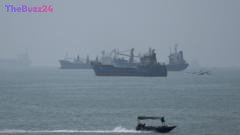
Larak Island’s proximity to the major port of Bandar Abbas places it directly along the Strait of Hormuz, a critical chokepoint for global maritime trade. Recent reports suggest Iran has been directing tanker traffic past this island for inspections and allegedly demanding substantial fees for passage. The IRGC spokesman condemned the U.S. strike as a “strategic and fatal mistake,” warning of severe economic and military repercussions.
The U.S. strike comes after a period of de-escalation, with President Donald Trump having previously paused renewed military operations against Iran in late July. This incident also occurs amidst renewed U.S. economic pressure on Iran, with Washington announcing a new sanctions campaign aimed at further isolating Tehran and expanding secondary sanctions against its allies. The broader conflict, which began with wide-ranging strikes in February, has significantly impacted global energy supplies, with approximately 20% of the world’s oil and liquefied natural gas previously transiting the Strait of Hormuz.
Key Takeaways
- US forces struck two Iranian rocket launchers on Larak Island, the first known attack on Iran in weeks.
- The strike occurred as Iran was reportedly preparing to launch rockets with sea mines into the Strait of Hormuz.
- Iran claims to have retaliated with a missile attack on US bases in Jordan, which Jordan confirmed intercepting eight missiles.
Editor’s Analysis & Impact
This escalation in the Strait of Hormuz signals a potential re-intensification of hostilities between the U.S. and Iran. The strategic importance of the Strait for global energy markets means any disruption carries significant economic implications, potentially impacting oil prices and supply chains worldwide. Iran’s retaliatory claims, if substantiated, suggest a willingness to engage U.S. assets directly, raising concerns about a broader regional conflict. The U.S. actions, coupled with ongoing sanctions, aim to exert maximum pressure on Tehran, but risk further destabilizing an already volatile region and could lead to prolonged economic and military consequences for all parties involved.
Frequently Asked Questions
Q: What is the significance of Larak Island and the Strait of Hormuz?
A: Larak Island is located near the port of Bandar Abbas and sits directly on the Strait of Hormuz. The Strait is a vital international waterway, serving as a critical chokepoint for global shipping, particularly for oil and liquefied natural gas. Approximately 20% of the world's oil and LNG used to transit through this strait before recent conflicts.
Q: What was the nature of the alleged Iranian retaliation?
A: Following the U.S. strike on Larak Island, Iranian state media reported that the IRGC launched an attack on U.S. military bases in Jordan using ballistic missiles. Jordan's army confirmed intercepting eight missiles that entered its airspace, though further details regarding damage or specific targets were not immediately clear.
Q: How do these events relate to U.S. sanctions on Iran?
A: The U.S. strike and Iran's alleged retaliation occur against a backdrop of renewed U.S. economic pressure. Washington recently announced a new sanctions campaign designed to further isolate Tehran and expand secondary sanctions against its allies, aiming to cripple its economy.
AI Disclosure: This article is based on verified data and official reports. Our Team and AI have cross-referenced every financial detail with primary sources to ensure total accuracy.
More from this Category