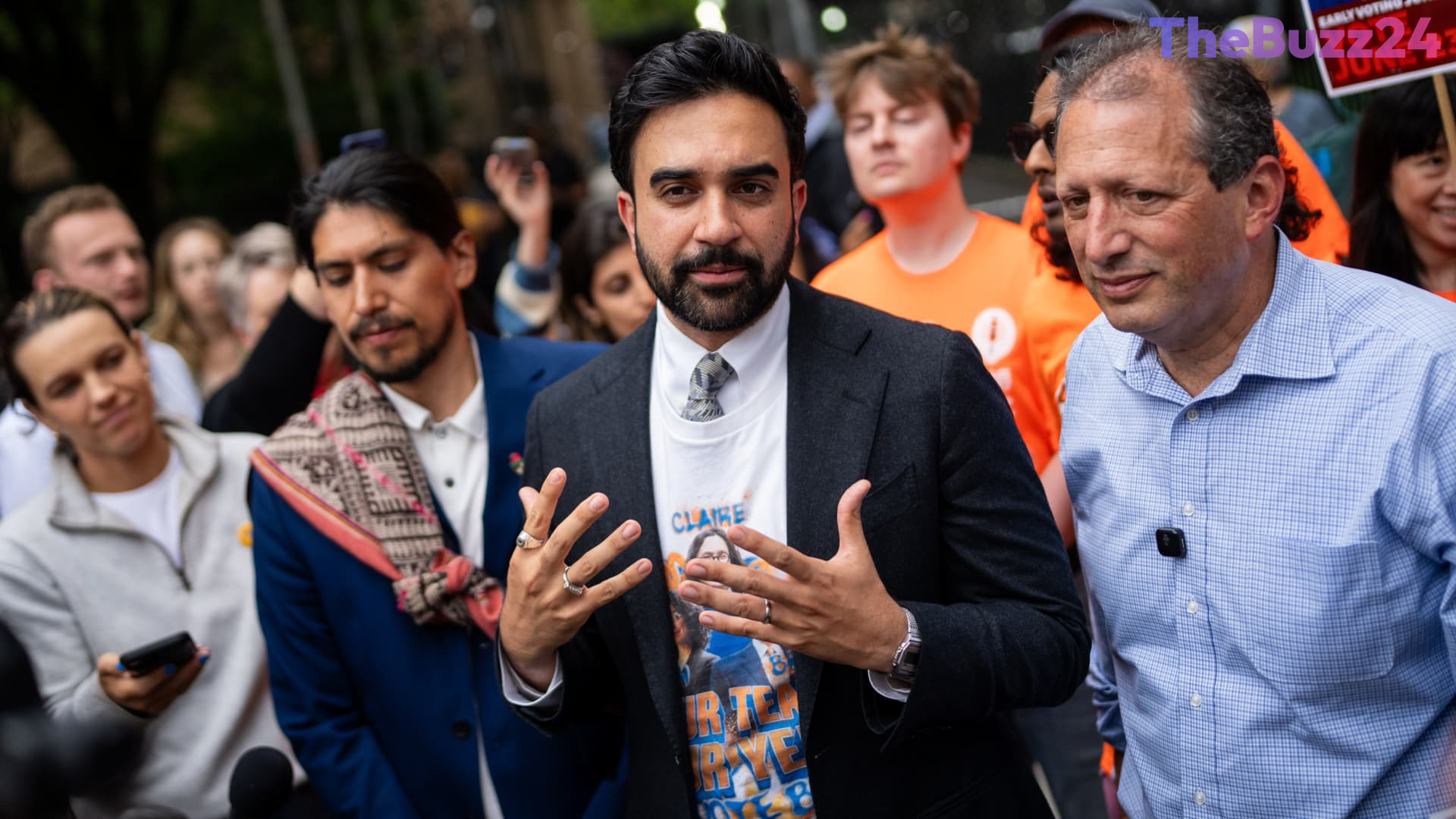
Voter Sentiment Shifts: Democratic Socialist Candidates Outpace MAGA-Aligned Contenders
Recent polling data reveals a notable shift in the American political landscape, suggesting that voters are increasingly receptive to candidates identifying as democratic socialists compared to those aligned with the Make America Great Again (MAGA) movement or those carrying the endorsement of President Donald Trump. While capitalism maintains a stronger overall favorability rating than socialism, the gap has narrowed significantly in recent years, particularly among younger demographics.
Data indicates that 32% of registered voters express a higher likelihood of supporting a candidate who identifies as a democratic socialist, whereas 29% would be more inclined to support a candidate endorsed by President Trump. Candidates explicitly branding themselves as MAGA supporters face even steeper challenges, with 57% of respondents stating such an affiliation would make them less likely to cast a vote for that individual. These findings arrive as democratic socialist candidates continue to secure victories in various Democratic primaries, signaling a potential evolution in the party’s ideological direction.
Despite these trends, the broader economic debate remains complex. While younger voters aged 18-34 show a distinct preference for socialist ideals, older generations remain firmly committed to capitalist principles. Analysts suggest that if these generational attitudes persist, the nation could face a seismic shift in economic policy and legislative priorities over the next two decades. For the upcoming midterm elections, however, the data suggests that Democrats maintain a slight edge in the generic ballot, potentially setting the stage for a more adversarial relationship between Congress and the executive branch.
Ultimately, the survey highlights a growing public appetite for a more robust federal government capable of providing expanded services, even if it necessitates higher taxation on the wealthiest citizens. While the immediate impact on federal policy may be limited by the current administration’s control, the rising influence of these political movements offers a clear preview of the ideological battles that will define future election cycles.
Key Takeaways
- Voters are statistically more likely to support democratic socialist candidates than those explicitly aligned with the MAGA movement or President Trump's endorsement.
- While capitalism remains more popular than socialism, the favorability gap has closed significantly, driven largely by shifting attitudes among voters aged 18-34.
- Democrats currently hold a 4-point lead in the generic ballot, suggesting a competitive environment for the upcoming midterm elections despite the president's low approval ratings.
Editor’s Analysis & Impact
The data suggests a profound generational realignment in American political economy. The narrowing gap between the favorability of capitalism and socialism indicates that the traditional post-WWII consensus on economic policy is fraying. For the business and investment community, this implies that long-term policy risks—such as increased corporate taxation, expanded social safety nets, and regulatory shifts—are becoming more mainstream rather than fringe. The fact that younger voters are consistently favoring socialist-leaning policies suggests that the ‘Overton window’ is moving leftward. Future market volatility may be driven by this ideological friction, as the legislative branch potentially moves toward a more interventionist stance, creating a long-term divergence from the deregulation-heavy policies of the current administration. Investors should prepare for a political environment where ‘socialist’ platforms are no longer automatic disqualifiers for a significant portion of the electorate.
Frequently Asked Questions
Q: How do voters currently view the terms 'socialism' and 'capitalism'?
A: Recent polling shows 28% of registered voters view socialism positively, a significant increase from 18% in 2024. Meanwhile, 50% of voters view capitalism positively, a figure that has remained relatively stable.
Q: What is the primary policy focus of the democratic socialist candidates mentioned?
A: Many of these candidates are advocating for increased taxes on the wealthiest Americans to fund universal healthcare, a higher minimum wage, and universal basic income.
AI Disclosure: This article is based on verified data and official reports. Our Team and AI have cross-referenced every financial detail with primary sources to ensure total accuracy.
More from this Category