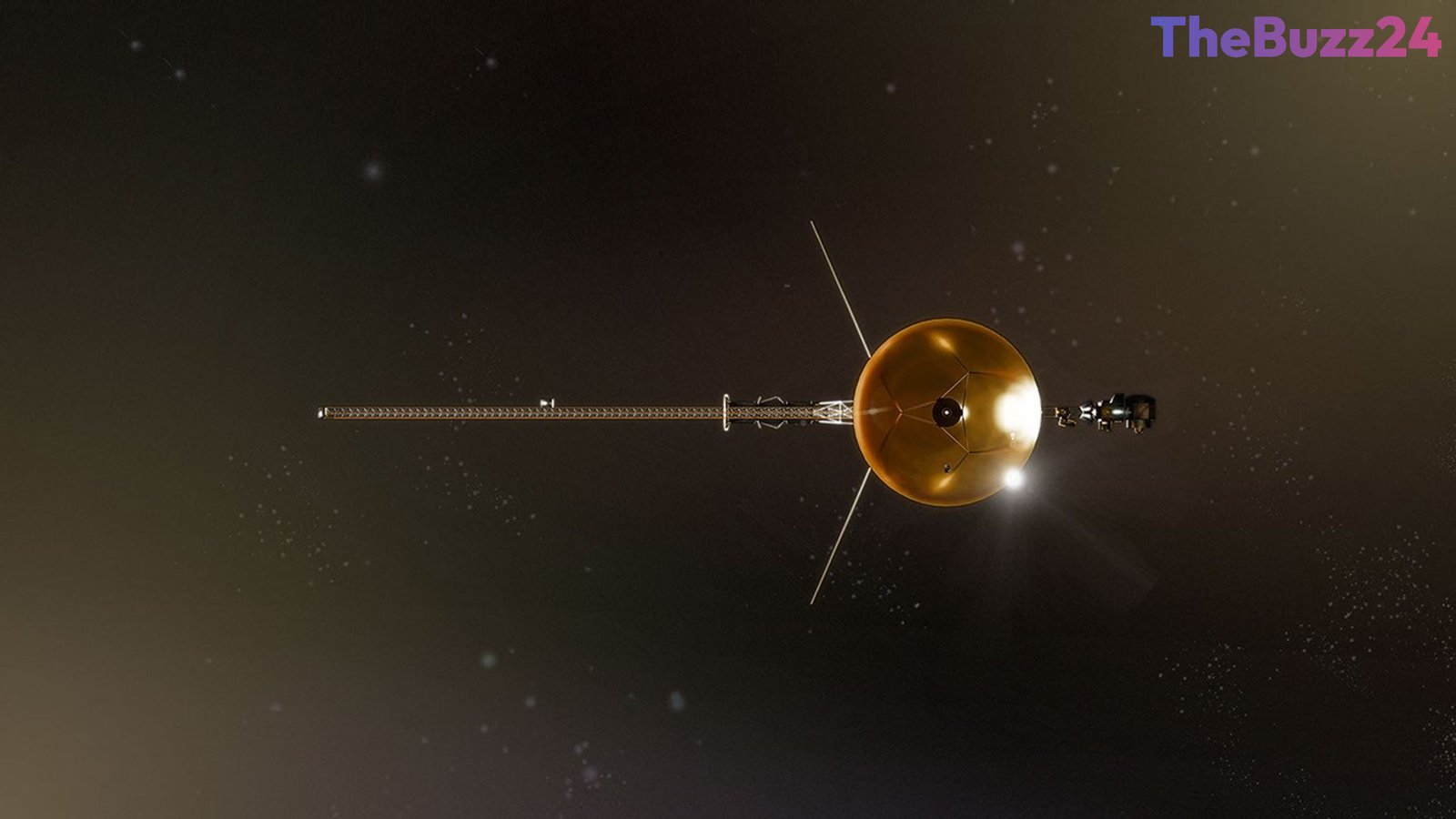
Voyager 1 Reaches Historic One Light-Day Distance Milestone in Deep Space
Nearly five decades after its initial launch in 1977, NASA’s legendary Voyager 1 spacecraft is set to achieve a monumental astronomical milestone, reaching a distance of one light-day from Earth—equivalent to over 16 billion miles, or 25.9 billion kilometers. As the farthest human-made object ever created, light originating from our planet now requires a full 24 hours to bridge the vast cosmic gulf and reach the probe. To commemorate this unprecedented journey into the deep unknown, space officials have organized a series of global public events and specialized panel discussions.
In anticipation of the milestone, people worldwide are invited to take part in a global initiative called “Shine Bright for Voyager’s Light-Day.” The public engagement campaign encourages participants to use smartphones and tablets after sunset to flash the spacecraft’s historic call sign, “VGR,” in Morse code, generating a symbolic wave of light encircling the globe. Enthusiasts are encouraged to document their luminous signals on social media channels to celebrate the enduring legacy of the historic mission.
Following the global light display, the Jet Propulsion Laboratory in Southern California will host a comprehensive moderated panel featuring mission leaders, project managers, and top scientists. The discussion will focus on the ongoing operations of both Voyager 1 and Voyager 2, the groundbreaking interstellar science they continue to transmit back to Earth, and the extreme engineering challenges involved in maintaining contact across unimaginable distances. Additionally, organizers plan to offer an exclusive preview of an upcoming feature-length documentary detailing the mission’s history, leading up to its official 50th anniversary celebration.
Since embarking on their grand tour of the outer planets, both Voyager probes have defied expectations, ultimately crossing the threshold of the heliosphere to enter interstellar space. Managed and operated by Caltech in Pasadena, California, the mission continues to rely on the Deep Space Network to beam invaluable scientific data across the solar system, cementing its status as one of humanity’s greatest technological achievements.
Key Takeaways
- Voyager 1 has reached a distance of one light-day from Earth, surpassing 16 billion miles.
- A global public engagement event invites people worldwide to flash the spacecraft's call sign in Morse code using mobile devices.
- NASA's Jet Propulsion Laboratory is hosting a special panel and documentary preview to discuss the longevity and scientific output of the twin Voyager probes.
Editor’s Analysis & Impact
The milestone achieved by Voyager 1 highlights a monumental era in aerospace engineering and deep space exploration. Operating for nearly 50 years far exceeds the original mission parameters, providing scientists with invaluable, long-term data regarding interstellar space and the boundaries of our solar system’s heliosphere. Beyond the immediate scientific returns, milestones like this serve a critical public relations function for space agencies, inspiring future generations of engineers and scientists. As both Voyager spacecraft slowly exhaust their radioisotope thermoelectric generators, the lessons learned from managing these distant systems will directly inform the architecture of future interstellar and outer-planet missions, ensuring humanity’s reach continues to expand deeper into the cosmos.
Frequently Asked Questions
Q: What does a distance of one light-day mean for Voyager 1?
A: It means that the spacecraft is now so far away that a beam of light traveling at maximum speed takes a full 24 hours to reach it from Earth, translating to a distance of over 16 billion miles.
Q: How can the public participate in the milestone celebrations?
A: People around the world can participate in 'Shine Bright for Voyager’s Light-Day' by using their smartphones or tablets to flash the spacecraft's call sign in Morse code after sunset and sharing photos or videos on social media.
Q: What is the primary scientific focus of the Voyager probes today?
A: Both Voyager 1 and Voyager 2 are currently gathering unique scientific observations of interstellar space, measuring the environment located beyond the heliosphere—the protective bubble created by the Sun.
AI Disclosure: This article is based on verified data and official reports. Our Team and AI have cross-referenced every financial detail with primary sources to ensure total accuracy.
More from this Category