Westerners Seek Traditional Values in Russia, Encounter Complex Realities
A unique migration trend is seeing a small but notable number of Westerners relocate to Russia, drawn by the promise of traditional values and a society seemingly at odds with what they perceive as the ‘destructive neoliberal ideology’ of their home countries. However, for many, the reality of life in Russia has proven to be far more complex than initially anticipated.
One prominent example is Leo Hare, a father of three from Texas, who moved to Russia in late 2023 after being granted asylum. A devout Christian, Hare was disillusioned with political divisions, genetically modified food, and the rise of the LGBTQ+ movement in the US. He believed Russia, with its state-promoted image of Christian faith and family values, offered an attractive alternative. Initially, he embraced his new life, sharing his experiences online and publicly thanking President Vladimir Putin. Yet, within weeks, Hare and his family were defrauded of a significant sum, leaving them homeless. While he praises the generosity of ordinary Russians and his church community, he has grown increasingly concerned about Russia’s economy and restrictions on information, admitting he ‘believed in the propaganda’ and now misses American freedoms.
This migration is partly facilitated by Russia’s ‘Shared Values’ visa, introduced in 2024 by President Putin. Often dubbed the ‘anti-woke’ visa, it offers temporary residency for up to three years to citizens of 47 countries deemed ‘unfriendly’ by Russia. Applicants must declare alignment with Russia’s traditional spiritual and moral values, bypassing typical language and history tests. While nearly 3,400 people had reportedly applied by spring 2026, independent verification of these figures and approval rates remains challenging. The visa reflects a broader Kremlin strategy to position Russia as a global defender of traditional values against perceived Western moral decline, with online agencies actively promoting the country as a haven for family values and safety.
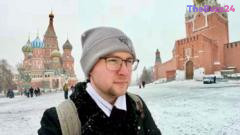
However, not all migrants share the same idealized view. Philip Hutchinson, a former UK Conservative Party candidate now based in Moscow, assists Westerners in relocating but avoids discussing the ongoing conflict in Ukraine, emphasizing his desire for a quiet family life. Another British migrant, Ben (surname withheld), who moved to Kursk, offers a more nuanced perspective. While appreciating Russian friendliness and feeling safer, he disputes the notion of Russia as a ‘conservative paradise,’ citing high divorce rates, prevalent single-parent households, and widely accepted abortion. Ben, who moved on a private family visa, uses his online platform to challenge what he sees as exaggerated claims by some influencers, highlighting that ‘Russia isn’t some utopia.’ Ultimately, while the ‘Shared Values’ visa has made it easier for some Westerners to forge new lives in Russia, it has not triggered a large-scale ‘anti-woke’ exodus, and the experiences of those who have moved often underscore a significant gap between state-promoted ideals and the complex realities on the ground.
Key Takeaways
- Russia's 'Shared Values' visa attracts Westerners seeking traditional values, but the program's success in drawing large numbers remains limited.
- Migrants like Leo Hare have faced significant challenges, including fraud and disillusionment with state propaganda, despite initial enthusiasm.
- The reality of life in Russia, as experienced by many Westerners, often contradicts the 'conservative paradise' narrative promoted by the Kremlin and some online influencers.
Editor’s Analysis & Impact
This phenomenon highlights Russia’s strategic use of ‘traditional values’ as a soft power tool, aiming to attract ideologically aligned individuals from Western nations. While the ‘Shared Values’ visa has not yet resulted in a mass migration, it serves as a propaganda victory for the Kremlin, reinforcing its narrative of moral superiority over the West. The experiences of migrants, however, reveal a significant disconnect between this idealized image and the practical realities of living in Russia, including economic challenges, restrictions on information, and a social fabric that may not align perfectly with conservative expectations. This suggests that while ideological alignment can be a powerful draw, the complexities of international relocation and the realities of a different political and economic system often lead to unexpected outcomes, limiting the long-term impact of such programs on broader demographic shifts.
Frequently Asked Questions
Q: What is Russia's 'Shared Values' visa?
A: The 'Shared Values' visa is a temporary residency program introduced by President Vladimir Putin in 2024. It allows citizens from 47 countries deemed 'unfriendly' by Russia to gain residency for up to three years by declaring alignment with Russia's traditional spiritual and moral values, bypassing standard language and history tests.
Q: What challenges have Western migrants faced after moving to Russia under this scheme?
A: Migrants have reported various challenges, including financial fraud, difficulties with the economy, restrictions on access to information, and a general disillusionment when the reality of life in Russia does not match the 'conservative paradise' image promoted by the state and some influencers.
Q: Has Russia's 'Shared Values' visa attracted a large number of Westerners?
A: While Russia claims nearly 3,400 applications by spring 2026, independent verification is difficult, and the program has not yet led to a large-scale 'anti-woke' migration wave. The number of approved applicants and those who successfully integrate into Russian society remains relatively small.
AI Disclosure: This article is based on verified data and official reports. Our Team and AI have cross-referenced every financial detail with primary sources to ensure total accuracy.
More from this Category