Turning Waste into Wealth: Chile’s Innovative Solution to the Atacama Desert Textile Crisis
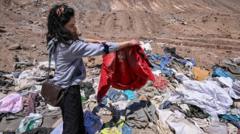
The Atacama Desert, renowned for its arid beauty, has increasingly become a repository for the global fashion industry’s discarded inventory. Each year, approximately 123,000 tonnes of used clothing enter Chile via the Iquique free-trade zone. While this trade supports local employment, it has triggered a severe environmental crisis. Because municipal landfills refuse commercial textile waste, a significant portion of these garments—estimated at 39,000 tonnes annually—is illegally dumped or incinerated in the desert, leaving a toxic footprint on the landscape.
Local authorities in Alto Hospicio have struggled to police the vast, rugged terrain against the constant influx of illegal dumping. Despite the deployment of surveillance technology and patrols, the sheer scale of the waste makes enforcement difficult. The environmental degradation caused by these synthetic and natural fibers piling up in one of the world’s driest ecosystems has prompted an urgent need for systemic change.
In response, a new industrial initiative is taking shape to convert this environmental liability into a circular economic asset. A $7 million processing facility, spearheaded by textile importer Bekir Conkur, is currently under construction. The plant is designed to recycle 20 tonnes of textiles daily, utilizing specialized machinery to transform discarded clothing into fibers and felt. These recycled materials are intended for use in automotive interiors, furniture, and insulation, all through a process that avoids the use of water or harsh chemicals.
This transition is bolstered by Chile’s Extended Producer Responsibility (REP) Law, which mandates that companies take full accountability for the end-of-life management of their products. By shifting the financial and organizational burden onto producers, the legislation is effectively incentivizing the move away from illegal dumping toward structured, sustainable recycling models. This regulatory framework is expected to serve as a blueprint for other nations grappling with the consequences of fast fashion.
Key Takeaways
- Approximately 39,000 tonnes of clothing are illegally dumped in Chile's Atacama Desert each year.
- A new $7 million recycling facility aims to process 20 tonnes of textile waste daily into materials for furniture and automotive use.
- Chile's Extended Producer Responsibility (REP) Law is forcing fashion brands to take financial responsibility for the disposal of their products.
Editor’s Analysis & Impact
The situation in the Atacama Desert serves as a stark microcosm of the global ‘fast fashion’ crisis. For years, the industry has operated on a linear model of production and disposal, externalizing the environmental costs to developing nations. The emergence of a circular economy facility in Chile represents a critical shift in how the industry handles post-consumer waste. By integrating legislative pressure—specifically the REP Law—with industrial-scale recycling, Chile is creating a template for sustainable waste management. If successful, this model could prove that textile waste is not merely trash, but a valuable raw material. The long-term success of this initiative will depend on the scalability of these recycling technologies and the willingness of global fashion brands to integrate these recycled fibers back into their supply chains, thereby closing the loop on their environmental impact.
Frequently Asked Questions
Q: Why is the Atacama Desert being used as a dumping ground for clothes?
A: The desert is used because Chile's Iquique free-trade zone receives massive quantities of unsold clothing, and local municipal landfills prohibit the disposal of commercial textile waste, leading traders to dump items illegally to avoid costs.
Q: How does the new recycling facility process the clothing?
A: The facility uses specialized machinery to break down discarded garments into fibers and felt without the use of water or chemicals, which are then repurposed for products like mattresses, furniture, and car insulation.
Q: What is the role of the Extended Producer Responsibility (REP) Law?
A: The REP Law mandates that companies and importers take financial and organizational responsibility for the end-of-life management of their products, effectively discouraging illegal dumping and encouraging recycling.
AI Disclosure: This article is based on verified data and official reports. Our Team and AI have cross-referenced every financial detail with primary sources to ensure total accuracy.
More from this Category