YouTube Music Implements AI Disclosure Labels to Enhance Transparency
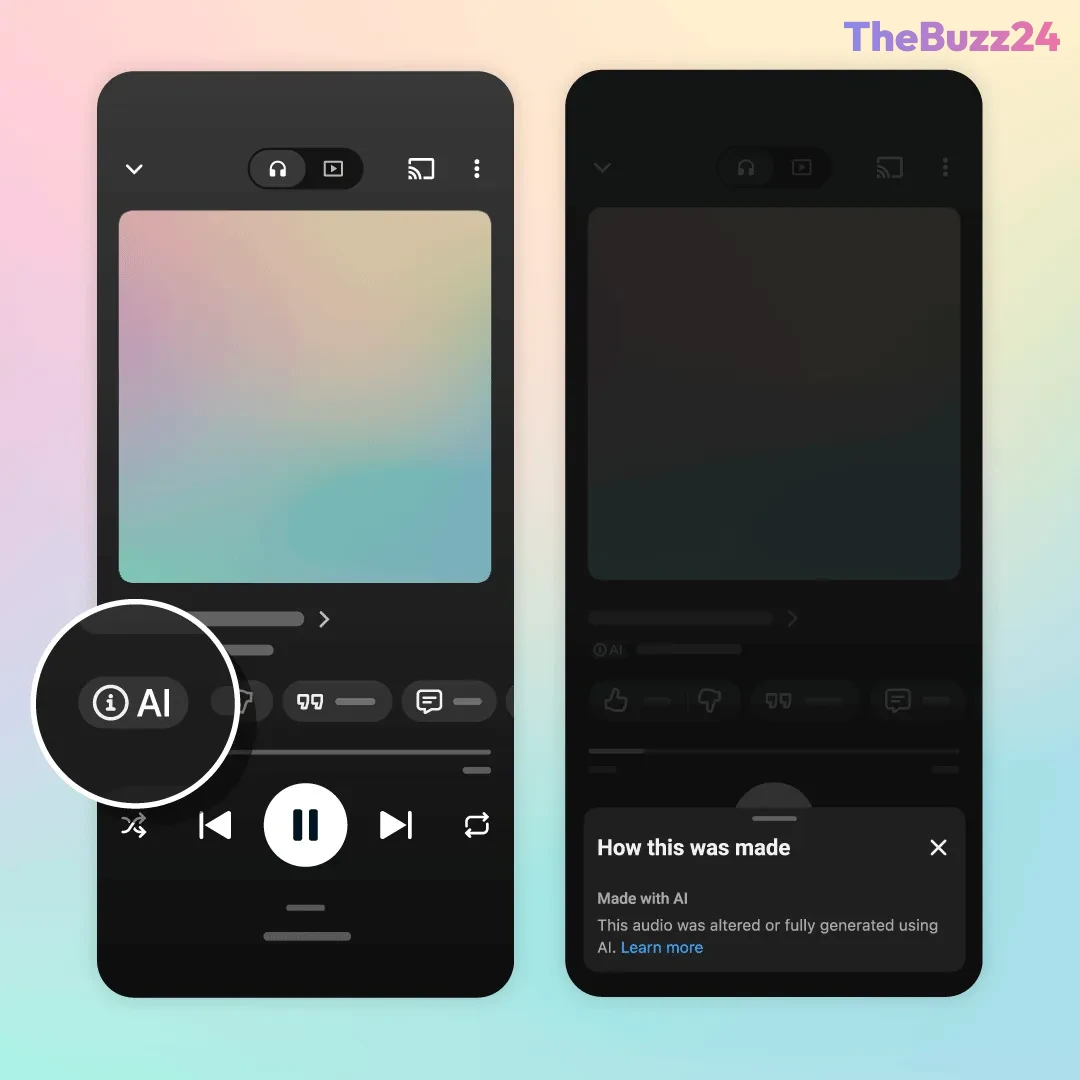
YouTube Music has officially introduced a new labeling system designed to provide listeners with greater clarity regarding the use of generative artificial intelligence in music production. This initiative, which spans both the dedicated music platform and the primary YouTube application, allows users to identify when AI has been utilized in the composition or vocal performance of a track. By clicking on the label displayed on the player page, users can access detailed information about how AI contributed to the specific recording.
To facilitate this transparency, YouTube has established three distinct categories for content creators: ‘Fully Gen AI,’ ‘Partly Gen AI,’ and ‘No Gen AI.’ The ‘Fully Gen AI’ designation is reserved for tracks created entirely by artificial intelligence, while ‘Partly Gen AI’ indicates a hybrid approach where artists have integrated AI components into their own original work. Standard production tools, such as pitch-correction software like Auto-Tune, are explicitly excluded from these requirements and fall under the ‘No Gen AI’ category.
This rollout arrives as streaming platforms grapple with the rapid influx of AI-generated content. Unlike some competitors that have opted for strict restrictions or the exclusion of AI tracks from royalty pools, YouTube is prioritizing user disclosure. The company continues to explore its own AI-driven creative tools, such as Dream Track, which enables creators to generate soundtracks using AI-modeled voices from participating artists, signaling a commitment to integrating AI into the creative ecosystem rather than banning it entirely.
Key Takeaways
- YouTube has launched a new labeling system to identify AI-generated content across its music and main video platforms.
- Creators must categorize their work into one of three tiers: Fully Gen AI, Partly Gen AI, or No Gen AI.
- Unlike some streaming rivals that restrict AI content, YouTube is focusing on transparency and disclosure to inform listeners.
Editor’s Analysis & Impact
The music streaming industry is currently at a crossroads regarding the integration of generative AI. YouTube’s decision to favor disclosure over prohibition reflects a strategic choice to remain a hub for innovation while addressing growing consumer demand for authenticity. By standardizing these labels, YouTube is setting a precedent for how platforms can balance the democratization of music creation with the need for intellectual property protection. However, the effectiveness of this system relies heavily on creator compliance and the accuracy of detection tools. As AI-generated music continues to scale, the industry will likely see a shift toward more sophisticated metadata standards, potentially influencing future copyright legislation and royalty distribution models. The long-term impact will depend on whether listeners prioritize human-made content or if AI-assisted music becomes a standard, accepted component of the mainstream listening experience.
Frequently Asked Questions
Q: What do the three AI labels on YouTube mean?
A: The labels are 'Fully Gen AI' for tracks made entirely by AI, 'Partly Gen AI' for tracks that mix human and AI elements, and 'No Gen AI' for tracks that do not use generative AI (standard production tools like Auto-Tune are included here).
Q: Does the use of AI on YouTube Music affect a creator's ability to earn money?
A: Currently, YouTube is focusing on disclosure rather than restriction. Unlike some other platforms that withhold royalties from AI-generated tracks, YouTube's policy does not automatically make a track ineligible for monetization based solely on the use of AI.
AI Disclosure: This article is based on verified data and official reports. Our Team and AI have cross-referenced every financial detail with primary sources to ensure total accuracy.
More from this Category